Follow Us on Google

“The central bank has the responsibility to be a nonpartisan adviser on general matters of macroeconomic and financial stability.”
—Ben Bernanke
By Omoniyi Salaudeen
The Central Bank of Nigeria did the expected thing on November 24, and for obvious reason. At its 308th meeting, held on November 23 and 24 in Abuja, the Monetary Policy Committee retained the Monetary Policy Rate at 23 per cent, and left the Cash Reserve Requirement at 45 per cent for deposit money banks, 16 per cent for merchant banks and 75 per cent for non-Treasury Single Account public sector deposits.
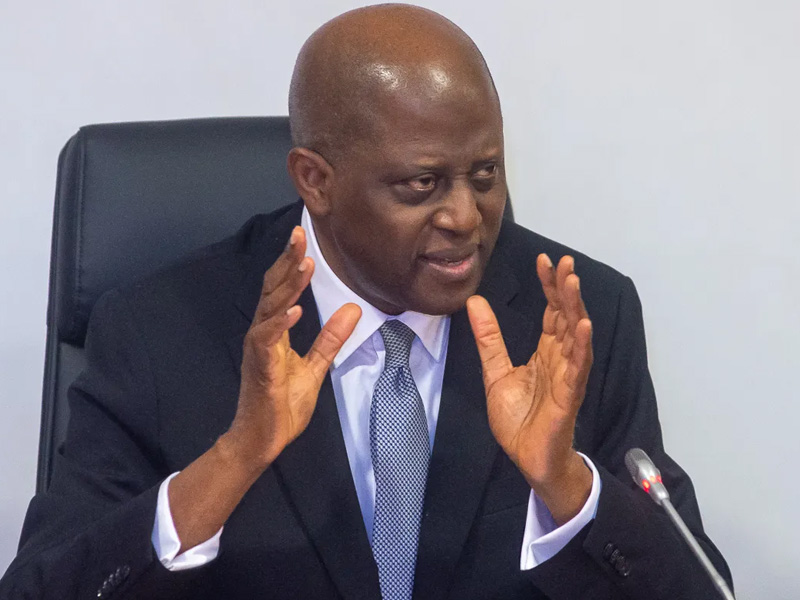
Cardoso’s answer was blunt, because elections are coming, and according to him, the committee had observed that the anticipated increase in spending from the end-of-year festive season and election-related activities could impact aggregate demand with likely upward pressure on prices. That single sentence is the whole policy, because the CBN is not fighting today’s inflation, it is fighting tomorrow’s inflation, the one that has not yet shown up in the data but is already being printed, bagged, and distributed in campaign offices across the country.
The numbers look good, but they are fragile. Headline inflation fell to 14.06 per cent in October from 14.63 per cent in September, its fifth consecutive monthly decline, core inflation fell sharply to 10.78 per cent from 12.95 per cent, and food inflation eased to 19.13 per cent from 19.59 per cent, reflecting easing pressures on processed food and farm produce following the commencement of the harvest season.
The Composite Purchasing Managers’ Index rose from 53 points in September to 53.2 points in October, reflecting improved activity across industry, agriculture and services, while gross external reserves stood at 54.02 billion dollars as of November 17, enough to cover about 10.26 months of imports, a buffer most emerging markets would envy.
On paper, that is a textbook case for easing, but in Nigeria it is a trap, because Nigerian elections do not just increase spending, they change how money moves. Campaign cash is fast, cash-heavy, and concentrated in a few weeks, and it goes to rallies, transport, posters, media, vote-buying networks, security, and last-minute patronage. It does not go through bank credit, it does not wait for productivity to catch up, and it does not create new supply. It chases the same food, fuel, transport, hotel rooms, and dollars, and it bids their prices up. That is why Cardoso paired the election warning with two other risks, the Middle East conflict sustaining pressure on energy prices, and adverse weather undermining food supply, and all three point in the same direction, more demand, less supply, and higher prices.
Cardoso is not just talking about economics, he is talking about a law that is already being broken, and that is why his warning cuts into the heart of electoral law. Section 88 of the Electoral Act 2022 sets hard limits on what a candidate can spend, with the president limited to N5 billion, a governor to N1billion, a senator to N100 million, a member of the House of Representatives to N70 million, and a member of a State Assembly to N30 million. No individual or entity is supposed to donate more than 50 million naira to a candidate, and parties are required to file election expenses reports with INEC within six months after the election. The National Assembly has since moved to raise those ceilings sharply in the Electoral Act amendment, to N10 billion for president, N3 billion for governor, N500 million for Senate, and N250 million for House of Representatives, with donations capped at N500 million6. Whether you use the old law or the new proposal, the principle is the same, campaign spending is not supposed to be unlimited. In practice, everyone in Nigerian politics knows it is, because presidential campaigns routinely spend multiples of the legal limit, off the books, through proxies, governors, contractors, support groups, and cash networks that never appear in INEC filings, and that is the open secret Cardoso is pointing at.
Other News
He cannot prosecute a candidate for overspending, because that is INEC’s job, with the EFCC, but he has to live with the macroeconomic consequences when the law is ignored. When a campaign spends N15 billion where the law allows N5 billion, that extra N10 billion is not productive investment, it is cash chasing votes, food, fuel, transport, dollars, and hotel rooms in a few weeks, and it creates demand without creating supply. The deeper problem is that the penalty is cheaper than the crime, because under the 2022 Act the penalty for breaching the spending limit is a fine of one per cent of the limit, or up to 12 months in prison, or both. For a presidential candidate, that is N50 million on a N5 billion limit, which is not a deterrent, it is a licence fee. No major candidate has been successfully prosecuted for overspending, and INEC has never had the political independence, forensic capacity, or will to audit the real accounts of presidential campaigns.
That is why Cardoso’s warning is so pointed, because he is saying, in central-bank language, that if you will not enforce the Electoral Act, he will have to enforce discipline with interest rates, and interest rates punish everyone, not just the overspender. The manufacturer in Onitsha, the farmer in Kaduna, and the young graduate seeking a mortgage all pay 23 per cent because politicians will not obey Section 88.+jk+((
Excessive campaign spending distorts macroeconomic stability in three ways that a rate cut cannot fix. First, it breaks the transmission mechanism, because when politicians inject naira outside the banking system, the CBN’s policy rate loses its grip, and the CBN can keep the MPR at 23 per cent, but if cash is flooding the streets, market rates, forex demand, and inflation expectations move on their own. The CBN has already warned that market rates drifted away from its policy rate after September’s cut. Second, it pressures the naira, because Cardoso linked recent volatility to year-end portfolio adjustments, higher foreign exchange demand from businesses hedging ahead of the new year, and rising election-related spending, and if campaign dollars chase a limited supply of foreign exchange, the naira weakens, imported fuel and food get dearer, and the CBN is forced to defend the currency at the same time it is trying to fight inflation. Third, it entrenches expectations, which is the most dangerous effect, because if traders, landlords, transporters, and food sellers expect prices to rise in December and January, they raise prices now, and inflation becomes self-fulfilling. Cardoso’s hold is therefore as much a signal as a policy, that the CBN will not let a political cycle undo five months of disinflation, and that is why he repeated the target, that the goal is single-digit inflation and the bank will not stop until it gets there.
Nigeria has seen this movie before. In 2015, 2019, and 2023, election cycles were followed by spikes in money supply, pressure on the naira, and a reversal of disinflation gains, and the pattern is familiar, in the months before voting, fiscal authorities loosen, politicians distribute cash, state governments accelerate contracts and payments, and the central bank is left to mop up the excess liquidity after the votes are counted.
What makes 2027 different is the timing, because the election on January 16, 2027, falls exactly on top of the festive season, when Nigerians are already spending more in December for Christmas, New Year, travel, and food stockpiling, and when you add a presidential election, governorship contests, and National Assembly campaigns to that, you get a double demand shock in the same six-week window. The shock hits the poor first, because when campaign money pushes up the price of rice, yams, transport fares, and cooking gas, it is the market woman who cannot restock and the family that cuts a meal who pay.
The cost of the hold is real. At 23 per cent, borrowing remains expensive for manufacturers, small businesses, mortgage seekers, and state governments, and a real rate of almost 9 percentage points above headline inflation rewards savers and punishes borrowers. For a small manufacturer in Aba or Kano, a loan at 30 per cent or more from a commercial bank is not a growth loan, it is a survival loan. But the alternative is worse, because a premature cut in November would have been read by markets as political, not technical, and it would have signalled that the CBN was willing to loosen into an election, and that signal alone could have triggered the very foreign exchange pressure and price spiral it was trying to avoid. By holding, Cardoso bought three things, credibility, time, and policy space.
He bought credibility with investors who need to believe the CBN will not be captured by the electoral calendar, time to see whether September’s big cut is actually transmitting to lending rates, and space to cut in early 2027, after the election spending shock has passed, if inflation continues to fall. Investors understood this logic, the decision matched the Reuters poll of economists, and markets did not punish the hold because they had already priced in the election risk.
Monetary policy cannot do this alone, and if fiscal authorities increase spending, release election-related funds, and allow campaign finance rules to be flouted, the CBN will be forced to keep rates higher for longer to offset that stimulus. The result is a policy mismatch, the government spends, the central bank tightens, and the private sector pays the price through higher borrowing costs. What Nigeria needs is coordination, not contradiction, and INEC, the EFCC, and the National Assembly must enforce campaign spending limits, because monetary policy cannot sterilise a political flood. The Ministry of Finance must avoid a December spending surge that coincides with the festive and election peaks, and state governments must resist the temptation to empty their treasuries for last-minute projects that add demand without adding supply. If Nigeria is serious about both democracy and disinflation, the CBN’s warning must be matched by three actions outside the CBN, real-time disclosure, not post-election reports six months later, traceable money through the banking system, not cash distributions at rallies, and a penalty that bites, such as a fine proportional to the excess spent, or disqualification. Until the cost of breaking the law exceeds the benefit of winning, the law will be ignored.
The question for 2027 is no longer whether the CBN will stay tight, it is whether Nigeria will finally treat campaign finance as what it is, not just an electoral offence, but a macroeconomic threat. If the Electoral Act remains a law on paper only, the CBN will be forced to keep rates high long after the election, and ordinary Nigerians will keep paying for politicians’ excesses in higher prices, a weaker naira, and costlier credit.