Follow Us on Google


•Dozens of deaths, injuries recorded in five months
•Deadly attacks on rallies, convoys, party supporters escalate nationwide
•APC, ADC, NDC, Accord, APM raise alarm, seek protection
•Experts identify causes, demand accountability
By Oluseye Ojo
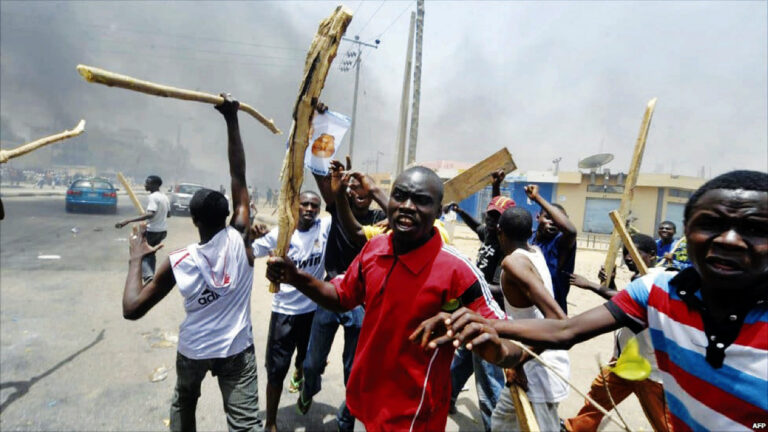
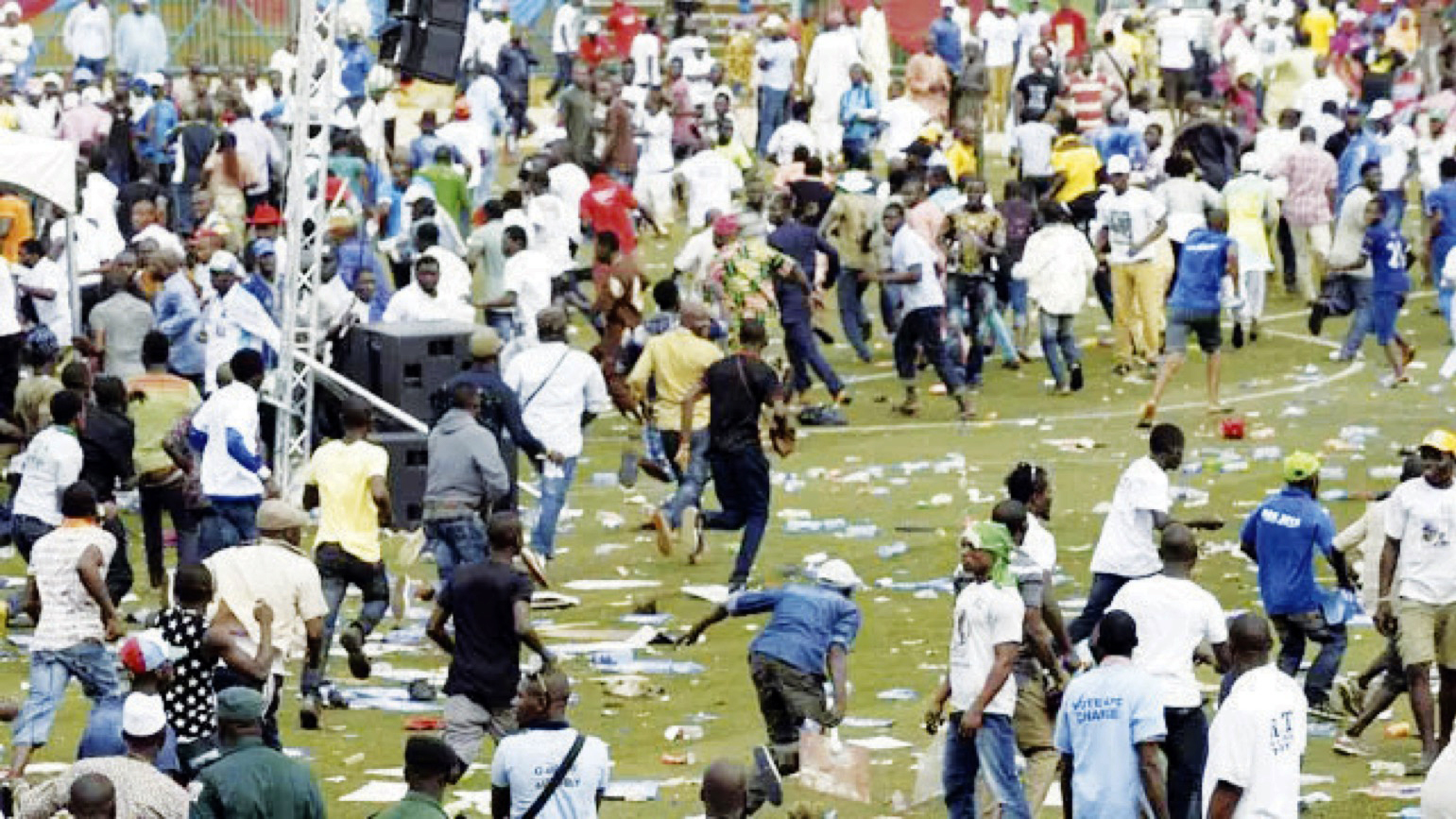
The countdown to the 2027 general elections is being overshadowed by political violence, attacks on campaign gatherings, intimidation of supporters and confrontations involving rival political groups.
This new wave of violence has raised concerns about the safety of candidates, voters and ordinary citizens as political parties intensify mobilisation ahead of the elections.
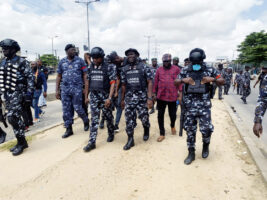
From shootings at political gatherings in Edo and Delta to attacks on opposition campaigners in Oyo, the assault on African Action Congress (AAC) presidential candidate, Omoyele Sowore, in Ekiti, and attacks on ruling party supporters in Katsina, the emerging pattern suggests that political rivalry is becoming increasingly dangerous.
The violence has extended to political convoys, party meetings, campaign materials, supporters moving through communities and even internal party contests.
In some instances, political activities have been disrupted by attacks, arrests, destruction of property and restrictions on party offices. Security agencies have announced arrests and investigations in some cases, while political parties continue to trade accusations over alleged sponsorship, complicity and selective enforcement of the law.
The latest incident occurred in Benin City, Edo State, where gunmen attacked a gathering of supporters of the Nigeria Democratic Congress (NDC) shortly before the arrival of its presidential candidate, Peter Obi, for a campaign rally.
The attack, which occurred along Airport Road, left a supporter, Aimionkhale Michael, with gunshot injuries on his thighs. The Edo State Police Command said three suspected attackers were on their wanted list.
The NDC accused the All Progressives Congress (APC) of orchestrating the attack, alleging that it was part of a pattern of intimidation against opposition figures. Obi, who addressed supporters after the incident, urged Nigerians to defend their votes and remain at polling units until votes had been counted. He also stressed the need for citizens to protect the democratic process.
The Edo attack came amid escalating tension in Delta State, where political violence has heightened concerns about the safety of political actors and their supporters.
In Uduere community, Ughelli North Local Government Area, violence surrounding the campaign activities of former Deputy President of the Senate, Ovie Omo-Agege, resulted in the deaths of six persons, according to preliminary police findings.
The incident triggered strong reactions from political leaders and security agencies. The Delta State government imposed a curfew in parts of Ughelli North, while the Inspector-General of Police, Olatunji Disu, ordered an investigation into the killings and police conduct surrounding the incident.
But responsibility for the violence remains disputed. Omo-Agege accused local political actors of involvement and alleged that security personnel failed to intervene, while Ughelli North Local Government Chairman, Jaro Egbo, described the incident as a reprisal, blaming supporters of Omo-Agege.
Delta has also witnessed violence linked to political activities in Asaba and Warri. An attack on an NDC political procession in Asaba resulted in a fatality and injuries, while a clash at an APC rally in Warri linked to ward delineation disputes left several people injured.
124 incidents, 22 deaths in five months
The scale of the problem is reflected in findings by Kimpact Development Initiative (KDI), which, through its Nigeria Election Violence Education and Reporting (NEVER) Project, documented 124 incidents of political and electoral violence between July 1 and November 23, 2026, resulting in 22 deaths across 35 states and the Federal Capital Territory.
The figures also revealed a sharp escalation in violence as political activities intensified. From three incidents recorded in July, the number rose to 48 in October, while 40 incidents were recorded in the first half of November alone.
The reported incidents included physical assaults, destruction of property, shootings, intimidation, harassment and kidnapping. Political party members and affiliated groups were identified as alleged perpetrators in 82.3 per cent of recorded incidents, while party members constituted 86.5 per cent of reported victims, suggesting that political competition and rivalries within party structures remain major drivers of the violence.
The National Peace Committee, chaired by former Head of State, General Abdulsalami Abubakar (retd), also raised concerns over breaches of the National Peace Accord signed by political parties ahead of the elections.
Its monitoring report covering August 19 to October 27 documented 109 breaches across 26 states and the FCT. Political violence and thuggery accounted for 33 incidents, while misinformation and disinformation recorded 29. Attacks on political activities and campaign assets accounted for 19 incidents, while intimidation and threats recorded 15. The committee identified recurring violations capable of undermining peaceful campaigns and public confidence in the electoral process. The KDI and National Peace Committee figures covered different periods and use different monitoring methodologies.
Oyo politics still in throes of violence
In Oyo State, political violence, intimidation, thuggery and destruction of campaign materials have continued to generate concern as parties intensify grassroots mobilisation. The latest incident occurred on November 21 when members of the Allied Peoples Movement (APM) were attacked during a house-to-house campaign at Opapa Fatuke, Ward 8, Oyo West Local Government Area.
The campaign team, according to the Secretary to the Oyo State Government, Prof. Musibau Babatunde, was engaging residents and distributing campaign materials when it was attacked by thugs suspected to be APC supporters. Several campaigners sustained injuries in the process, while campaign materials were destroyed.
But the APC rejected the allegation. The Director of Media and Publicity of Senator Sharafadeen Alli Campaign Organisation, Mr. Bisi Oladele, said APC believes in issue-based campaigns and does not condone violence. He asked security agencies to investigate the alleged incident.
Earlier, violence ensued during a political procession involving supporters of Accord and the political movement associated with a broadcaster, Oriyomi Hamzat, the party’s governorship candidate, in the Molete area of Ibadan. The incident resulted in the death of a supporter and injuries to others.
The development prompted warnings from political actors against the use of violence, threats and intimidation to settle political differences.
The state has also witnessed exchanges of accusations between the APC and APM over alleged plots to attack supporters. The Sharafadeen Alli Campaign Organisation had raised concerns about alleged plans to attack APC supporters and pointed accusing fingers at members of the Park Management System in the state.
The APM rejected the allegations and described them as politically motivated.
The state has history of violent political confrontations in previous electoral cycles, including clashes involving party loyalists and individuals associated with political power structures.
Sowore’s Ekiti ordeal raises security questions
The experience of AAC presidential candidate, Omoyele Sowore, in Ado-Ekiti, Ekiti State, further raised questions about the safety of political actors and the response of security agencies to politically sensitive incidents.
Sowore and members of his team were involved in a violent confrontation in Ado-Ekiti on October 30, shortly after attending a radio interview. He described the incident as an attack by armed men, and alleged that the assailants were politically connected. He accused security officials and individuals associated with the state government of involvement.
But the Ekiti State Police Command gave a different account. It described the incident as an altercation between Sowore’s team and some individuals at a restaurant. It said the police responded to a distress call, rescued the activist and took him for medical attention.
The police announced the arrest and arraignment of 11 suspects in connection with the incident. Sowore, however, maintained that the principal attackers he identified in a video footage had not been apprehended. He subsequently petitioned the Inspector-General of Police, demanding an investigation into the incident, the arrest and prosecution of those found culpable and an examination of allegations involving public officials and other individuals. The Ekiti State Government denied involvement in the attack.
Katsina’s volatile campaigns
The violence has affected political actors across party lines, although opposition parties have repeatedly alleged that their members and candidates are targeted by supporters of the ruling party.
In Katsina State, APC supporters travelling to Governor Dikko Radda’s campaign rally were attacked by hoodlums in Yankara, Faskari Local Government Area, leaving several injured and campaign vehicles burnt. The attack followed another incident in Malumfashi Local Government Area, where APC supporters travelling to a campaign flag-off in Funtua were attacked.
Other News
Rising tension in Rivers
In Rivers State, political tension also resurfaced, with suspected thugs attacking members of the African Democratic Congress (ADC) in Elele, Ikwerre Local Government Area, in November.
Earlier incidents in the state included the arrest of three ADC members and the burning of a party member’s house in Aluu community.
Warning signals in Sokoto
In Sokoto State, the entourage of ADC governorship candidate, Manir Dan’iya, and female supporters came under attack between October 30 and 31. A branded vehicle was seized and property damaged during the incident. The state also witnessed controversy over the sealing of the ADC state office ahead of the rescheduled campaign flag-off of former Vice President Atiku Abubakar, prompting concerns over restrictions on political activities and the treatment of opposition parties.
Deadly campaign rallies in Enugu, Ebonyi
In Enugu, NDC campaign activities were also affected by violence. Ifeanyi Nwolie was confirmed dead from gunshot injuries sustained during the party’s campaign launch on October 10.
In Ebonyi, one person was said to have been killed and three others injured when gunmen attacked the convoy of NDC candidate, Rollins Offia-Nwali, on October 22. A vehicle was also burnt during the attack.
Thugs on the loose in Lagos, Cross River
In Lagos, NDC town hall meeting in Oregun, Ikeja, was invaded by armed men, who disrupted the gathering, assaulted participants and damaged property.
The incident also affected journalists and other people attending the meeting.
In Cross River, the convoy of Peter Obi, NDC presidential candidate was again, attacked in Calabar during his political engagement.
No respite in Kano, Kebbi
The convoy of NDC vice-presidential candidate, Rabiu Kwankwaso, also came under attack during a political visit to Bichi in Kano State. In Kebbi, the ADC presidential candidate and his campaign team raised concerns after police fired tear gas near a building where they were staying during a political engagement.
Political intimidation through state power
Apart from physical attacks, opposition parties and election-monitoring organisations have raised concerns over restrictions on political activities, including the sealing of party offices, denial of access to public facilities and alleged administrative measures capable of constraining political mobilisation.
The sealing of the ADC state office in Sokoto ahead of Atiku Abubakar’s campaign flag-off raised questions about the use of administrative powers and the circumstances under which political parties are prevented from accessing their offices.
Political actors have also alleged restrictions involving access to public venues, broadcast platforms and accommodation facilities for visiting delegates in some states.
Stakeholders warned that administrative restrictions, intimidation and denial of political space could deepen political grievances, undermine participation and trigger confrontations when supporters attempt to resist perceived suppression.
Tinubu’s convoy attack and release of suspects
The attack on President Bola Tinubu’s convoy in Abuja has also become a major issue in the debate over political violence, security and accountability.
The incident occurred on November 13, shortly after the president observed Jumu’ah prayers at a mosque in the Garki area of the Federal Capital Territory.
The presidency initially disputed reports that the convoy had been attacked. The FCT Police Command, however, subsequently confirmed that individuals threw stones and other dangerous objects at the departing convoy, damaging vehicles and injuring security operatives.
The police said a joint security team responded to the incident and subsequent intelligence-led operations led to the arrest of 78 suspects, who were later released.
Factors fuelling violence
Several factors are believed to be contributing to the rise in political violence, including the struggle for political power, winner-takes-all politics, the recruitment of unemployed youth as political foot soldiers, economic hardship, inflammatory rhetoric, misinformation, proliferation of weapons and weak accountability.
The Armed Conflict Location and Event Data Project (ACLED Nigeria) analyst, Raheem Mutiu, identified unresolved grievances, intense competition between political groups and perceptions of marginalisation as important factors behind the growing attacks. He stated that ACLED had recorded more than 30 attacks targeting political campaigns, candidates, supporters, convoys and gatherings since the presidential and National Assembly campaigns began on August 19.
He identified economic pressure, inflation, rising living costs, fuel prices and insecurity among the grievances contributing to political discontent, particularly in parts of the North-West.
Mutiu also warned that the attacks were becoming more geographically widespread and that politically linked violence could undermine the credibility of the elections.
The Centre for Democracy and Development’s researcher, Dengiyefa Angalapu, also drew attention to the threat posed by misinformation and hate speech. Angalapu warned that a voter making a choice under threat was not exercising that choice freely. He said fake news and hate speech could deceive voters and undermine confidence in credible information.
The danger of electoral violence was also evident during the 2026 Osun governorship election cycle, when the Centre for Journalism Innovation and Development (CJID)- tracked 34 violent incidents and 18 deaths ahead of the election.
Misinformation, hate speech and the media
The growing circulation of misinformation, disinformation, manipulated videos and politically sponsored propaganda across social media platforms has also emerged as a major concern ahead of the elections.
Experts warn that false or distorted accounts of political events could inflame passions, deepen hostility between rival camps, provoke retaliation and undermine public confidence in the electoral process, particularly when such content is circulated at a time of heightened political tension.
TikTok’s recent partnership with the Nigeria Union of Journalists (NUJ) and Code for Africa to train more than 300 journalists across Lagos, the Federal Capital Territory, Ogun and Oyo states on responsible election reporting, information verification and digital media engagement ahead of the 2027 general elections has drawn attention to the role of the media in preventing electoral violence.
IGP, INEC warn political actors
The Inspector-General of Police, Olatunji Disu, warned political parties and candidates against recruiting, financing or deploying thugs to intimidate opponents and disrupt political activities. At a high-level stakeholders’ meeting with political parties and the Independent National Electoral Commission (INEC) in Abuja on November 24, he declared that the police would maintain neutrality and prosecute sponsors of political violence, irrespective of their political offices, affiliations or influence. He said the police owed allegiance to the Constitution, the law and Nigerians, not to any political party or individual. The IGP promised adequate protection for lawful political rallies, meetings and processions. He also warned that no political ambition was worth the life of any Nigerian. He urged party leaders to take responsibility for the conduct of their candidates, officials, youth wings and supporters.
9 states to watch
The Independent National Electoral Commission (INEC) has identified nine states, where pre-election violence has been recorded. Three states were flagged in the South West, which are Lagos, Ekiti and Oyo. In the South South, three states were also identified. They are Edo, Delta and Cross River. Enugu and Ebonyi were identified in the South East as states with potential for electoral violence. In the North Central, Benue was also flagged.
The Chairman of INEC, Prof. Joash Amupitan, warned that violence could endanger over 1.41 million ad hoc personnel to be deployed across 177,299 polling units, suppress voter turnout and trigger post-election unrest. He also cautioned political leaders against signing peace accords in Abuja, while tolerating or sponsoring violence at the grassroots.