Follow Us on Google
From Taiwo Oluwadare, Ibadan
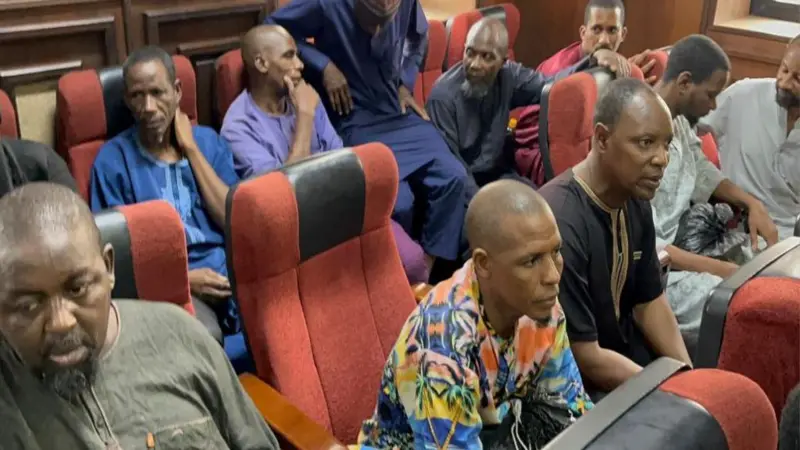
As the Federal Government commences the trial of principal suspects linked to the 2025 Yelewata massacre, survivors and observers say the proceedings represent more than a legal formality; they mark a defining test of justice and accountability for a community that was nearly wiped off the map.
The massacre, which left scores dead and displaced hundreds, effectively dismantled Yelewata as a functioning community. Once a vibrant settlement, the town now stands largely abandoned, its homes deserted and its streets silent. Survivors fled in the aftermath of the attack, seeking refuge in Internally Displaced Persons (IDP) camps and in safer communities such as Makurdi, the Benue State capital.
For many of the displaced, the scars of that night remain fresh.
At one of the IDP camps housing victims of the attack, survivors recounted chilling accounts of violence, loss and uncertainty. Among them was Mrs Josephine Aodaka, who narrowly escaped death but lost her husband during the assault. Fighting back tears, she described the terror that unfolded and the devastating toll it took on families around her.
According to Mrs Aodaka, a neighbouring household suffered unimaginable loss. Two young boys who had recently secured admission into Benue State University were killed alongside their parents and four other family members. In a matter of hours, an entire family’s dreams and aspirations were extinguished.
“They had just gained admission. Their parents were so proud,” she recalled. “Now, they are all gone.”
She also shared the unresolved ordeal of another neighbour, Chinasa Ejiaka, who survived the attack but continues to grapple with unanswered questions.
Other News
Chinasa’s husband, Michael, and their two children disappeared during the violence and have not been seen since. For her and others in similar situations, the lack of closure has deepened the trauma, replacing mourning with prolonged uncertainty.
Observers say the massacre was not an isolated outburst but a calculated act of brutality that unfolded over several hours. Entire families were reportedly wiped out, leaving children orphaned and women widowed. Survivors described scenes of chaos and helplessness as neighbours watched loved ones being killed.
The scale and ferocity of the killings have left Yelewata in ruins physically, socially and emotionally. Beyond official casualty figures lies a deeper story of shattered lives and broken communities.
Human rights advocates and community leaders have urged the federal government to ensure that the trial is transparent, thorough and free from political interference. They argue that justice must go beyond arrests and court appearances to include accountability, compensation for victims and concrete plans for rehabilitation and resettlement.
For many displaced residents, returning home remains a distant hope. With homes destroyed and security concerns unresolved, rebuilding Yelewata will require more than infrastructure; it will demand restoration of trust and safety.
As the trial begins, the nation watches closely. For the survivors, however, the stakes are deeply personal. Justice, they say, must not be delayed, diluted or denied.
Yelewata is more than a tragic headline; it is a symbol of lives violently cut short and futures erased in a single night. For those who endured the horror, the courtroom proceedings represent a chance — perhaps the only chance — for accountability to prevail.
Anything less, survivors insist, would amount to a second betrayal of a community that has already suffered too much.