Follow Us on Google
From Adesuwa Tsan, Abuja
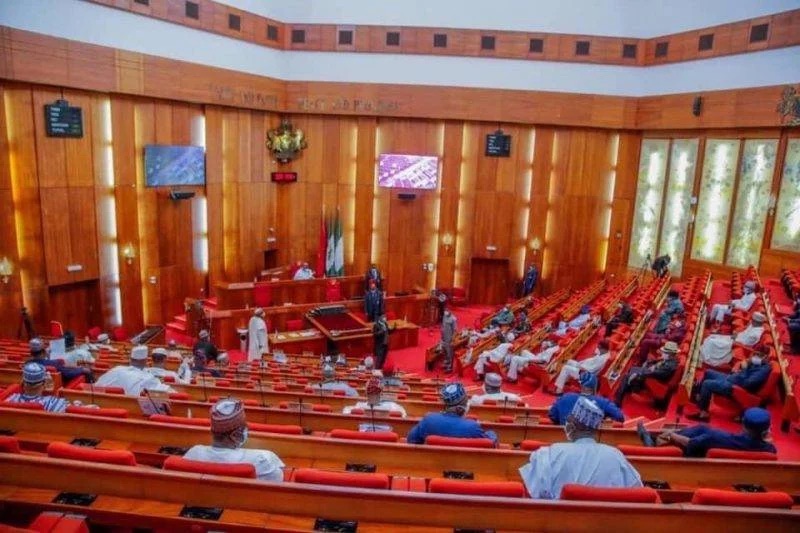
The Senate has urged the Federal Government to secure fresh written assurances from the South African government on the safety of Nigerians living in the country following renewed xenophobic attacks, while stopping short of endorsing calls to nationalise South African businesses or sever diplomatic relations.
This followed the adoption of a motion sponsored by Asuquo Ekpenyong in plenary yesterday.
The lawmakers also directed the Ministry of Foreign Affairs and the Nigerian High Commission in South Africa to obtain formal guarantees for the protection of Nigerians and demand the arrest and prosecution of those responsible for violence, looting and unlawful vigilante activities.
The Red Chamber also mandated its Committees on Foreign Affairs and Diaspora and Non-Governmental Organisations to investigate the implementation of its earlier resolution on the matter and report back within two legislative weeks.
Moving the motion, Ekpenyong warned that the June 30 ultimatum issued by anti-migrant groups for undocumented foreigners to leave South Africa had triggered fresh attacks, intimidation, displacement and destruction of businesses owned by Nigerians and other African nationals.
He noted that anti-migrant groups had unlawfully ordered undocumented foreign nationals to leave the country before the deadline, followed by widespread fear, demonstrations, attacks on foreign-owned businesses and the harassment of migrants.
According to him, the attacks had extended beyond undocumented migrants to Nigerians and other foreign nationals with valid residence and work permits, many of whom had reportedly been profiled, threatened, evicted and intimidated by vigilante groups.
He added that the indiscriminate targeting of lawful residents showed that the campaign had gone beyond immigration enforcement and amounted to xenophobic hostility based on nationality.
While recalling Nigeria’s pivotal role in South Africa’s struggle against apartheid, he noted that the country provided diplomatic, financial and material support to South Africa’s liberation movement and campaigned for the release of Nelson Mandela and other political prisoners.
Ekpenyong also reminded the Senate that Nigeria hosted the World Conference for Action Against Apartheid in Lagos in 1977 under former military Head of State, General Olusegun Obasanjo, and imposed economic measures against businesses linked to the apartheid regime.
He also expressed concern that while Nigerian-owned businesses in South Africa had repeatedly been attacked, looted and abandoned, South African firms operating in Nigeria, including MTN and MultiChoice, continue to conduct their businesses without molestation.
He said Nigeria had consistently chosen diplomacy and African solidarity over retaliation but warned that recent developments, including the voluntary repatriation of some Nigerians and the expiration of the June 30 ultimatum, showed that previous interventions had failed to guarantee adequate protection.
While recognising South Africa’s sovereign right to enforce its immigration laws, he insisted that such enforcement must be carried out only by authorised state institutions in accordance with the rule of law and international human rights standards.
Supporting the motion, Orji Uzor Kalu commended President Bola Tinubu and the Ministry of Foreign Affairs for facilitating the evacuation of Nigerians who wished to return home, but insisted that compensation should be paid for Nigerian businesses and assets destroyed during the attacks.
Other News
He urged the Federal Government to sustain diplomatic engagement with South Africa rather than adopt retaliatory measures.
On his part, Mohammed Monguno described the recurring attacks as an unfortunate cycle that resurfaces every few years and argued that Nigeria’s foreign policy should be centred on protecting its citizens abroad.
However, Abdul Ningi said Nigeria’s foreign policy should place Nigerians first, lamenting that repeated appeals had failed to halt the attacks. He suggested that Nigeria should consider severing diplomatic relations with South Africa if the violence persisted.
Similarly, Yahaya Abdullahi urged restraint, arguing that the developments should be viewed within South Africa’s domestic political context.
He said the attacks could be linked to internal political struggles aimed at destabilising the South African government and weakening the African National Congress, advising the Senate to await the outcome of a detailed investigation before considering punitive measures.
Responding, Senate President Godswill Akpabio said Abdullahi’s submission had introduced an important perspective that deserved careful consideration.
He directed the Senate Committee on Foreign Affairs to investigate the situation and submit a comprehensive report within two legislative weeks.
He also appealed to senators who proposed additional prayers seeking the nationalisation of South African businesses or the severance of diplomatic ties to step them down pending the committee’s findings.
The Senate thereafter adopted the substantive prayers of the motion through a voice vote.
In a separate resolution, the Senate expressed concern over the growing attacks, abductions and killings of serving and retired military personnel.
The resolution followed a motion sponsored by Abdulaziz Musa Yar’Adua, who cited the recent death in captivity of former Director of Defence Information, Major General Rabiu Abubakar (retd), after he was abducted by bandits in Katsina State.
The Senate observed a minute’s silence in honour of the late general and other victims of terrorism, resolved to send a delegation to condole with his family, the Katsina State Government and the Nigerian Army, and urged security agencies to intensify intelligence gathering, surveillance and collaboration with local communities.
Lawmakers also called on the Federal Government to accelerate the deployment of modern security technology to combat terrorism, banditry and kidnapping, while directing security agencies to ensure those responsible for the killing of the retired general are arrested and prosecuted.
The Senate leadership was further mandated to brief President Bola Tinubu on the country’s worsening security situation, as Akpabio urged the Committees on Defence and the Armed Forces to intensify oversight of security agencies to improve their effectiveness in tackling insecurity nationwide.