Follow Us on Google
From Jude Chinedu, Enugu
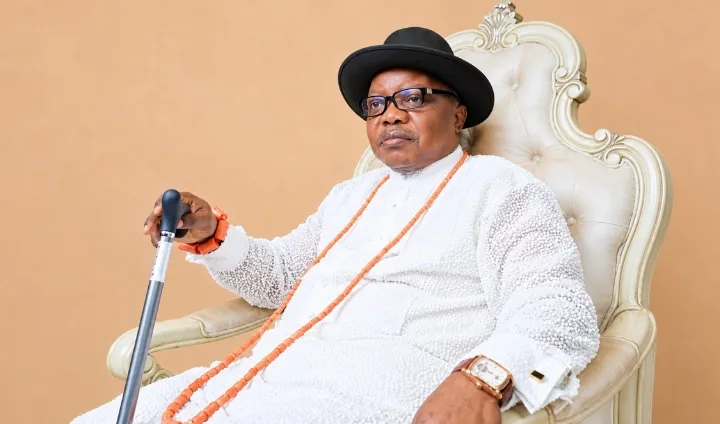
As Nigeria joins the rest of the world to mark World Press Freedom Day (WPFD) 2026, a former National Secretary of the Nigeria Union of Journalists (NUJ), Shu’aibu Usman Leman, has stressed that press freedom remains central to peace, stability and national development.
Speaking on this year’s theme: “Shaping a future at peace: Promoting press freedom for human rights, development, and security,” he said the safety of journalists is directly tied to the stability of the state.
He warned that suppressing the media creates conditions for misinformation, distrust and conflict to thrive.
“Peace is defined by the presence of truth, not the absence of conflict. Without honest public discourse, a society can neither mend its past nor build its future. The safety of the journalist is inextricably linked to the stability of the state, and peace itself cannot be sustained on a foundation of enforced silence,” he said.
Reflecting on the state of journalism in Nigeria, he described the environment as increasingly hostile, marked by intimidation, harassment and unlawful detention of media practitioners.
Drawing from his book, Bleeding Ink, published to commemorate the NUJ’s 70th anniversary, he said the experiences of journalists across the country reveal a troubling pattern.
“The accounts within its pages expose a grim, systemic pattern of intimidation, unlawful detention and harassment that too often culminates in the ultimate sacrifice.
“These are not isolated incidents or mere hazards of the trade; they are symptoms of a corrosive climate where the search for truth is treated as a provocation rather than a public service.
“In a nation navigating the complexities of peace-building and internal security, a muzzled press is a profound liability. When journalists are intimidated into silence, the damage goes far beyond the profession. The suppression of truth creates a vacuum of credible information, and in that vacuum, public trust disappears, institutions weaken, and misinformation and conflict take over,” he said.
Other News
He further alleged that security agencies, which are meant to protect citizens, are sometimes implicated in acts of intimidation against journalists, while unresolved cases continue to fuel a culture of impunity.
“We see security agencies, the very institutions tasked with our protection, occasionally implicated in acts of intimidation, while the failure to resolve cases of violence against the press reinforces a culture of impunity that emboldens the oppressor,” he added.
Leman posed a critical question on the country’s peace-building efforts, insisting that meaningful progress cannot be achieved in an atmosphere of fear.
“How can we build a future at peace when those tasked with informing the public must work in a permanent state of fear? The answer is simple, we cannot. Press freedom is a cornerstone of peace-building because it provides the transparency that holds power to account and the platform for dialogue that prevents conflict before it begins,” he said.
Despite the challenges, he commended Nigerian journalists for their resilience and commitment to professional ethics.
He called for concrete action from government and relevant institutions, including legal reforms and accountability for abuses against journalists.
“From the front lines of difficult environments to investigative desks uncovering corruption, our colleagues continue to uphold professional standards under conditions that would break many. Their bravery defines our media landscape, but it should never be a requirement for survival.
“The government must move beyond rhetoric and ensure real judicial accountability for those who target journalists. The legislature must urgently reform laws that are being weaponised to punish legitimate inquiry under the guise of national security, while security agencies must return to their core mandate of protection rather than persecution.
“There can be no sustainable development, no meaningful human rights, and no lasting security where the truth is silenced. A future at peace requires a press that is free, safe and independent. We have the ink and the will; what we need is the collective courage to ensure that our ink no longer has to bleed. The time to secure that future is now,” he said.