Follow Us on Google
By Adesuwa Tsan
When the Senate resumed plenary last week Tuesday after a three-week recess for party primaries, the atmosphere inside the chamber was markedly different from previous resumptions. Behind the routine exchanges of greetings and handshakes lay the reality that dozens of lawmakers had returned politically wounded. Some had lost their parties’ tickets outright. Others were battling disputes arising from contentious primaries. A few were still hoping that interventions from party leaders could reverse their fortunes.
The scale of the losses took a toll on the 10th Senate. Out of the 105 serving senators, only 60 secured return tickets for the 2027 general election while about 40 failed in their bids to return to the National Assembly. The losses cut across geopolitical zones, political camps and levels of influence within the ruling All Progressives Congress (APC), exposing the limits of incumbency and the growing power of governors and state party structures in determining political outcomes.
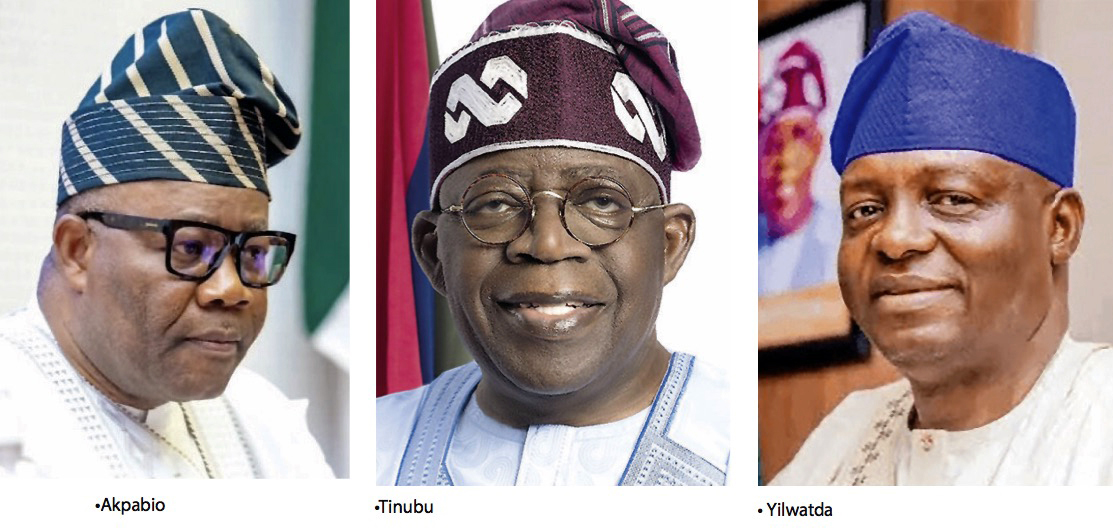
While welcoming senators back from recess, President of the Senate, Godswill Akpabio, acknowledged both the victories and disappointments that followed the primaries. “I felicitate particularly with those who have secured their mandates to represent their parties in the next election. I know that there will always be victories and disappointments, yet above every individual triumph stands a greater triumph, the triumph of democracy itself,” he said.
He then delivered what many interpreted as a direct message to senators who had lost. “And in this Senate, we are promised that we will have very few disappointments. And I do know that the Senate leader and the leadership of the Senate is working very hard towards that. So in advance, I will say congratulations to all of us across party lines.”
For a legislature that has spent three years relaxing oversight over the executive, passing major reforms and supporting the governing party’s agenda, the scale of the defeats came as a surprise to many of the losers. It exposed a fundamental fact about political power in contemporary Nigeria: the control of political destiny goes beyond pandering to the executive.
Akpabio’s attempt to revive hope amongst his colleagues with his assurance that “we are promised that we will have very few disappointments” sounded simple but tells a story that revealed the existence of a political problem extending far beyond disappointed senators.
Daily Sun gathered that the wave of defections that swept away the opposition from the Red Chamber was largely fuelled by promises of uncontested return tickets for members of the ruling APC. Others who had been able to build political structures in their states were also given the assurance of incumbency protection during their primaries.
Incumbency offered advantages that often discouraged challengers. These include access to resources, visibility, constituency projects to flaunt and influence within party structures that generally made securing a return ticket easier. This applied even more to former governors who had the financial war chest and ardent followers to oil their political wheels.
However, the 2026 APC primaries challenged that assumption. Former governors were unceremoniously defeated or removed, mostly by serving governors who moved in to install preferred candidates.
Consensus arrangements displaced competitive contests whilst screening committees became tools for the disqualification of unwanted aspirants.
In several states, intra-party rivalry came into play. The primaries demonstrated that a senator’s greatest threat no longer comes from opposition parties but from political actors within his own party. Senators such as Jibrin Isah, Danjuma Goje and Ipalibo Banigo discovered that legislative incumbency had become subordinate to broader party calculations. The implication is profound.
The whole scenario was further complicated by the Electoral Act trap. The difficulties facing defeated senators have been magnified by the Electoral Act 2026 which they passed with enthusiasm, apparently believing the opposition would be the only ones restrained by its amendments.
One of the most consequential provisions prohibits politicians from changing parties after membership registers have been submitted for the election cycle. Ironically, the same lawmakers who supported stricter anti-defection measures are now amongst those most affected. In previous election cycles, a defeated senator could immediately explore alternative platforms. Today, that route has narrowed considerably.
The consequence is that senators who lost primaries are politically trapped. Their fortunes depend largely on internal party mechanisms, litigation or intervention by influential leaders. This reality gives Akpabio’s promise additional significance because without meaningful intervention, many affected senators may have nowhere else to turn.
Other News
Whether by words or action, the Senate President’s attempt to intervene in the outcome of the primaries has come under question in many quarters. Perhaps the most important lesson from the primaries is the continued rise of governors as the dominant political force within the APC. The question therefore is how Akpabio intends to change their decisions.
Across multiple states, governors emerged as the ultimate arbiters of candidate selection and this trend did not begin with the 2026 primaries. It has been developing gradually since the return to democracy in 1999. Governors control state party structures, they influence delegate selection, command and deploy substantial financial resources and ultimately shape local political alliances.
By contrast, senators operate within narrower constituencies and often depend on the same state structures controlled by governors. Over time, this imbalance grew wider, with the latest round of primaries exposing the full reach of gubernatorial influence across different parties throughout the country.
But while governors may succeed in pushing their preferred aspirants forward, the implication is discord and rebellion within the party which may ultimately lead to electoral losses. Many of the losers are not political lightweights and may deploy their influence and followership against the interests of the party.
In Kogi, for example, Senator Jibrin Isah openly accused forces aligned with Governor Ahmed Ododo of frustrating his ambition. He publicly declared that “the battle line has been drawn” in a widely circulated video. The lawmaker’s reaction signals a breakdown in the otherwise cordial relationship between the two camps. Until recently, he had been a supporter of the incumbent governor and his predecessor, Yahaya Bello.
In Ogun, the political tussle between Governor Dapo Abiodun and former governor Otunba Gbenga Daniel led to the latter’s failure to secure a return ticket. In Imo, Governor Hope Uzodimma demonstrated the extent of gubernatorial power by overwhelming former governor Rochas Okorocha in the senatorial contest. Former Gombe governor Danjuma Goje also failed to dislodge Governor Mohammed Yahaya even in a re-run race. The message was unambiguous: the governors hold the advantage. They are even stronger following President Bola Tinubu’s effective handover of party structure to them within the ruling party’s hierarchy.
Akpabio’s intervention is significant because it acknowledges an uncomfortable reality. Before the primaries, Senate leaders reportedly reassured colleagues that they would not be abandoned politically. Many senators interpreted those assurances as confidence that consensus arrangements, negotiations or party interventions would protect them. The outcome showed otherwise.
By publicly declaring that the Senate leadership was “working very hard” to reduce the number of disappointments, Akpabio effectively admitted that a gap exists between expectations and reality. The statement also suggests ongoing efforts to manage the political fallout which could extend well beyond mere sympathy or solidarity.
It is also a matter of ensuring stability. A Senate with forty politically wounded members is potentially volatile. Some lawmakers may become disengaged or hostile to party leadership. Many still possess influence capable of affecting electoral outcomes in their states, so managing their grievances has become a political necessity. Yet there are limits to the power of the Senate.
The Senate President is undoubtedly one of the most powerful politicians in Nigeria, but he may not be powerful enough to reverse what the primaries have produced. Several factors must be considered. Candidate selection is fundamentally a party matter.
Governors have interests to protect, state chapters have preferred candidates and the APC National Working Committee must defend the legitimacy of the primaries. The presidency’s overriding objective remains securing President Tinubu’s re-election and maintaining party cohesion. In that hierarchy of priorities, the ambitions of defeated senators may not rank highly, particularly as governors exercise far greater control over the grassroots.
Akpabio can negotiate, persuade, lobby and seek accommodations but he cannot simply order governors to surrender tickets already won by their preferred candidates. That said, these efforts may yet yield positive results if credible bargaining chips are on the table.
What Akpabio cannot realistically be expected to do is restore lost tickets. What he can provide, however, is a political landing ground. Historically, Nigerian politics has relied on compensation as a conflict management tool through appointments, board positions, ambassadorial nominations, campaign roles, party offices and similar arrangements which often serve as alternatives when electoral ambitions cannot be accommodated.
For some senators, this may ultimately be the path forward. The fate of the defeated senators may well become a test of Akpabio’s standing within the APC power structure, a measure by which his colleagues will judge him not by the promise itself, but by the results that follow. These outcomes will shape the final months of the 10th Senate.