Follow Us on Google

From Shafa’atu Suleiman, Sokoto
The United Nations Children’s Fund (UNICEF) and the governments of Sokoto, Kebbi and Zamfara states have stepped up investments in children’s welfare through strategic interventions in education, healthcare, nutrition, immunisation and child protection.
The interventions, which have reached millions of children across the three states, are aimed at improving access to essential services and ensuring that every child has the opportunity to learn, grow and fulfil their potential.
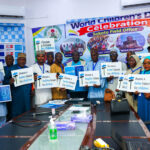
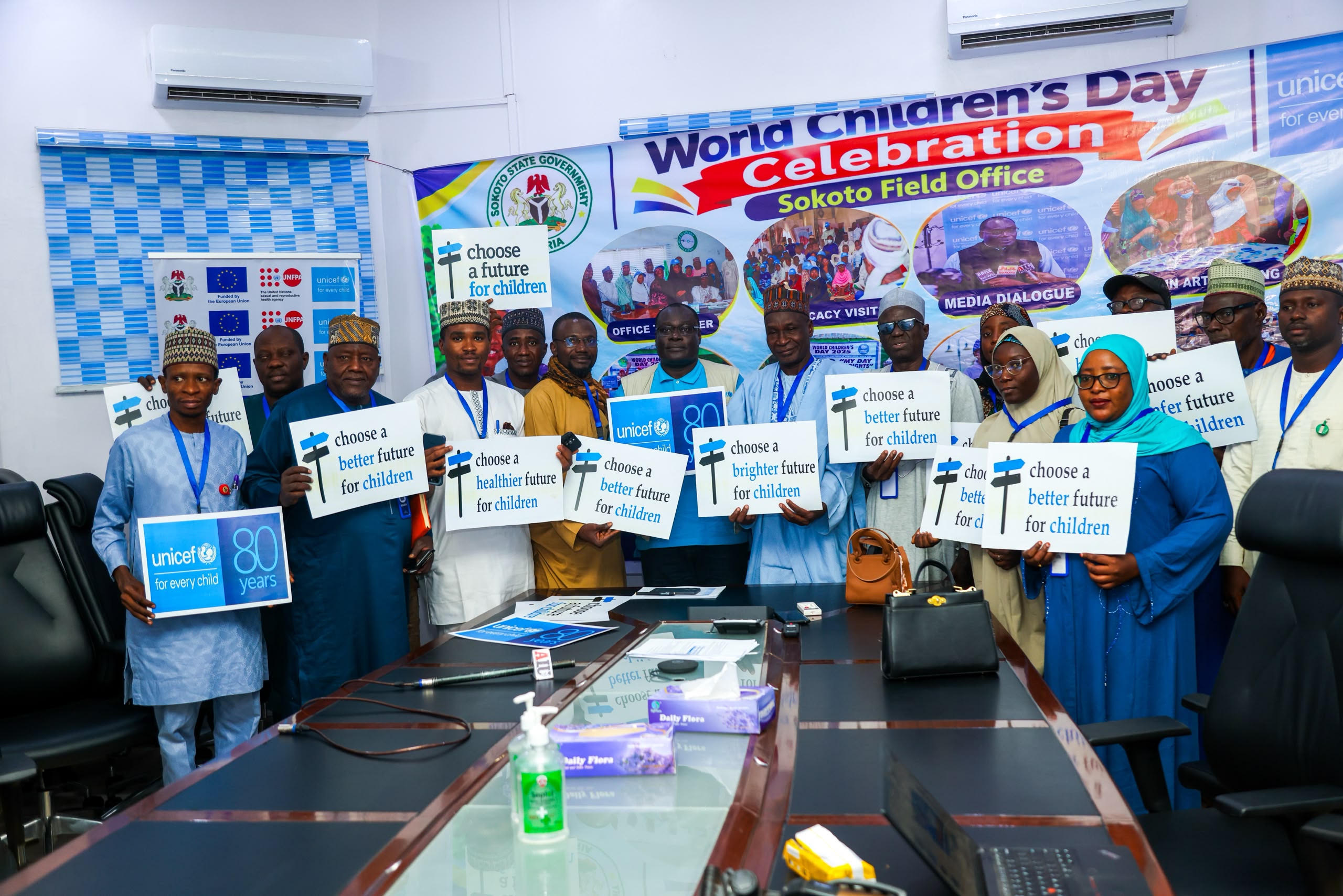
The Chief of UNICEF Sokoto Field Office, Dr Michael Juma, disclosed this during a media briefing organised by the organisation on Friday to commemorate the 2026 World Children’s Day, celebrated globally under the theme “My Day. My Rights. My Future.”
Juma reaffirmed UNICEF’s commitment to strengthening partnerships with government institutions, development partners, traditional and religious leaders and communities to advance children’s rights and improve their living conditions.
Highlighting achievements recorded through the partnership with the three state governments, he disclosed that UNICEF had supported the identification of approximately 624,000 out-of-school children, with about 68,000 already reached through school re-enrolment initiatives.
He also revealed that approximately 98,000 children had benefited from the Teaching at the Right Level (TaRL) programme, an innovative approach designed to improve foundational literacy and numeracy among pupils.
“UNICEF is also supporting teacher professional development, the provision of learning materials, accelerated basic education and integrated Qur’anic education, alongside innovative learning opportunities such as radio-based education and the Nigeria Learning Passport,” he said.
According to him, the initiatives are particularly important in reaching children affected by insecurity, displacement and other barriers to formal education.
In the health sector, the UNICEF Chief disclosed that approximately 7.8 million children across Sokoto, Kebbi and Zamfara had been reached through measles-rubella vaccination campaigns, while more than five million children received polio vaccinations during the last concluded campaign.
He further disclosed that Kebbi State had recorded significant progress in malaria prevention, with approximately 148,000 children receiving the first dose of the malaria vaccine and 130,000 receiving the second dose.
Juma said the organisation remained committed to strengthening routine immunisation and healthcare delivery to reduce preventable childhood illnesses and improve child survival.
On nutrition, he commended the Sokoto and Zamfara state governments for their commitment to tackling malnutrition through the provision of approximately ₦100 million and ₦500 million respectively for the procurement of Ready-to-Use Therapeutic Food (RUTF), used in treating children suffering from severe acute malnutrition.
He also applauded the Kebbi State Government for committing approximately ₦540 million towards free medical care for children.
Other News
Through social health insurance initiatives supported by UNICEF, he said, approximately 86,000 beneficiaries had been recorded in Zamfara, 18,000 in Sokoto and 10,000 in Kebbi, further strengthening access to essential healthcare services.
In child protection, UNICEF has supported the development of child protection legislation, Family Court Rules and social protection policies to strengthen the protection, rehabilitation and reintegration of vulnerable children, including children in conflict with the law.
The organisation has also supported the establishment of a Special Care Baby Unit in Sokoto State, with similar initiatives being advanced in Kebbi and Zamfara to improve healthcare for premature and low-birth-weight babies.
Juma noted that the achievements reflected the importance of sustained partnerships and collective investment in building stronger systems that protect children’s rights and improve their welfare.
He, however, stressed the need to sustain the momentum, particularly in ensuring that more out-of-school children return to classrooms and that vulnerable families have access to essential services.
On concerns over declining global development funding, he explained that the challenge was not limited to Nigeria, adding that UNICEF was expanding its resource mobilisation efforts to sustain support for state governments and essential programmes.
He nevertheless assured journalists that education programming across the three states had not been affected by the funding decline experienced earlier in the year.
The UNICEF Chief also called for stronger coordination among government institutions, development partners, civil society organisations, traditional and religious leaders and community structures, stressing that the protection of children required collective responsibility.
He particularly urged journalists to use their platforms to promote public awareness, highlight development achievements, amplify children’s voices and hold stakeholders accountable for commitments towards improving their welfare.
World Children’s Day is commemorated annually on November 20 to promote international togetherness, awareness of children’s rights and efforts towards improving their welfare.
UNICEF said this year’s theme, “My Day. My Rights. My Future.”, reinforces the importance of listening to children, respecting their voices and ensuring that their rights are protected through concrete actions.
The organisation reiterated its commitment to working with governments and other stakeholders to build a future in which every child, irrespective of background or circumstances, has the opportunity to survive, learn, grow and achieve their full potential.