Follow Us on Google

From Juliana Taiwo-Obalonye, Abuja
Public relations professionals have called for tougher accountability measures, including sanctions against practitioners who spread false information, as they warned that social media and artificial intelligence were making it increasingly difficult to distinguish facts from fabricated content.
They also cautioned young communication professionals against prioritising personal branding and online visibility over competence, professional training and demonstrable results.
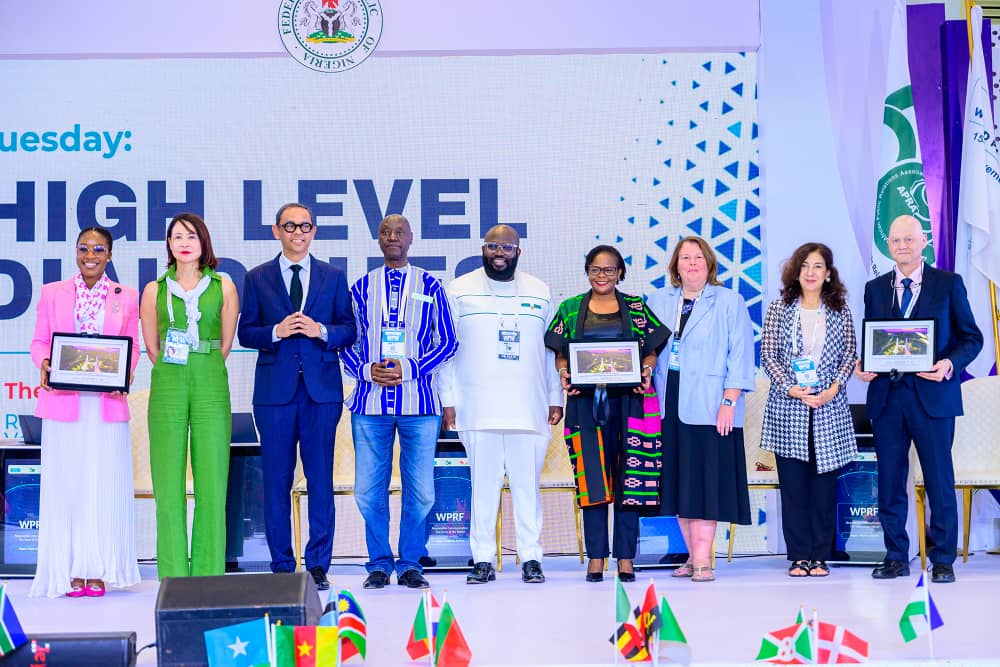
The experts made the call during a panel discussion on “Future-Proofing Responsible Communication in a Digital-First World” at the World Public Relations Forum (WPRF) 2026 in Abuja.
The panel featured the Managing Director and Chief Executive Officer of New Horizons Limited, Tim Akano; the creator of the PR Power List, Omawumi Ogbe; and the Secretary of the Zambia Institute of Public Relations and Communication, Nicolas Nkhuwa. It was moderated by Amrah Aliyu.
Speaking on the growing threat of misinformation, Akano said the democratisation of information through social media had created an environment where virtually anyone with a smartphone could publish content without editorial scrutiny or accountability.
He said the traditional media system, where editors and fact-checkers scrutinised information before publication, had given way to an era in which individuals could circulate unverified claims to millions of people.
According to him, the emergence of artificial intelligence had further complicated the situation, making it possible to manipulate images and generate fabricated content capable of misleading the public and damaging reputations.
Akano, who said his organisation had become Africa’s largest IT training firm over 22 years, noted that the shift in information consumption had also affected public trust, with social media increasingly competing with traditional media as a major source of news.
He cited a World Economic Forum report which, according to him, indicated that 56 per cent of people preferred consuming information through social media platforms.
He urged public relations practitioners to adopt two fundamental principles: verify information before amplifying it and acknowledge mistakes quickly and publicly when they occur.
“Anything you want to send out, you first verify,” he said, adding that delaying an admission of error could worsen reputational damage.
Akano also disclosed that he had stopped checking his phone immediately after waking up in the morning, preferring to attend to important tasks before engaging with the constant flow of digital information.
Ogbe, in her contribution, criticised the growing obsession with online visibility among young professionals, warning that many were more interested in building personal brands than developing the expertise required to justify their public profiles.
She said credibility was earned through consistent performance and tangible contributions, not merely by describing oneself as an expert or accumulating social media followers.
“Trust is an action word. It’s built. We talk too much. We need to start doing,” she said.
The creator of the PR Power List, which recognises outstanding public relations professionals, said the initiative was deliberately designed around research and independent assessment to ensure that recognition was based on merit rather than personal connections or self-promotion.
She advised young practitioners to concentrate on acquiring professional skills and delivering quality work before seeking public recognition.
Other News
“Many people want to brand before the substance. Do something credible before you start to show, so to speak. Really get your work together,” she said.
Ogbe also called for stronger professional regulation, arguing that the low barrier to entry into public relations had allowed untrained individuals to parade themselves as practitioners.
Responding to a question on how professionals spreading damaging information could be held accountable, she said professional associations such as the Nigerian Institute of Public Relations (NIPR) had an important role to play in enforcing standards.
She advocated appropriate sanctions and punishments for misconduct, particularly where individuals deliberately disseminate false information for financial gain, engagement or online popularity.
Nkhuwa, who also heads the public relations department of Zambia’s Examinations Council, warned that the digital footprints young people were creating today could have far-reaching consequences for their personal and institutional reputations.
He disclosed that his organisation had recently been confronted with fabricated correspondence purportedly issued by the institution and signed by its chief executive, although the name attributed to the supposed chief executive did not even exist.
He said he advised his chief executive against responding publicly to the fabrication, explaining that such a response could inadvertently give the false information greater publicity.
Instead, he said the institution relied on the trust it had built with its audiences, some of whom immediately challenged the false publication on its behalf.
According to him, the experience demonstrated the importance of establishing credibility and maintaining strong relationships with stakeholders before a crisis occurs.
He urged young people to understand that every post, comment and digital interaction contributes to the reputation they are building for themselves, their organisations and their countries.
“Every single click that you make and every single message that you post, you are actually creating a narrative about yourself and about your country or your institution,” he said.
Nkhuwa further warned that, as artificial intelligence becomes more sophisticated, information available online could influence how individuals and organisations are perceived in the future.
He therefore urged young content creators to be deliberate about the information they consume and distribute rather than share everything simply because it is trending.
Earlier, the moderator, Aliyu, described smartphones as the new newsrooms, printing presses and broadcasting stations, noting that the digital revolution had eliminated many of the financial barriers that previously restricted access to global audiences.
She, however, questioned how the public could determine which sources to trust in an environment where virtually everyone could publish information and go viral within seconds.
The discussion ended with a collective call for responsible digital engagement, with participants encouraged to adopt the principle: “Pause, verify, then share.”