Follow Us on Google


By Josfyn Uba
She came from a family where her father thought she did not count because she was a girl. She felt neglected by him most of the time, as she could not understand why she was not accepted because of her gender.
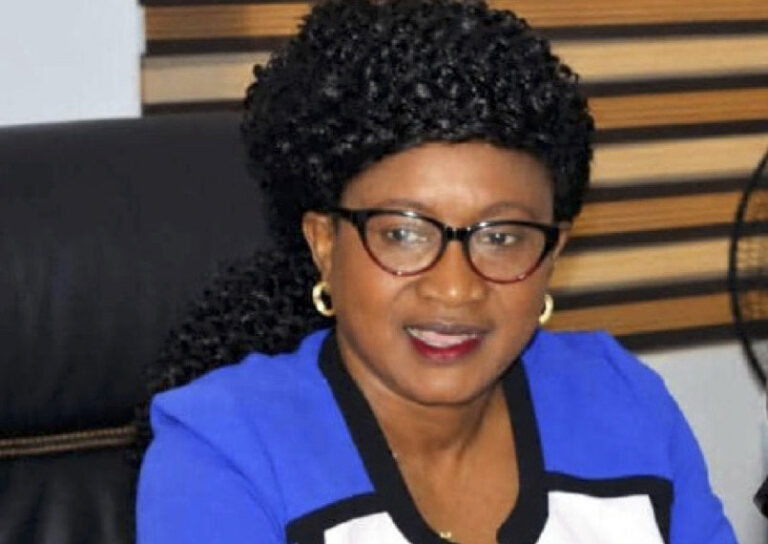
Today, as a survivor of childhood neglect and trauma, she passionately speaks to audiences of women and girls, raising their visibility and making a meaning of their purpose to influence the world for good. She is a woman full of ideals, with strength over adversity, and imperfections turned to benefits, Her vision is to support 500 African girls to attain education and she intends to create as many life skills courses as possible to empower women at all levels.
Welcome to Dr. Adesayo Adelowo’s world. She is the founder of Fragrance of Influence, where she spoke to Daily Sun about her quest of over two decades to help girls through teaching, providing practical tools and imparting knowledge, using her personal experience.
Why is it important to ensure women and girls are empowered?
In most cultures, women are considered second class citizens, the weak, dependent, frivolous, seductive, and foolish ones. They are thought particularly to be incapable of foresight and to lack the capacity to make and carry through sensible and realistic plans.
Women and girls suffer all forms of violence in the public and private spheres, including trafficking and sexual and other types of exploitation and harmful practices such as child, early and forced marriage and female genital mutilation.
However, women can be powerful agents of change. In this light, it is pertinent that ensuring women’s and girls’ human rights is fully realized and their empowerment has a transformative and multiplier effect on sustainable development. Empowering women will ensure their full and effective participation and equal opportunities for leadership at all levels of decision-making in political, economic and public life.
It is important to have gender equality and women’s empowerment and the full realization of human rights for women and girls, as they impact on transformative and multiplier effects on sustainable development. They drive economic growth in all nations.
What have been some of your unforgettable experiences, positive and negative, about the plight of women and girls?
I come from a family where my father thought I did not count because I was a girl child, I did not have an emotional support from my father, he was not interested in my well being at all. I felt neglected by him most of the time and I felt trauma because I could not understand why he was not accepting of me because of my gender.
When I turned 16, these were days of trials and darkness. I had passed enough subjects at O-Level to gain admission into a university but because I did not apply for JAMB, I had to find something to do before the next JAMB exams, but my dad had different plans for me. Firstly, he advised that I should go to Grade 2 teaching college, because that was what one of my uncles and cousin did. I did not even see any sense in that suggestion, so I did not consider it. After that he was able to find me employment at Ondo State Broadcasting Company as a radio broadcaster. That was a very elegant job then, in 1985, but because I knew his plans for me, just to get rid of me, I declined the offer.
Why did I decline the offer? I remember that when my sister completed high school, my father was able to find a job at the National Post Office, Akure, for her, and after a short while he found a man who was genuinely in love with her, and my sister got married at 20. I am sure that was my father’s plan, start work as a broadcaster, work for a while and get married. Sincerely, marriage did not appeal to me at that stage, and I did not want anyone to sabotage my journey. So, I turned down his offer, left home, I did not know where I was going but it felt like I had to run for my life, so I did.
A positive experience for me was when I got married and I have two girls who are accepted and nurtured by my parents in love, it was like a dream having given birth to my girls and I watched how my husband and his celebrated and nurtured them. Another sad unforgettable episode was when I heard that my cousin passed in her sleep because she had concussion, apparently, she had suffered brain damage because of physical violence and abuse from her husband, indeed, it was so difficult for me to grapple with.
What are the gains of the past two decades and where are the areas women need to focus on in the decades ahead?
For millennia, women endured inequality, discrimination and violence in relative silence. Issues affecting half the human population went neglected by predominantly male policymakers, historians, artists and leaders. But, recently, because of technologies, women have been able to share their experiences more widely than ever before. Anger over these injustices began to smoulder and then ignite.
Some years back, girls were not considered worthy of continuing their education but were rather sent off for early marriage. That has changed drastically. Now, there are women with college degrees, working and succeeding and leading. More young girls are given opportunities to grow and learn.
Previously, in some countries, women were not outspoken about gender-based violence and domestic abuse. With more awareness, we see today’s women coming forward and taking the future in their own hands.
As women’s voices rise into a global chorus, they are not only addressing gender-based violence. They are also rejecting centuries of stigma – calling for an end to period shame, for better access to feminine hygiene supplies, and for better data on long-neglected women’s health issues like post-partum depression and gynaecological disorders. These changes have been accompanied by a rise in the status of women and girls.
Where are the gaps?
It is important for women to work and earn money so that they can meet their own needs and help cover household expenses.
Around the world, women need to be empowered to take on roles that were once beyond reach.
Feminist economics should work harder to reshape how policymakers understand women’s roles in the world, drawing attention to the unpaid work still disproportionately done by women. Unpaid domestic and care work falls disproportionately on women, restraining their economic potential as the COVID-19 pandemic additionally affects women’s jobs and livelihoods.
Although women are increasingly seeking to become policymakers themselves, they still lag behind men in elected positions.
Twenty-five years since the adoption of the Beijing Declaration and Platform for Action, progress towards equal power and equal rights for women remains elusive. No country has achieved gender equality.
Women continue to be underrepresented in the fields of science, technology, engineering, and mathematics, representing only slightly more than 35% of the world’s STEM graduates. Women are also a minority in scientific research and development, making up less than a third of the world’s researchers.
What are the big lessons of life you have learned in the past two decades about women and womanhood?
Other News
Women are uniquely designed by God to be strong. However, we have been conditioned by the society to think less of ourselves and to think more of every other person. I have learnt that it is important to love my neighbour as myself, which means, if I do not love myself, I have nothing to give to the other person. I have learnt never to underestimate myself or prioritise everyone’s need and I attend to me last.
I have learnt that, as a woman, people may doubt me, even those closest to me. However, it is more satisfying when I accept myself and approve of myself, then I do not need to be worried if no one approves of me.
What was the defining experience or motivation for founding Fragrance of Influence?
When we are born, our voice is the first sign of life. We enter this world hardwired to communicate through our voices. It’s as natural as breathing, I assume for some more than others. Somewhere along the line, many women become quieter and silenced as a result of negative experiences caused by discrimination, marginalization and oppression of all kinds.
In a culture that celebrates distraction over focus, women’s identity becomes a product of imposed cultural and social process and political relations. Their identity brings the possibility of being discouraged and frowned upon because they are deviants from the prevalent and acceptable form (the male child).
Personally, I have experienced how women are allowed only to maximize their potential, so far as it does not challenge nor violate the norm. Women are powerless, defined, delineated, captured, understood, explained, and diagnosed using the scale of the norm, patriarchy.
So, it becomes a matter of production over purpose, and noise over listening, because of these errors and evils committed against women, many women find their voice lost, compromised, and even ridiculed.
However, women are made in the image of God to reign and rule over the earth and God blessed them and commanded them to be fruitful, multiply and replenish upon the earth. Unfortunately, the society has its own inferior mandate for women. There are many contradictory voices to the voice of God. Most women have been robbed of the strength to challenge these contradictory voices, rather, they succumb to listening to such voices, making it hard to hear and trust their own.
Let us talk about your vision, why you think it is attainable and how you are going about it.
My vision is to support 5,000 girls who are from disadvantaged backgrounds in their education. The support could be in the form scholarships and of education in socio-emotional and life skills needed to navigate and adapt to a changing world and make decisions about their own lives.
Girls’ education goes beyond getting girls into school. It is also about ensuring that girls learn and feel safe while in school, have the opportunity to complete all levels of education, acquiring the knowledge and skills to compete in the labour market, learn the socio-emotional and life skills necessary to navigate and adapt to a changing world, make decisions about their own lives and contribute to their communities and the world.
The question is, how many education institutes guarantee this wholistic perspective? Very few, of course, and if there are any, it would be at an enormous cost to the child’s parents.
The big goal would be to develop a Purpose to influence school for Girls by 2030 and provide a fully funded education for girls from disadvantaged backgrounds. This will transform the lives of 5,000 girls through a fully funded, wrap-around, boarding school education. I am convinced that girls deserve the opportunities. The more girls are helped to become leaders and role models, the better off our society will be. Transformed by the power of an excellent education, these girls will become the mothers, achievers and change agents.
How will you attain this goal?
I believe in the power of vision, if I can see it, I can have it, further to this, I am collaborating with some individual, non- for-profit organization to harness resources for this goal.
What various ways have you been using to communicate to women and how effective has each been?
I communicate to women through lectures both physical and virtual, secular, and church conferences, social media platforms, and I have published two books on Fragrance of Influence as it relates to women and leadership.
It has been effective because I have seen women’s lives been transformed as they embrace the truth that they are on earth on a purpose and they have the mandate to design their desired lives.
What is your philosophy of life? And how do you justify it?
I believe I am responsible for my own life — no other person is responsible for how I turn out to be in life. I believe men and women were created equally, and each deserved as much as another.
I believe a woman should be courageous and be willing to make compromises and concessions to selflessly serve their families.
I believe children are paramount, they deserved to gain quality education, be happy, and nourished in a safe environment.
What is your advice to young women aspiring for a fulfilling life?
A fulfilling life demands constantly focussing your attention on the things that are significant to you, especially on the values upon which you want to build your live; the characteristics of the person you desire to be, and the mark that you feel most called to make.
For a woman to live a fulfilling life, she has to be aware of her identity, that is, who she is and whose she is, and draw on reserves of gold in form of strength, courage, creativity, and resilience that has been deposited in her and invigorate her courage to maximise her potential and the influence the world.
How do you think individual, institutions and government can contribute to the effort to make the world a better place for women and young girls?
The whole world must accept that women have the mandate to reign and rule and that leadership is not necessarily a result of inherent birth traits in the personality and nature of the individual, nor to be reserved for men because men naturally were more fit to rule and lead, instead, women and men are, and should be leaders because God created humankind to lead and rule.