Follow Us on Google
By Christy Anyanwu
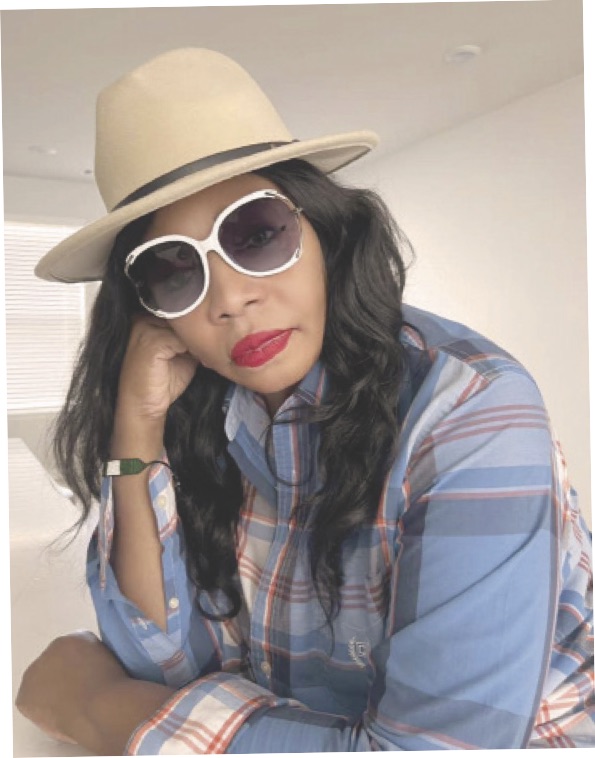
Aju Elumelu James focuses on women empowerment, youth development and social justice. She is an international artiste, songwriter, motivational speaker and certified nurse who is devoted to helping youths in general.
She has worked in corporate America and is a seasoned sales and marketing professional with over 15 years’ experience in business and market development. Today, her interest is tilted towards Nigerian politics, advocating for more women getting into political office in forthcoming elections, a cause she champions through her Aju Morgan Elumelu Foundation.
In this interview you get to know more about this outstanding, remarkable but unassuming woman.
How would you describe yourself and your background?
I am a bridge-builder—a strategist, advocate and servant-leader driven by a deep-seated belief in equity and transformational change. My background is a tapestry woven from the structured discipline of healthcare and the dynamic pulse of political advocacy. As a healthcare professional in the United States, I learned the power of empathy, precision and urgent intervention. Today, I apply those same principles to Nigeria’s political landscape—diagnosing systemic barriers and prescribing actionable solutions.
What are your interesting traits, what makes you tick or turns you off?
What makes me tick is impact through action. I am energized by turning vision into tangible outcomes—whether it’s training women to run for office or shaping policies that include those often left behind. I thrive on collaboration, innovation and the audacity to challenge the status quo.
What turns me off is complacency and exclusion. I have little patience for empty rhetoric, tokenism or systems that silence women’s voices. Injustice isn’t just a concept to me—it’s a call to action.
You were based in the US and worked as a medical practitioner, but your passion now is tilted to Nigerian politics. What prompted the switch?
Medicine taught me to heal one person at a time. Politics, however, offers the opportunity to heal entire communities—and nations. My transition wasn’t a switch but an expansion of purpose. While in the US, I remained deeply connected to Nigeria’s socio-political pulse. I saw a gap between the potential of Nigerian women and the platforms available to them. I realized that, to create lasting change, I had to step into the arena where decisions are made—the political space. This is not an abandonment of healthcare values but an application of them: diagnosing systemic illness, prescribing structural reforms and healing democratic participation.
What inspired you to start the Aju Elumelu Foundation and the 35% women’s representation initiative?
The inspiration was born from two realities: the glaring under-representation of women in Nigerian governance and the untapped potential of women who are ready to lead but lack the tools and platforms. The Aju Elumelu Foundation was created to be that platform—a vehicle for strategic investment in women’s political and economic agency.
The 35% initiative is not just a number—it’s a threshold for transformative influence. Research globally shows that when women make up at least a third of decision-making bodies, policies become more inclusive, corruption decreases and governance improves. We are not asking for a favour—we are asserting a necessity for Nigeria’s future.
Do you think women have what it takes to come out en masse for political positions, even with this push for 35% representation?
Other News
Absolutely—and they already are. What women have lacked is not capability but structured support, safe pathways and equitable financing. When you see the resilience of Nigerian women in business, education and civil society, you are seeing the same qualities required in politics: intelligence, integrity, innovation and immense resolve. Our role is not to convince women they are capable but to dismantle the barriers that have historically excluded them. With training, funding and collective backing, women will not only come out—they will also win.
What lessons have you learnt about life, in your career as a nurse and in politics?
From nursing, I learned that every life matters, every voice deserves to be heard and urgency saves lives. In politics, I’ve learned that systems dictate outcomes. You can have the best intentions, but without strategic navigation, change remains elusive. Both fields have taught me resilience—the kind that doesn’t just bounce back but moves forward with greater clarity. Most importantly, I’ve learned that leadership is service, and power is best used when it uplifts others.
What were some of your memorable moments growing up in Nigeria before you journeyed to the US?
Growing up in Nigeria imprinted on me the vibrant energy of community, the power of storytelling and the resilience in our culture. I remember marketplaces buzzing with women traders—entrepreneurs who managed households and businesses with incredible grace. I recall discussions around the radio during elections, sensing early on that politics was about people’s lives. Those formative years instilled in me a deep sense of place, purpose and pride—a foundation that anchors all I do today.
What advice would you give to young women who are interested in pursuing political office in 2027?
Start now. Build your capacity, your network and your narrative. Join our She Leads Naija Run to Win Academy. Understand your constituency deeply—its needs, its voice, its heartbeat. Develop a clear, actionable agenda. Align with mentors and allies who amplify your purpose. And, above all: run to win, not just to participate. Your ambition is valid, your voice is necessary and your leadership is non-negotiable for Nigeria’s future.
What message do you hope to convey to young girls and women around the world who may be inspired by your example?
You are the architect of your destiny and a co-builder of our shared future. Do not wait for permission to lead. Do not shrink from spaces meant for you. Your gender is not a limitation—it is a lens of strength, empathy and innovation. Whether in politics, science, business or the arts, own your story, claim your seat and remember: the world changes not when voices are given to the silent but when the silent decide to speak—and lead.
What role does your family play in supporting your endeavours? Do you have any particularly close relationships or mentors?
My family is my fortress and my compass. Their unwavering belief gives me the courage to take bold steps and the humility to stay grounded. I am also blessed with mentors—seasoned leaders in governance, activism and development—who guide me with wisdom and challenge me with honesty. Together, they remind me that legacy is not built alone, but through collective courage and shared conviction. Let’s build a Nigeria where every woman’s potential is not just recognized but realized. Together, we rise.
What is your next step with respect to where you will take Women for 35%?
After our launch , we resolved to expand the Women for 35% movement to all local government areas across the country, and we have successfully achieved this objective.
We now have coordinators in all 36 states, a milestone that has strengthened the structure of the movement and enabled me to focus on completing my book titled Power & Prejudice.