Follow Us on Google

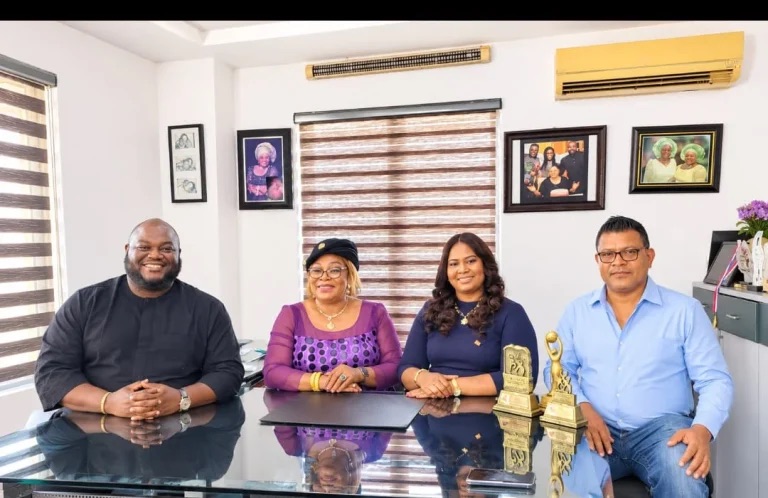
Women in Management (WIM Africa) has called for greater inclusion of women in policy formulation and economic decision-making, insisting that women must be actively involved in shaping policies affecting their lives rather than being treated merely as beneficiaries of government interventions.
The organisation also demanded improved access to land ownership, affordable financing and public procurement opportunities, arguing that barriers preventing women from participating fully in economic activities must be dismantled to unlock their contributions to national development.
President of WIM Africa, Dr Ngozi Oyewole, made the call at the Top50 Global Economic Forum 2026 in Lagos, yesterday, where the Federal Government outlined measures to expand women’s access to capital, markets and social protection, including credit guarantees, agricultural financing and a $50 million initiative to connect women exporters with international markets.
Oyewole maintained that women deserved representation wherever decisions affecting their economic and social interests were taken, stressing that meaningful empowerment required their participation in policy development and implementation.
“Every decision concerning a woman, we would like a woman to be on the table where decisions are made. When policies are made, we would like women to be a voice in those policies,” she said.
She urged the government to strengthen women’s property rights, improve access to land and address discriminatory practices, including religious biases, that restrict their participation in leadership and economic activities.
According to her, women’s contributions to the economy extend far beyond formal leadership positions, particularly at the grassroots, where they play critical roles in agriculture, trading and other productive activities.
“The women down the grassroots are the ones who are indeed feeding the nation. That’s where you have the farmers. That’s where you have the women who are proper decision makers, because I tell you, without them, there will be no food in Nigeria,” Oyewole said.
She explained that WIM Africa was working to connect women at the grassroots with business leaders, policymakers and institutions capable of helping them gain access to markets, financing and other economic opportunities.
Oyewole also demanded greater transparency in public procurement, urging government institutions and corporate organisations to publish contract opportunities early, clearly state qualification requirements and ensure prompt payment to suppliers.
She said women-owned businesses required financing arrangements that reflected their operational realities, particularly working capital to execute confirmed orders and longer-term funding to purchase equipment and expand production.
Responding to concerns about women’s economic exclusion, the Minister of Women Affairs and Social Development, Imaan Sulaiman-Ibrahim, said the Federal Government was implementing measures to address limited access to credit, markets and other opportunities confronting women-owned enterprises.
“Empowering women and protecting the vulnerable is not charity. It is economic policy,” the minister declared.
Represented by the Director-General and Chief Executive Officer of the Mariam Babangida National Centre for Women Development, Adedayo Benjamins-Laniyi, Sulaiman-Ibrahim said Nigerian women operated more than 23 million micro-enterprises but owned only about one in seven formal businesses.
She added that only about one in 10 women accessed formal credit, while unpaid care work, predominantly undertaken by women, represented an estimated economic value of up to $111 billion annually.
The minister described the situation as a major development challenge requiring targeted investments, improved access to financing and policy interventions to remove structural barriers.
She disclosed that women participating in savings groups under the Nigeria for Women Programme Scale-Up had mobilised more than N8.1 billion in savings and accessed over N8.2 billion in loans.
According to her, the programme, co-financed by the World Bank and participating state governments, was designed to strengthen women’s economic participation and expand access to financial services.
Sulaiman-Ibrahim also said the GuaranteeHer window of the National Credit Guarantee Company covered 60 per cent of the risk on loans extended to women-owned businesses, while women farmers were accessing financing through the Bank of Agriculture at interest rates below 10 per cent.
She further disclosed that the Federal Government was collaborating with the Ministry of Industry, Trade and Investment on a $50 million Women Exporters in the Digital Economy initiative aimed at connecting Nigerian women entrepreneurs with regional and international markets.
Beyond access to finance, the minister said the Federal Executive Council had approved three national policy instruments on October 28, covering child protection, menstrual health and the care economy.
She explained that the National Action Plan on Ending Violence Against Children would strengthen preventive measures across the states, while the National Care Policy and Implementation Plan would establish standards for childcare and elderly care.
The care policy, she added, also provided for a National Care Digital Platform to be developed through a public-private partnership and the establishment of a National Care Fund.
Sulaiman-Ibrahim urged private-sector organisations to complement government efforts by extending credit to women entrepreneurs, investing in local manufacturing and the care economy, and opening procurement and supply-chain opportunities to women-owned businesses.
“Government cannot do this alone, and it should not try to,” she said, urging businesses to provide financing, invest in productive sectors, patronise women-owned enterprises and protect their supply chains against trafficking and forced labour.
Also speaking, Founder and Global Chairperson of Women in Management, Dr Sulochana Segera, said the forum and the Professional and Career Women Global Awards were designed to connect women at the grassroots with influential leaders, business networks and opportunities across the world.
Segera disclosed that the 16th edition of the awards marked the first time the event was being held on the African continent, describing the development as an opportunity to increase African women’s visibility and participation in international business.
She explained that participants from different countries were expected to represent women in their communities who could not attend the event and help create opportunities for their products and businesses.
“Same way for Africa, it’s not only about women who speak here, it’s about the woman who has no voice but who has a stage waiting for them,” Segera said.
She maintained that the platform was intended to bridge the gap between women operating at the grassroots and those occupying influential positions in business and public life, while promoting wider access to economic opportunities.