Follow Us on Google
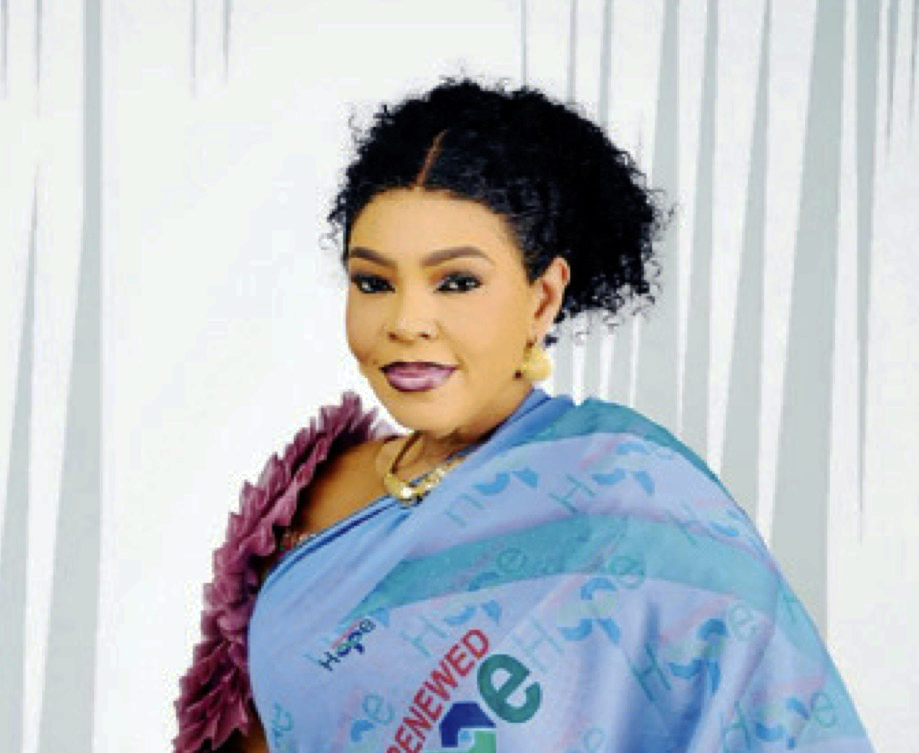
•It’s shocking there’s only 5% of women in governance in Nigeria
By Christy Anyanwu
Dr. (Mrs.) Mary Alile Idele is the National Women Leader of the All Progressives Congress (APC). She is a scholar, pastor, philanthropist and entrepreneur, among others
Dr Idele, fondly called Capacity, is a PhD holder in Philosophy from Louisiana Baptist University, USA.
As a political influencer, she has advocated social justice, equality and women’s participation in politics across facets in the nation.
In an interview with Sunday Sun in Benin City, Idele, who is the current chairman of the Federal Medical Centre, Asaba, Delta State.talks about her roles in shaping policies, as well as perceptions about women in governance, among other issues.
How did you earn your second term as APC Women Leader?
I came in to complete the tenure of the former National Women Leader, Beta Edu, when she became the Minister of Humanitarian Affairs. She had two and a half years left on her tenure. So I completed that tenure and then there was a convention, which just recently happened, and I won the election, returned unopposed for the position of the National Women Leader.
What did you do for the women that made them re-elect you?
For me, people say I’ve done very well, but I did my best and I did things differently this time around. We’ve had national women leaders and I’m sure everybody has done the job to the best of their ability.
I wanted to do things differently. I wanted to introduce new ideas, new strategies, new policies, different ways of doing things so that we can get different results. And that’s what I did.
In order for us to carry our APC women along in what we’re doing, we needed to create opportunities for women to shine, to show their capacity in every ramification. So I created a lot of programmes.
An example of such programmes is what is called 774 Explode, a programme that is to expand women’s participation in politics. That was a programme that went across different states of the country. I worked with the governors of the states to empower our women and to introduce women that are educated into politics.
Because we can continue to shout about reserved seats and we can continue to shout about 35 per cent affirmation for women, but if we don’t have women that are educated and genuinely interested in politics, it is of no use. It’s all good to be beautiful, but at the end of the day you need to sit at the table. And it’s not always just sitting at the table, you need to participate in discussions.
You need to understand politicking. You need to understand strategies, policies and how to make these decisions.
If we look at the game of politics, many of us, myself included, grew up to accept the saying that politics is a dirty game. And because of that, parents shielded their daughters from playing politics. Their father would say, never in my lifetime.
And that made our women not to participate in politics. Because, of course, “it’s a dirty game”. Why would you be there? Of course, somebody will call you a prostitute. Why would you want to be in a place where somebody would look at you and say, ‘Oh, we think you are a prostitute,’ and so on and so forth? So, because of that, women used to stay back. Women were not coming out.
So, they’ll put another male there. And that’s why you’ve seen a decline in the number of women participating in politics. And the cultural barriers have not helped. The religious barriers are not helping either. I grew up when pastors used to preach in church and say, ‘No, no, no, nobody should (go into politics), no, no, no, politicians are dangerous, don’t go near them,’ and things like that.
And that’s where we are now, where we do not have many women playing politics.
Mothers need to start sitting down and saying, ‘Okay, if my daughter is not there at the decision-making table, any decision goes’; they might sit down and say, if you are a 12-year-old girl, you can get married. Those in support, say Aye. They say Aye, and that’s about it. It’s passed into law.
So, where is the girl-child in all this? Where is our representation? Where is the female voice in all this?
That is what the project is all about. And that project was successfully done in so many states, kudos to the APC governors. They supported us, and we did that.
One of the major barriers is finance. For instance, if you want to contest for a seat, you need to pay for your nomination form and your express of interest form. Your flyers are not cheap. Media is expensive. Somebody that you are calling to come and sit down in meetings all day, well, those are expensive.
And you, as a woman, have your first priorities and commitments to your children and your family. So, if you are not financially buoyant, how do you survive in politics?
They say politics is a man’s world because of these facts, because of finance, money and every other thing. All these things were what we looked at when we spoke to the governors and they supported this programme. It was a huge success in many states, such as Benue, Sokoto, Edo and Cross River.
And now we are going to Ondo, I think, in two weeks’ time. It’s a continuous programme. So, 774 has been a huge success.
We’ve done other things like the Older Citizens’ project. We looked at women that were like our mothers. They were politicians and they played politics. And then after that, who calls them for meetings? What else? And their position is taken from them, given to another person, and they are just forgotten like that. The Older Citizens, that’s another project that we introduced and we now have Older Citizens Network and so on and so forth.
There are other projects like that. There was another one where I partnered with Heart Bible University in Texas, and we gave scholarships to 3,600 Nigerian girls to study in the U.S. We want them to be active in politics. There are quite a lot of projects, which I did in those two and a half years.
How are women faring in politics, in terms of appointments, under President Bola Tinubu?
I would say that His Excellency, President Bola Ahmed Tinubu, is a gender-friendly President. He is pushing for more seats. He has made mention of these reserved seats, passing the bill and all that.
In our NEC meeting, he openly challenged the governors, and he openly applauded the governor of Niger State, I believe, who reserved the position of the vice-chairman in all the local governments of the state for women. And he commended him, and told the other governors, you guys should emulate him. And that’s what we’re trying to do.
And that’s one of the programmes that I’m championing, which is called the Twinning System. Twinning, that’s twins. The Twinning System means, if there is a male governor, there should be a female deputy governor.
If there’s a male chairman, the deputy should be female. And if there’s a female chairman, the deputy should be male. The Twinning System is something that I’m championing across board.
The reserved seats, he has also spoken about that. The First Lady, I think we all saw it when she hosted the House members to an elaborate dinner. She gave a very good speech telling them to pass the bill. The President has spoken several times, telling them to pass the bill.
It can’t be clearer than that. The bill currently sits in the House of Representatives. It has gone through first reading and second reading. It’s supposed to go through a third reading, and it has been postponed twice now.
We are waiting for that bill to go through the third reading before it goes in for presidential assent. And of course, we are doing everything possible. We are travelling across the country, lobbying the governors, because, at the end of the day, the senators are from the states.
They all came from our states. And the governors know them one-on-one. They know them personally.
So lobbying is what we are doing, telling the governors, ‘Talk to your people. You know them. You are the ones that put them there, the House of Representatives members and so on’.
Other News
So, the President, our President, is good to go on this increment for more women or creating space for more women in politics. We must look at statistics, because when we started this campaign or when I started this campaign, people were just saying, ‘Oh, national woman leader, she’s talking and she’s talking’. But we brought out statistics to let people see what’s going on around the world. In Rwanda, they have 65 per cent of women in governance. Tanzania, 40 per cent. South Africa, over 40 per cent. Now, if we go to Saudi Arabia, when you talk of Saudi Arabia, the first thing that comes to mind is that it’s a Muslim place. And if women can get up to 40 per cent in governance there, what is stopping Nigeria? Because, in Nigeria, we have just five per cent.
In fact, we are the last in Africa. And we call ourselves the giant of Africa. Being the giant of Africa, what is stopping half of the population of this country from participating in politics or to be part of governance? Besides, it’s easier to ask to be part of governance, but before you can be part of governance, you must be a politician. Nobody is coming to call you from your houses to say, ‘Oh, just come, come and occupy this office’, if you are not a politician. Even if you are so favoured and somebody pulls strings for you to get in there, you might just be there and be useless; there’s nothing to do, you don’t make any contribution. You sit at the table looking pretty and looking beautiful but contribute nothing.
On the other hand, it will be different, if women go through the ranks in politics. That’s why we’re saying women must come out. Women must play politics regardless of what the men have said. In my mentoring programme, that’s one of the things I do.
I mentor the next generation. I can go into a room of 1,000 women and I go there just to mentor them and sometimes my opening remark is, ‘If you are here and you don’t want to be called a prostitute, that’s the door. Just go out now because you will be called a prostitute’.
It doesn’t matter if you hold your husband to walk into a political committee, somebody will call you a prostitute. So, you don’t want to be aggrieved or to fight or to be annoyed and say, ‘Oh, I’m not playing this politics anymore. How dare he call me a prostitute?’
They will call you names so that you can get up from your seat and walk away and I can bet that, when you get up, three men will sit down on it. And that’s the thing.
So, look at yourself very well in the mirror and accept that those are the names they will call you. For now, we are still working on it, but that is just so sure. So, if you know that you don’t want to be called names, then you are not ready, absolutely not ready, to be a politician. Because if things are not going their way, that is the first statement they will make to your face, not even behind you, to your face and say, ‘Oh, prostitute like you’. And then it doesn’t matter. So, yes, it’s fine.
If being a woman means I am a prostitute, that also means your mum is one as well. So we move, but I’m not getting up from my seat.
Those are the things that we tell the next generation. Somebody will tell you, ‘Oh, this is dirty. As a posh lady, you don’t need to play this game’.
Somebody will tell you, ‘You are well-educated. Don’t play this game’. That’s why I say I have a PhD and I’m in this game.
We must be able to speak out and we must get more educated women into the game. My mother, she’s 80 years old now. She’s a politician, a very strong politician. She was a former senatorial woman leader for this state, in Edo South.
In their time, it was, ‘Come and clap and dance’. And once they finished clapping and dancing at the campaign ground, they shared N5,000 and they went home. So, whenever they were now writing the names in the rooms, they were not there.
By the time they would write the name, which is another barrier, it was by midnight. So, as a woman, where are you going at midnight? Somebody will tell you, ah, madam, are you sure? It’s not safe for women. Don’t go this time around.
But that is when they write the names. That is when they are having caucus meetings. That’s when they are holding inner meetings.
So, those are some of the barriers against women. I usually say this to one of my very good journalists. He would call me and say, ‘Ah, mama, we have an interview. You need to be at the studio. What time? Ah, you should just get there by 6:30am. That is discrimination because, by 6:30am, women are doing school runs.
You have three children in the house. What are you doing at 6:30? You are preparing your children for school. So if you are putting that programme at 6:30am, you are already discriminating against half the gender of Nigeria.
Have you tried to study why some other African countries have more women in politics and in governance?
That’s exactly where we are now. His Excellency, Ben Kalu, proposed this in the House: deliberate seats, that’s what happened in Rwanda. They deliberately put extra seats for women to sit down.
We are not saying the reserved seats bill means let’s reshuffle. It’s saying sit as you are, but put extra seats for women.
That is what we are doing. If we put extra seats, that will automatically create 36 extra seats in the House of Reps and 36 extra seats in the Senate. That’s the idea behind the reserved seats.
What that will do is that, for example, if we take a state like Edo State, when they are contesting for the House of Reps and contesting for the Senate, the reserved seat can only be contested for by a woman. That will bring 36 extra seats in both chambers of the National Assembly. At the same time, it will bring three extra seats to the House of Assembly. So in these countries, they deliberately put into action ideas that could make those seats to be exclusive for women.
In the House of Reps, for example, we have 360 seats but there are only 19 women. Out of 360, that’s a very poor representation, extremely poor representation. In the Senate, with 119 seats, we have four women. So there’s no way you will pass a law that the women’s vote will be heard because there are just four representing the whole of Nigeria.
However, if we have additional seats, that will make it automatic. Regardless, each year, there must be 36 women seated in these Houses.
Looking at the financial aspects, including elections, can politics be made easier to encourage women to participate?
I think a lot of political parties have done that. In APC, my party, we’ve done that.
Expression of interest form is the same thing for everyone. But the nomination form itself, in my party, for women, is half price.
For example, as national women leader, the nomination form for my seat as women leader was N5 million, but I paid N2.5 million because I’m a woman. Every woman that is contesting for any position pays half the cost. So, if a man is paying N10 million, a woman contesting for the same seat will pay N5 million.
But, outside that, because a lot of political parties have their own thing, in APC, the ruling party, that is something that everybody has applauded. Myself, I’ve applauded it and it’s something that is really, really gaining ground across the country for APC. Now, if we look at it further, there is a saying that power is not served a la carte.
You fight for power to get it. So, even you who want to contest, you must be bold. You must fight. You must do the needful in order to get that seat. You must say, okay, I’m ready. You must say, I can do it.
We continue to encourage our women. And that is why the Project 774 came into place, because it’s a purely financial empowerment programme where the governors assist. And I’m telling them, for example, in Edo State, we have 18 local governments. I said, give us 18 well-educated women to champion the Project 774 Explode.
And in that case, we are telling the governors, we want these women in the House of Assembly, as the councillors. But also, Mr Governor, you need to know that this is a financial implication. Our women in Nigeria, we are very hardworking. Give them money to start businesses. A lot of governors have done so with a minimum of N500,000.
You can give a woman N100,000, they will start a business and it will thrive. But governors have given them half a million to go and do business, get your money so that when you go to political meetings you can be recognised, even if it’s pure water you are buying, buy. Let people know you are serious. You too champion some programmes. That is where we are.
What’s your vision for 2026/2027 as the women’s leader, in case your party is voted in for a second term?
The vision is simple. I need the reserved seats bill for women to be passed into law. Whatever we need to do, lobbying, He-for-She, the men that will speak on our behalf, if we need to beg, we are begging, whatever we need to do, that bill must be passed; because that bill has been chucked out before in the 8th Assembly. It didn’t even make it through. This is the highest and the farthest this bill has gone at the third reading. So, we need to come back more powerfully than before, we need to let the men know we are not saying get up from your seats, we are not challenging them, we are just saying reserve a seat and let a woman sit on that seat.
How did you start your journey into politics?
I schooled abroad. My BSc, Msc and PhD were from abroad. Although I didn’t enter politics when I was abroad, I came back home one year for holidays and decided to visit the old people’s homes for Christmas giveaway. I went with one organisation. I had expectations of what the old people’s home should look like but when I got there I saw old women lying on the floor on a mat. It was a bad experience, a sight I would not forget in a hurry. That was how I started my NGO, Sister to Sister. That NGO is 10 years old; it’s in 10 countries around the world. That NGO empowered women and girls. My mom is a politician, my husband is a powerful politician, I just dived into it. I began what I was doing, empowering women and girl children with Sister to Sister, my NGO, doing a lot of programmes, a lot of empowerment and scholarships here and there, across the country and outside the country, I started playing politics as well. When it was time for Edo State to produce the national woman leader, somebody said, ‘she’s the one. She knows what to do.’
That’s how I became a politician and how I decided to be a voice for women. I saw women, I saw girl-children that missed the WAEC examination because they were on their period and they needed to go back home. In the villages, there are some stories you hear and you won’t believe this is really happening in 2026, where we have village schools with no rest room, when she’s having her period, she needs to go back home to change. She comes back and they have finished the English or Maths exams. She definitely would wait for another year to retake the exams because they didn’t have the means to do NECO, so they will wait for another year to write the same exam because she’s a girl child. Those stories don’t sit well with me. Those are the things that made me dive into politics.
What do you think about insecurity around the country, which creates more widows, orphans and displaced people?
We need to tackle it headlong. For instance, let’s assume there is a snake inside this sitting room. We will all jump, we don’t care who is going to kill it as long as somebody kills the snake. If you can kill it, kill it. We won’t say we are waiting for one brother to do it. That is what insecurity is all about. I don’t care who is tackling it as long as it is tackled. We have seen a lot of things that we can’t be proud of. Nigeria is a country with strong values; in our diversity we are good. We don’t want to now have a place where we are saying we cannot travel to a certain part of the country because of insecurity. Insecurity, kidnapping, taking girls from their hostels.
Bandits deserve capital punishment, maximum punishment for them all. Because, at the end of the day, they are destroying lives and the foundation of people.
‘Women-don’t-help-women has been a slogan in Nigerian politics. What’s your take on that?
That’s one of the things people tell me. I tell them over and over again that people will support good policies. It’s not all men that are supporting their fellow men. It’s not all women that would support women; people will support good policies. If you are brilliant, that would help a great deal. We don’t just want to present a woman for presentation’s sake. We want to see what you can bring to the table. Let me look at what you can deliver, let me look at your policies. Let me look at what you are talking about and then we say let’s support you. The fact that we say we don’t have enough women in politics and they say bring them out and you just bring one market woman as our House of Representatives member and then you want all of us to vote for the person? How? It is not about women not supporting women, even men. Men don’t vote for men as well. We must look into all these things but the highpoint of this is to look for capable hands that will deliver.