Follow Us on Google

The 2026 Osun State governorship election recorded a largely calm security environment in the opening hours of voting, but technical failures involving the Bimodal Voter Accreditation System (BVAS), reported vote-buying and isolated violence threatened to disrupt the process, the CLEEN Foundation said in a statement signed by its Executive Director, Peter Maduoma.
In its preliminary statement issued on Saturday, the election security observer group said its observers monitored polling units across the state and found that security officials generally demonstrated professionalism, neutrality and readiness.
However, CLEEN said the positive security assessment was tempered by reports of BVAS malfunctions, voter inducement and isolated incidents of intimidation, including an incident in which a police officer allegedly fired a teargas canister at voters at a polling unit in Modakeke, Ife East Local Government Area.
The foundation said the officer involved had been apprehended and was being interrogated by the police leadership.
According to the report, three incidents had been recorded through its separate Election-Day Violence Observer Log, with two reported in Ola-Oluwa and one in Ifelodun.
The incidents included two cases of verbal or physical intimidation without weapons and one case of vote-buying.
CLEEN stressed that the reports remained subject to further verification but urged security agencies to investigate them promptly and protect voters, party agents and observers at the affected locations.
The foundation’s assessment of the security situation was otherwise largely positive.
It said 86 per cent of monitored polling units had three or more security officials deployed, while 39 per cent of officers had arrived before 7 a.m.
Similarly, 98 per cent of reports indicated that security personnel wore identifiable nametags and service numbers, while 65 per cent of locations had officers with visible communication equipment for requesting backup.
The observers also rated security officials highly in their interactions with voters.
CLEEN said officers were considered approachable or very approachable in all the locations monitored, while 80 per cent were rated impartial or very impartial.
The overall conduct of security officials was rated good or very good in 94 per cent of monitored locations, while the atmosphere around the polling centres was generally described as calm, peaceful and orderly.
On security threats, CLEEN said no armed groups or political thugs were observed close to any of the monitored polling units during the reporting period.
Other News
It, however, noted that armed security personnel were observed outside the immediate perimeter of some polling units, describing firearm visibility outside polling units as a standard security protocol consideration rather than a concern in itself.
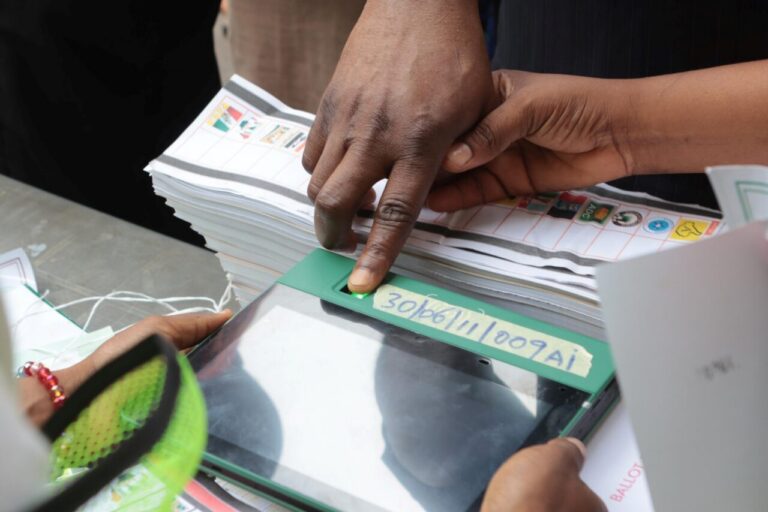
Beyond security, the foundation identified BVAS failure as one of the major operational challenges confronting voters.
It reported network connectivity problems, difficulties with facial recognition and fingerprint authentication in several polling units.
Affected locations included Irepodun Ward 6, PU 008 at Ajele’s Compound; Ilesa East, Ilerin Ward, PU 7; Irepodun Ward 6, PU 017; Ifelodun Ward 6, PUs 005 and 006; and Irewole Ward 9, PU 007 at Country Lodge.
CLEEN said INEC technical teams responded to some of the problems, but response times and effectiveness varied, resulting in frustration among voters.
Despite the delays, the foundation said voter turnout was mixed, with some polling units recording significant numbers of voters, partly driven by voter determination and, in some instances, political inducement.
The polling-unit assessment showed that 57 per cent of units monitored were rated “very good” and 37 per cent “good”, leaving only 6 per cent rated “fair”.
On the perception of safety, 57 per cent of respondents described their polling centres as “very safe and secure”, while 41 per cent considered them “safe and secure”. Only 2 per cent described the environment as “somewhat safe and secure”, with none reporting an unsafe environment.
CLEEN said the figures suggested that security deployment and crowd management had generally helped to reassure voters and observers.
The foundation, however, warned that the relatively peaceful opening phase should not lead to complacency, noting that election-related risks could increase during the later stages of voting, particularly around the counting, collation and announcement of results.
It called on security agencies to maintain neutrality, restraint and professionalism throughout the remainder of the election.
“As the election proceeds to collation and result announcement, CLEEN Foundation calls for heightened vigilance, transparency, and restraint from all actors,” the statement said.
The organisation said its monitoring would continue through the close of polls, with further updates expected as additional reports are received and verified.