Follow Us on Google
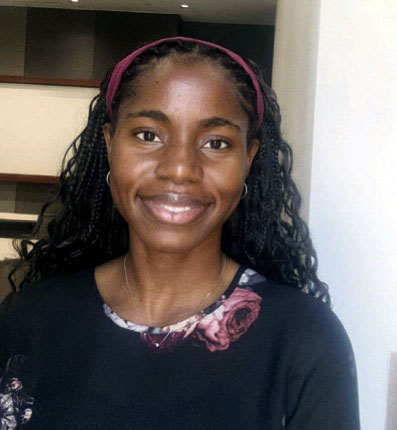
Professor (Mrs.) Adebukola Osunyikanmi
It is indisputable that Nigeria is having an agonizing experience concerning insecurity, terrorist activities, threats of secession and disaffection among her ethnic groups. Dilapidated infrastructure and absence of basic amenities have adversely affected the well-being of her citizens. All the essential social services that are taken for granted in other democracies are almost non-existent in Nigeria. These challenges persuade citizens to question the workability of democracy in Nigeria. Can citizens ask questions when public policies are not helping their plights? Are there mechanisms for recalling legislators who fail to provide quality representation? Why is there no robust political education that can stimulate indifferent citizens, especially women, to participate actively in politics?
These questions may remain unanswered for a long time unless concerted efforts are directed towards correcting the observed anomalies. Tribalism, nepotism, religious sentiments and political shenanigans have helped install many wrong persons in government. Nigeria’s democracy has sunk into anabysmal level of political inefficiency. The last general elections clearly indicated that Nigeria is drifting away from the basic ethos of democracy. There must be an extraordinary intervention to get the country on the right track.
Candidates are usually foisted on the masses. Majority of them are stooges of the elite. From observations and analysis of recent elections in Nigeria, the vast majority of electorate are victims of poverty. Thus, clientilism influences political activities at rallies and polling units. Campaigns fail to address tangible issues. There is no political marketing to communicatedeliverables to citizens.
Clientilistic deals that undermine Nigeria’s democracyreached its crescendo in recent elections. Politiciansrepeatedly cash in on the poverty that ravages the Nigerian masses especially the womenfolk. The irresistible need of women to meet the needs of feeding their children is a bait that propels them to go to thepolling booths, collect money and vote for the highest bidder.
The elections influenced by the sales of votes are certainly not credible. Such elections always turn in leaders that are not accountable to the people. Hence, the masses will languish in a desert of non-performance until another election period emerges. Unfortunately, the painful lessons of previous years quickly fade away. The poor voters go to the polls again for instant gratification. They are silent in a society filled with decrepit public hospitals. They have no voice to challenge the incidence of high infant and maternal mortality rates. They remain mute as public schools run without modern facilities.
Citizens are silent as heaps of garbage litter our streets.Preventable diseases are prevalent because of open defecation and poor sanitation. Public officials lack the right approach to make the environment good for living. In addition, lives and properties are being wasted by criminals. The Government is still unable to create appropriate security apparatus to deal with the perpetrators of evil in the country. Women, who are the major victims, are negligently voiceless.
The theme for International Women’s Day 2020 – Each for equal – was apt. Our women should be prepared to help build a gender equal government in Nigeria. The gender imbalance in our state and national legislatures is unacceptable. The gender imbalance in the judiciary should be a source of concern for us. The gender imbalance in the executive branch should not remain unchallenged in future elections.
Nigerian women must arise and work for a gender equal country. They account for fifty percent of Nigeria’s population. They must get the best among themselves to contest and win seats in the States’ legislatures, the House of Representatives and the Senate. Half of the available seats in each legislative house must be occupied by women. Again, our women should collaborate to get female governors elected in our states. The performances of those who get elected as state governors will eventually encourage the electorate to vote for a female president in a very near future. Women do well in the home front. They will excel in the public space.
Women should begin to contest and be voted for. As women throw their hat into the ring, the rest of the womenfolk must encourage them by voting for credible female contestants. The sensitization must start with a vigorous campaign by the National Council of Women’s Societies and its affiliates. The Federal Ministry of Women Affairs must provide the necessary advocacy for this purpose.
Women have done well in many private sector organizations. They perform creditably in human resources coordination, accounting and financial management, project management, Information Technology and a host of others. For instance, Ms. Funke Opeke is a model of what women can do in Nigeria. She founded Main One Cable, West Africa’s first privately owned undersea cable stretching from Europe to West Africa. Her services have been facilitating high Internet connectivity in Nigeria and other African countries since Main One Cable commenced operation. Mrs. Ibukun Awosika is another female entrepreneur that has succeeded in areas where men struggle to make their mark. She is the founder of The Chair Centre Limited, a company which manufactures office furniture. She is a member of Nigerian Sovereign Wealth Fund. She is a member of Nigerian Economic Summit Group. In 2015, she became the first female Chairman of First Bank of Nigeria. Mrs. Osaretin Demuren, an Economist and a banker, is the current Chairman of Guaranty Trust Bank. Osaretin is the first woman to lead the board of Guaranty Trust Bank. These are few examples of women who have impressively demonstrated what women can do if they are allowed to serve in public offices in Nigeria.
Nigeria is at a political crossroads. We need change agents who will development necessary infrastructure in transportation, education and health. We need credible officials who will provide solutions to the shortage of electricity that hinders business activities in Nigeria. We need people who are able to deploy soft skills to create social cohesion among the various ethnic groups in Nigeria. Women are blessed with the above attributes so they can make great happens in Nigeria. Yes, Nigerian women can and should serve as game changers in our democracy.
•Professor (Mrs.) Adebukola Osunyikanmi is of the Department of Political Science and Public Administration, Adekunle Ajasin University, Akungba-Akoko, Ondo State.