Follow Us on Google

By Bianca Iboma-Emefu
Women across the world are calling for a fundamental shift in how justice, development, and leadership are defined—one that recognizes them not as victims in need of protection but as powerful agents capable of transforming societies when systems work in their favor.
From the crowded markets of Lagos to rural communities across Kenya, women sustain economies, nurture families, and drive social change. Yet their contributions remain largely undervalued, underfunded, and unsupported by the very systems that benefit from their labor.
In communities from Lagos to Nairobi, women are the backbone of social and economic life—building businesses, nurturing families, and leading change. Yet, despite their undeniable contributions, systemic inequalities continue to silence, marginalize, and underfund their efforts. The narrative must shift: women are not fragile victims in need of protection; they are the catalysts for global transformation.
Women’s potential is often celebrated rhetorically but constrained structurally. “Potential without access is frustration. Voice without protection is danger. Leadership without healing is exhaustion,” warns Pastor Eunice Iferi-Chukwuemeka, convener of the Stop Hurting People Foundation. This paradox lies at the core of persistent gender disparities. Until justice moves beyond lip service and becomes embedded in policy, funding, and institutional reform, progress remains superficial.
Speaking on the contradictions that fuel global inequality, the convener of Stop Hurting People Foundation, Pastor Eunice Iferi-Chukwuemeka, said women’s potential is often celebrated rhetorically but constrained structurally.
“Potential without access is frustration. Voice without protection is danger. Leadership without healing is exhaustion,” she noted.
Invisible trauma—stemming from gender-based violence, economic exclusion, and societal silence—continues to erode women’s confidence and leadership capacity. Experts emphasize that mental health and trauma-informed care must be recognized as essential public infrastructure. Addressing these wounds is not optional; it is urgent. Healing restores agency, confidence, and participation, enabling women to fully contribute to societal development.
When women control resources—access to credit, education, and investment—they become engines of growth. Their economic independence stabilizes households, strengthens communities, and propels national economies. Historically, women’s leadership capacity has been evident, yet they remain underrepresented in political and economic decision-making spaces. True equity demands their inclusion at every level of governance.
The message is clear: fund women-led initiatives, reform discriminatory policies, and expand opportunities for girls and women. Inclusive leadership is not a privilege; it is a necessity for sustainable, humane governance. When women lead, societies become more resilient, responsive, and just.
Iferi-Chukwuemeka emphasized that justice for women must move beyond symbolic commitments and political slogans to become embedded in policy, funding, and institutional reform. True justice, she argued, requires systems that actively dismantle barriers rather than quietly sustain them.
She called on governments and institutions to invest in women-led organizations, reform discriminatory policies, and build governance structures that uphold dignity, equity, and opportunity.
A central theme of her address was trauma—often invisible, rarely addressed, yet deeply corrosive to women’s participation in public life. Gender-based violence, economic exclusion, and societal silence continue to shape women’s experiences, limiting confidence and leadership capacity.
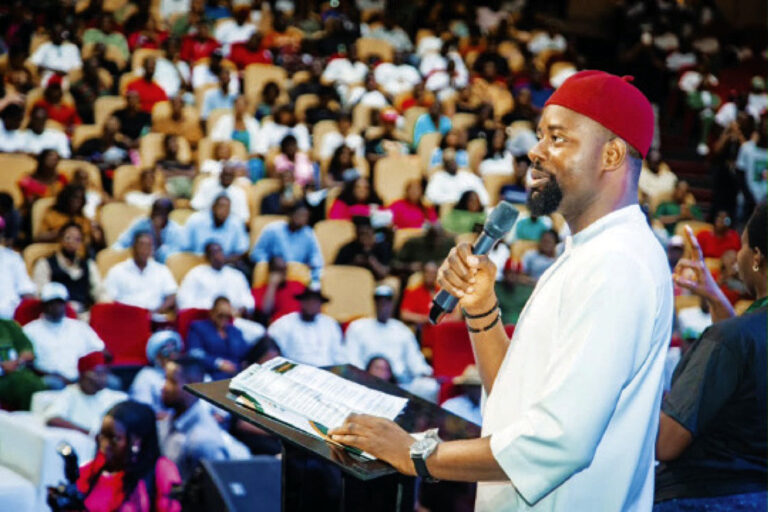
Iferi-Chukwuemeka at the forum stressed that mental health and trauma-informed care must be treated as public infrastructure, not private struggles. Without healing, women’s engagement declines, leadership potential erodes, and cycles of inequality persist.
Economic empowerment is identified as a critical lever for change. Access to capital, credit, education, and investment opportunities transforms women from passive recipients of aid into drivers of growth. When women control resources, advocates note, household stability improves, community resilience strengthens, and national economies expand.
Despite historical and contemporary evidence of women’s leadership capacity, women remain significantly underrepresented in political and economic decision-making spaces. Policies affecting millions of women are still shaped in rooms where their voices are absent.
The message is unequivocal: equity cannot exist without representation. Inclusive leadership, advocates argue, leads to more humane, responsive, and sustainable governance.
The call to action is direct and uncompromising: fund women-led movements and organizations; integrate trauma-informed frameworks into public policy; expand education and economic access for women and girls; and increase women’s representation at all levels of leadership.
The conclusion is clear. This is not a request for favoritism but a demand for balance—an insistence on restoring what history and systems have denied.
When women heal, societies stabilize.
When women are funded, economies grow.
When women lead, nations thrive.
As women across the globe rise—resilient, vocal, and unwavering—the message to the world is unmistakable: justice rooted in dignity does not only empower women; it transforms humanity itself.
Our demands are straightforward yet profound: Invest in women-led organizations that understand community needs; integrate trauma-informed frameworks into policy and development strategies; expand access to education, finance, and leadership opportunities; elevate women into decision-making roles across sectors.
This is not a plea for favoritism but a demand for balance—restoring the rights and opportunities that history and systems have denied women for too long.
When women are empowered—mentally, economically, and politically—the ripple effects uplift entire nations. Societies rooted in justice, dignity, and inclusion are societies where every woman can thrive and contribute her full potential.
The global call is unmistakable: women are the solution, not the vulnerability. Their rise is humanity’s rise. Their justice is our collective future. As women across the world stand resilient and unwavering, the message to leadership and policymakers is clear: Invest in women. Heal women. Elevate women. Transform nations.