Follow Us on Google
•Lawmakers, Niger-Delta stakeholders, community leaders laud Tantita
By Michael James Abiodun
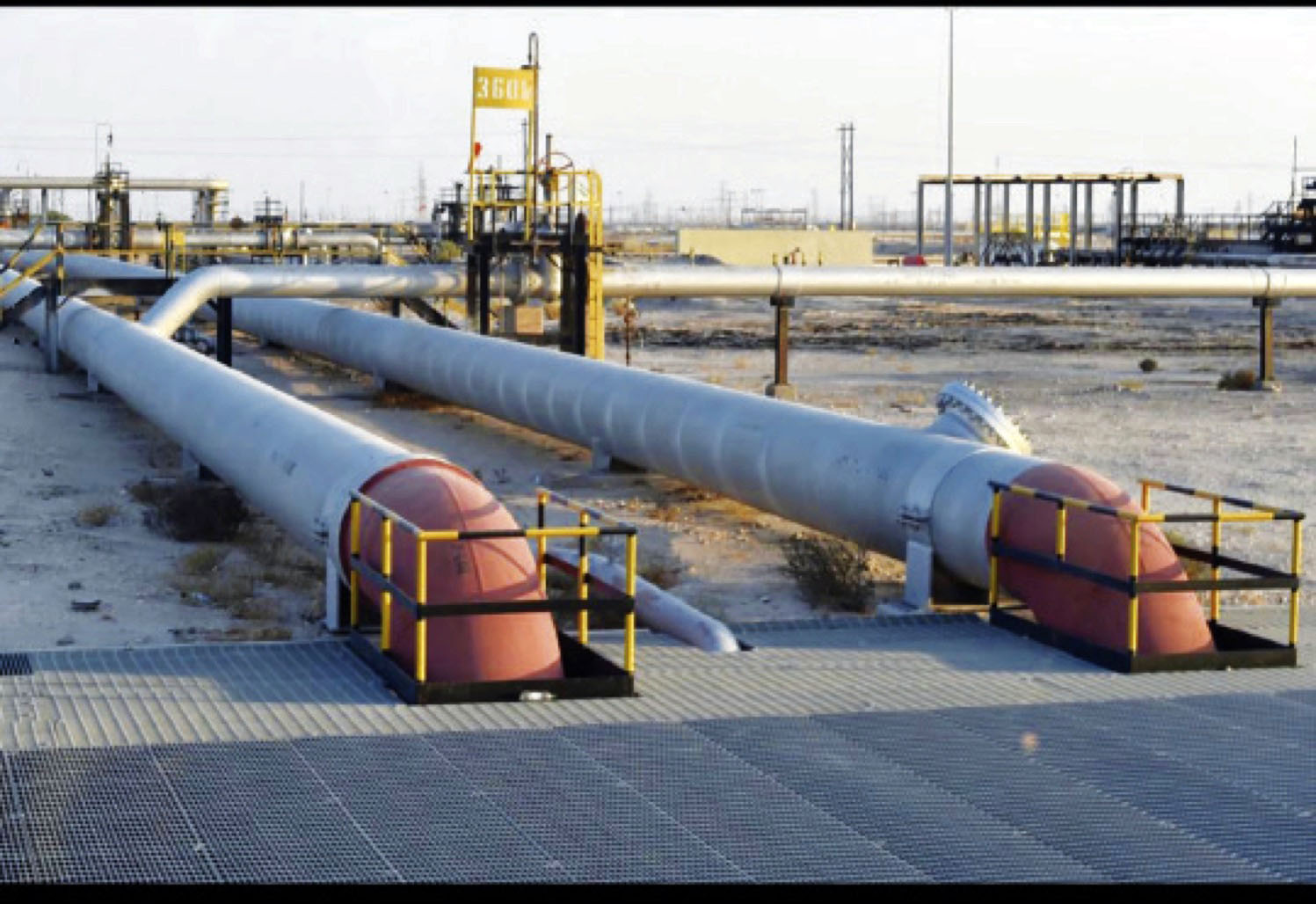
Oil theft has dropped by 79 per cent in recent years, industry statistics have shown. This feat was achieved through the use of technology and deployment of personnel in monitoring oil pipelines and other assets. Data from the Nigerian Upstream Petroleum Regulatory Commission (NUPRC) put crude and condensate production at 1.67 million barrels per day in August 2026, with crude alone at 1,500,190 barrels per day, which is enough to meet the country’s OPEC quota of 1.5 million barrels daily for a fourth straight month.
At the centre of this success is Tantita Security Services Nigeria Limited (TSSNL), which ensures that oil assets are protected and production quota is met.
Nigeria earns over 80 per cent of its foreign exchange from crude oil export. The petrodollars have come to represent a significant portion of the country’s income.
That explains why all hands must be on deck to ensure continuous flow of the dollar revenue to national coffers. That would not only ensure that government meets its obligations to the people but guarantees continuous development and growth of the economy.
Nigeria had lost 36.69 million barrels of crude to theft and sabotage in 2022, according to the Nigeria Extractive Industries Transparency Initiative. But by 2023, that figure had fallen by 79 per cent to 7.68 million barrels and has continued to decline since.
Achieving and sustaining these feats requires sustained check against oil theft with the aid of technology and qualified personnel. The drastic 79 per cent drop in oil theft has been linked to the superlative works done by the Tantita Security Services Nigeria Ltd (TSSNL) in the Niger Delta region.
The Nigerian National Petroleum Company Limited (NNPCL) engaged Tantita in August 2022 through a pipeline surveillance contract.
High Chief Government Ekpemupolo, otherwise known as Tompolo, founded Tantita out of the belief that the best people to secure the creeks are those who already know them. These include fishermen, boat operators and former militants who understand the terrain better than an outside contractor.
Tantita’s personnel monitor export pipelines, trace illegal connections, identify crude-theft points, and report suspected illegal refining activity to security agencies for enforcement.
Tantita employs about 136,000 people directly in pipeline-related work, with indirect employment extending to more than 300,000 more. It has also tried a less conventional approach to the theft problem. In partnership with the Stakeholders Development Network and Ecosus Pro Nigeria Limited, it launched the Tantita Sustainable Rice Farming Initiative, aimed at moving communities once involved in illegal oil activity into large-scale rice farming instead.
Operational modalities
Tantita Security Services Nigeria Limited says it integrates advanced technology into all aspects of security operations, providing real-time monitoring, rapid threat detection, and seamless communication.
Its technology and system integration solutions are designed to enhance security infrastructure, streamline operations, and prevent incidents before they occur. It delivers end-to-end solutions that ensure our clients’ facilities remain secure while improving efficiency and response times.
To achieve efficiency in its operations, Tantita deploys surveillance technology to protect infrastructure from vandalism, theft, and unauthorized access.
It offers a range of surveillance systems customized to meet the specific needs of our clients.
The company installs high-resolution cameras with night vision and thermal imaging to monitor activities 24/7, ensuring that no event goes unnoticed.
Its surveillance systems allow for remote monitoring through secure networks, giving authorised personnel access to live footage anytime, anywhere.
Also, its cameras with motion sensors and AI capabilities can automatically detect unusual activity, triggering alerts for immediate response.
In a report on its website, Tantita said controlling access to critical areas ensures that only authorised personnel have entry, reducing the risk of insider threats or unauthorised access.
“Systems such as fingerprint scanners, facial recognition, and retina scanners ensure secure and efficient access management. RFID Smart Card Systems allow for restricted access to key areas and provide a record of entry logs for enhanced accountability,” it said.
The company said it also installs turnstile gates and automated barriers to control entry points in high-security facilities, minimizing unauthorized movement.
“Early detection of potential threats is crucial for preventing damage and ensuring timely responses. Our integrated alarm systems are designed to detect and notify security teams of intrusions instantly. Our perimeter Intrusion Detection Systems (PIDS) detect breaches along fences or walls, issuing immediate alerts,” it said. There are also glass and door sensors installed on doors and windows that send alerts if forced entry is detected, preventing unauthorised access.
“Our systems integrate with mobile devices to notify security personnel in real time, ensuring swift response to incidents. Seamless communication between security teams ensures coordinated responses to emergencies and real-time decision-making.
“Our advanced radio systems ensure uninterrupted communication across facilities, even in remote locations. We design and equip control rooms with video walls and communication consoles, providing centralized oversight for large-scale operations. Emergency Notification Systems enable quick dissemination of alerts to relevant stakeholders during emergencies, minimizing confusion and delays.”
Oil output soars
Other News
Data from the Nigerian Upstream Petroleum Regulatory Commission (NUPRC) put crude and condensate production at 1,677,777 barrels per day in August 2026, with crude alone at 1,500,190 barrels per day, which is enough to meet the country’s OPEC quota of 1.5 million barrels daily for a fourth straight month.
Oil accounts for more than 75 per cent of Nigeria’s foreign exchange earnings, and the Federal Government has tied part of its target of a $1tn economy by 2030 to stability in the sector.
Amid calls to split its contract among multiple firms, traditional rulers and other stakeholders in the region have warned that fragmentation could weaken coordination.
The stakeholders urged the Federal Government to resist calls to halt or break up Tantita’s pipeline surveillance contract.
Former House of Representatives member Oghene Egoh said the indigenous security companies involved in pipeline surveillance had improved security around oil infrastructure and helped increase production by curtailing pipeline vandalism, illegal bunkering and crude theft. He urged the Federal Government to sustain the arrangement rather than revoke it.
In March, Dr Blessing Agbomhere, a legal practitioner and security expert, described the pipeline surveillance framework coordinated by Tantita and other indigenous firms as a “strategic national instrument” with implications for Nigeria’s economic stability and security. He argued that dismantling the structure at a time when crude production was recovering could jeopardise gains made in reducing oil theft and restoring output.
Similar concerns have been expressed in the National Assembly. More than 300 federal lawmakers endorsed the continued engagement of Tantita in April after reviewing petitions against the company. The lawmakers cited data showing higher crude production and reduced pipeline vandalism and warned that breaking up the existing arrangement could undermine those gains.
Deputy Spokesperson of the House of Representatives, Philip Agbese, similarly cautioned against splitting the surveillance arrangement among multiple operators. He argued that pipeline protection is a sensitive security function requiring coordination and discipline, and that fragmenting responsibilities could create inefficiencies and weaken the system.
Communities close to the pipelines have similarly expressed the same concern. At a joint retreat involving House committees, Niger Delta host-community leaders and representatives of oil-bearing local governments rejected calls to decentralise the Tantita contract, arguing that the Petroleum Industry Act already provides a framework for community participation through the Host Communities Development Trust.
The Ovie of Great Idjerhe Kingdom, King Monday Obukohwo Whiskey, said Tantita’s role had brought noticeable improvements and argued that criticism of the company should not become an excuse for weakening the security arrangement. He specifically attributed some of the attacks on Tantita to its refusal to compromise professional standards in securing sensitive oil assets.
Felix Onoriode, a surveillance worker from an Isoko community in Delta State, offered a community-level explanation for retaining the contract. He said the operation had taken youths who previously engaged in crime off the streets by giving them regular employment while they participated in protecting oil infrastructure.
He also argued that a single operational structure provided clearer responsibility and reduced bureaucratic delays, warning that decentralisation could create confusion.
A group of Niger Delta stakeholders believe that restructuring the contract should be approached cautiously because the existing system had helped stabilise the oil-producing areas.
The Niger Delta recently received special recognition when High Chief Government Oweizide Ekpemupolo, popularly known as Tompolo, was conferred with the “Guardian of the Nation” award at the 2026 African Muzik Magazine Awards (AFRIMMA) in Dallas, Texas.
Announcing the award, the organisers said Tompolo was recognised for Tantita’s contribution to the protection of Nigeria’s critical national assets. AFRIMMA also credited Tompolo for contributing to peace-building, job creation and community development across the Niger Delta.
What other stakeholders say
Chairman of the House Committee on Host Communities, Dekor Dumnamene Robinson had said the contributions of Tantita and its leadership to national security deserve appreciation.
Also, in one of the strongest endorsements yet of the firm’s operations, lawmakers under the Joint Committee of the House of Representatives on Host Communities and Public Petitions and other stakeholders also commended Tantita for what they described as effective and patriotic service in safeguarding Nigeria’s critical oil infrastructure.
They specifically cited the recovery of crude oil production, reduction in pipeline vandalism and restoration of relative peace in oil-producing communities as major achievements recorded under the leadership of High Chief Government Ekpemupolo, popularly known as Government Ekpemupolo.
“Tantita Security Services Nigeria Limited, in partnership with NNPCL, has rendered demonstrably effective service in the protection of crude oil pipelines and the recovery of national crude oil production,” they stated.
The Joint Committee subsequently passed a unanimous vote of confidence on the company and called on the Federal Government and NNPCL to approve a long-term renewal of the surveillance contract to consolidate gains already achieved in the fight against crude oil theft and illegal bunkering.
“Tompolo and his team have served this country at great personal risk. They have kept the economic lifeline of the nation running and restored peace to communities that had not experienced peace in decades,” he said.
The National Chairman of Host Communities of Nigeria Producing Oil and Gas (HOSTCOM), His Highness Benjamin Style Tamaranebi JP, had further commended President Bola Ahmed Tinubu for the confidence he has reposed in Tantita as a critical part of the security apparatus for protecting oil assets in the Niger Delta.
“Let us be clear: Destroying our oil assets is economic suicide. It’s a direct attack on the very lifeline of our communities. Our host communities have endured environmental degradation, economic hardship, and neglect for decades. The passage of the Petroleum Industry Act (PIA) was a turning point, ensuring that our communities finally receive direct benefits from the resources extracted from our land,” he said.
He said that Tantita Security Services and other security outfits are crucial in safeguarding Nigeria’s oil assets. Their presence has helped to curb oil theft, improve production levels, and stabilise our national economy.
He said: “HOSTCOM believes that the unique understanding of the Niger Delta terrain by Tantita and its personnel is vital for effective onslaught against oil theft, and it’s imperative that our security agencies and other critical stakeholders in our region recognise the selfless contributions of Tantita and its main promoter, our own indefatigable Niger Delta crusader for better life for our people and champion of equitable and fair distribution of the nation’s resources, High Chief, Dr. Government Oweizide Ekpemupolo, alias Tompolo, the Ibe-Ebidouwei of Ijaw Nation and support them.”