Follow Us on Google
From Priscilla Ediare, Ado-Ekiti
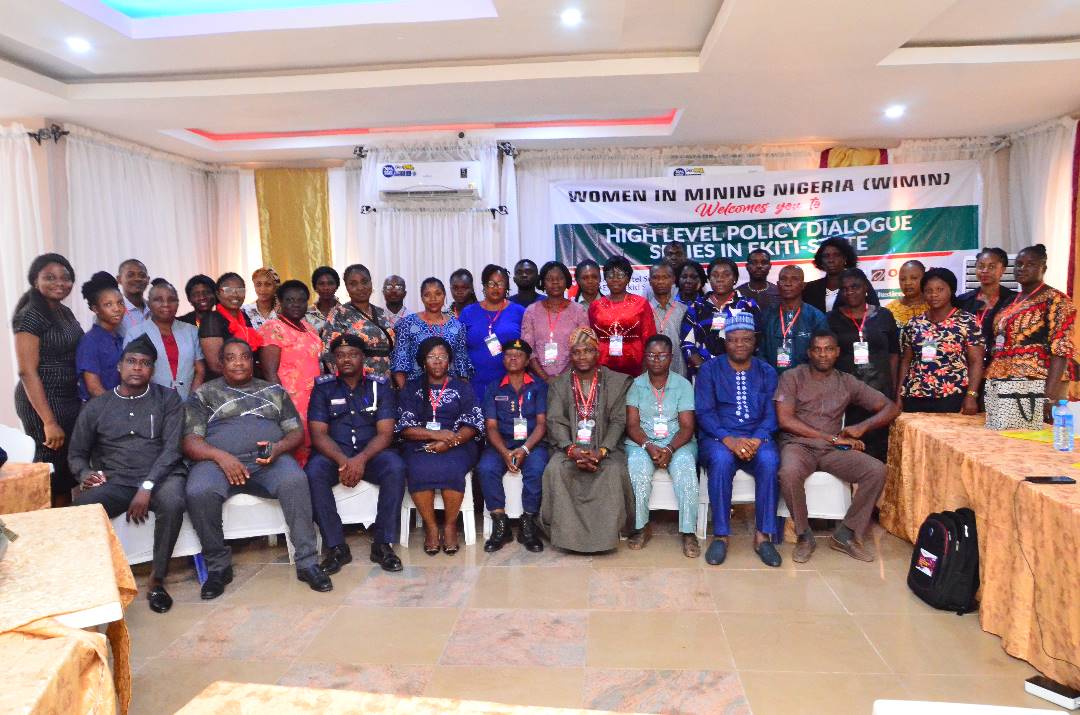
As part of efforts to ensure that the issues of child labour, sexual and gender-based violence (s/gbv)in the Mining sector become a thing of the past and also have a mining industry that respects the rights of women and children, Women in Mining Nigeria (WIMIN)and other relevant stakeholders have come together to fashion out ways to tackle the threat in the sector.
Addressing the issues at a 2-day policy dialogue on gender rights and child labour in the sector organised by WIMIN for mining stakeholders in Ado-Ekiti, the Ekiti State capital, the President and Founder of Women In Mining Nigeria.(WIMIN) Hon. Janet Adeyemi, charged those in the sector on the need to work together and end the menace.
In her remarks, the WIMIN President noted that the policy dialogue was put in place to bring the stakeholders in the mining sector together to discuss issues that have relegated women to the background in the sector, adding the policy dialogue was a critical step towards achieving the goal.
The President, who was represented by the Group’s Program Coordinator, Dennis Deloraine, said, “It is imperative that we come together to address these issues and work towards creating a more equitable and sustainable mining sector that respects the rights of all individuals involved.
“The issue of child labour has become a major concern, with an estimated 1 million children working in mines worldwide.
“Additionally, gender discrimination and violence against women are still prevalent in many mining communities, further exacerbating the challenges faced by women in these areas.
“We can develop solutions that are both practical and effective in protecting the rights of women and children in the mining industry.
“We can make a positive impact on the lives of those who are most vulnerable in the mining sector. Let us work towards a future where gender rights are respected and child labour is eliminated, and where the mining industry operates in a manner that is both sustainable and socially responsible.”
Speaking on how women were being relegated, she said, “The relegation has actually led to women facing what is known as sexual and gender-based violence incidences here in Nigeria, in a bid to tackle the issue Women In Mining In Nigeria had invited the relevant stakeholders to x-ray the group’s policies and practices in the sector, identify the gaps, the drivers and the enablers of S/GBV incidences here in Ekiti State and come up with a way forward”.
Also speaking, the Ekiti State Coordinator of National Human Rights Commission(NHRC), Mr Biodun Adigun, who was represented by the Commission’s Public Affairs Officer, Mr Bayo Babalola, hinted there was already existing collaboration between NHRC and WIMIN.
“The women group had already signed a Memorandum of Understanding (MoU) with the Commission at the headquarters in Abuja and this has been extended to state offices including Ekiti. This will solidify and boost already existing collaboration with the group.
Adigun who lamented low report of human rights abuse in the mining sector said ,”We are now trying to workout modalities by which WIMIN newly launched reporting App will be put into use by the commission as well as other critical stakeholders for the reportage of complaints bordering on abuse of women rights in mining. And to see other means that could be explored to ensure that complaints are received from the public to the commission from time to time on abuse of women in mining”.
Senior Special Assistant to Ekiti State Governor on Civil Society Matters, Mr Biodun Oyeleye, said protecting women against violence in mining or violence generally is a human rights issue which has to be protected.
Oyeleye noted that researches have shown that, women are the worst hit in terms of economic emancipation and It is important to take care of their rights, as they will in turn take care of the children.
“When their right is protected, they will have the capacity to pursue economic emancipation apart from human rights issue. In Ekiti state, the government has a zero-tolerance to violence against women. There are policies and laws in place to ensure that rights of women and children are protected”.