Follow Us on Google
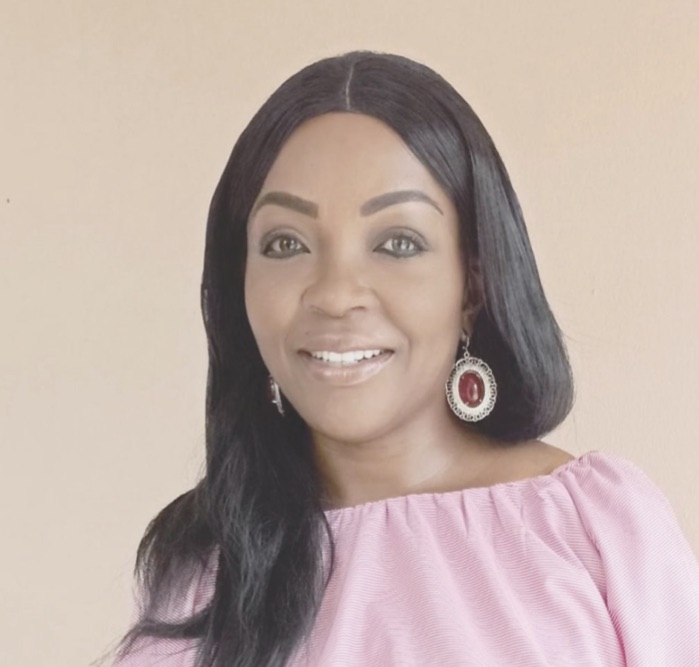
From Okwe Obi, Abuja
The Country Representative of the Hague Institute for Innovation of Law (HILL), Ijeoma Iwu-Nwafor, in this interview, contended that women are marginalised because of obnoxious cultural laws made by men which have had a psychological implants in them for decades. Nwafo-Iwu argued that women see fellow women in the psychological lens of men which is why women judge fellow women harshly. She charged women to speak up and to take up the gauntlet to challenge the political dynamics beyond the 35 per cent affirmative action.
In the area of entrepreneurship, she said businesses fail because of the lack of mentorship. However, she noted that with the right structure and systems, things will turn around for good. Except:
Talking about justice, how far have you worked in ensuring that most Nigerians get justice?
This is a very good question. In reality, what we actually do at HILL, that is the acronym of where I work, is that we are pushing for what we call people-centered justice. We are realizing through research, not sentiment, that most people resolve their justice needs without ever going to a courtroom, without ever seeing a lawyer, without ever seeing a judge. Why is it so? It is because there is no access. So think about your village. If somebody has a problem, or they experience injustice, the last thing they will say is that I am going to court. They either go to the traditional ruler, or even within the family system, or even go to the police. So the question that HILL asks is that, all these people they are going to, are the judgments sustainable? Land matter, if your traditional ruler resolves it, a generation after, they will start again. So what we try to do at HILL is to cover that gap. We are trying to close that gap by validating what is happening in reality, where people are going to get their justice needs met, and the fact that our formal institutions are equally very important, if not even more important, if you want to put it that way. But how can we join the two? If you look at a country like Ethiopia recently, they just passed a law, basically making it possible for traditional resolutions to become validated in the formal court. So it cuts down the chances of cases going round and round, where the traditional ruler would resolve it, the next generation, the landline would start again, because it is now archived within the formal sector.
Now, women are perceived to be the most vulnerable species when it comes to justice in this country. Do you have a special interest in women, in terms of getting justice?
Well, HILL, is also sensitive to issues of women, because that is what the data is telling us. And it is not peculiar to Nigeria, it is a global challenge. The reason, if you look at it, most countries have some kind of religious background, some traditional belief systems, and unfortunately it puts women in a very vulnerable situation. And even the way society defines what power is also perpetuates injustice. So for instance, power was defined based on who is providing the money for the family to thrive. But now it is shifting, because most families who grew up where the father is just providing money and he is absent, there is tension between the grown-up children and the father. So where is the justice in that, in minimizing the role of the woman? In some avenues, I have even asked people, I have always wondered why some men, and I hope it is not happening as much, would opt to marry a woman who is not educated, and yet they want their children to be educated. And they are not physically at home to do the educating. So again, the injustice arises. Are we educating enough girls? So you can talk about justice in the education sector. Are we educating enough girls, at least to secondary school standards, where they will be able to be of support to children who are also being educated. Then you look at economic background. Statistically, anyone who is the breadwinner tends to have health problems, whether you are a man or a woman. So if we now start shifting that power game where two people come in and they are partners, and you say, oh, we would like to make 200K in our family, and then you strategize how, okay, maybe you can make N30,000, me, I’ll make this, but it is in a way that will not put stress on one or the other. So these are ways where, when people talk about justice, we practicalize it. But we’re practicalizing it based on data. If you talk about gender-based violence, some people say men are also vulnerable, but the numbers are more of the women. So that is why oftentimes you hear people talk about the women. So while HILL is not designed to just look out for women, the data is telling us that, yes, women are vulnerable, children are vulnerable, persons with disability are vulnerable, just because they are not in the majority. So even if you look at it from a majority-minority standpoint, it is because they are not really in the majority. And sociology teaches us that majority or minority is not necessarily based on numbers. It is based on access to power, access to make decisions. Because if you look at some data of some countries, you see, like even South Africa, let me take it, because that is the one people do not understand. In South Africa, during the apartheid, even though the whites were in the majority, it was based on power, access to power. It is not based on numbers. So, that is a very good example of what all of that comes down to.
So,how do we break the cultural barrier?
You are talking to me, I am a woman. Low-hanging fruit. So to intentionally create platforms for women, and intentionally start to have conversations, I mean real conversations, about equity. I am not so keen on equality, because to me, equality means sameness. I do not necessarily think if you sit a woman down, she wants to be the same as a man. No, but she wants to be treated fairly. If you had a dispute with your friend, it is your first impulse to beat the person up, because they are not doing what you want them to do. But yet, every three minutes, a woman dies from being beaten up. And then the first thing someone may say she must have said something It’s not about that. You even have friends at work that are flip and you beat them, because that’s not the best way to resolve conflicts. So we need to start having those conversations, educating people and rewiring how people think. Some people come from very abusive homes, so their response to male-female interaction is abusive. And nobody has ever said to them, you know that thing you saw your father do? That is not really what gave him power. You understand. But if they don’t stop to have that conversation, they will keep repeating and the cycle will keep repeating itself. So I think intentionally creating the platform, also using data like what we do at HILL, using data to see what is really happening out there. Let me tell you, when we did our data conducted research in 2016, 2017, people came up with family problems as being one of the justice needs. But by 2023, 2025, people came up and said there is gender-based violence going on in my family. So what does that mean? It means that people are becoming more vocal about it. It does not mean that these issues never existed. There were labeled differently, people were uncomfortable with it. So the more we talk about it and the more we create the platform, I think that will really help. Because then education and knowledge kind of takes place when the platform is there for people to even discuss about it. And thirdly is also policies. We should really have policies, intentional policies. Like what is going on in Nigerian space with women and all of that. But my challenge with that, like what I see out there, is I sometimes question the process that we go through to develop policies in Nigeria. Oftentimes I think sentiment overrides research, overrides knowledge, overrides facts. So if you are going to have special seats for women, how is that going to work out in real terms? Does that mean that women can’t run for the substantive seats any longer? Does that mean that on that voting day, how is the voting ballot box going to look like? You know what I mean? So when I sat one of the people down, I was asking so many questions. And you know what the person said conclusively to me? Well, let’s get it first, we’ll figure out the rest. Should we figure out the rest and then get it? You know what I mean?
So beyond advocacy, have you carried out any intervention in terms of women’s marginalization? Have you been able to provide legal services for women who have been assaulted in the past? And if you have, how many?
Okay, thank you very much. Now, this question has to do with my place of work. So the Agency for Innovation of Law, we have pilot programmes. For instance, in Imo State, we have community justice centres set up to address either land issues or family issues, and specifically gender-based violence issues. So cases come, it is a working establishment, so cases happen every day, all day. We also have a radio show in Imo State called Justice Voices. And the idea is that people call in, and there is always an expert there trying to explain one aspect of gender-based violence prevention or the other. People come in for all manner of things. There are people who come in and their cases are resolved right there. There are people who outrightly have to go to court. There are issues of neglect, there are issues of abuse. Some are physical, some are emotional, some are economic abuse. Some women are abused economically. It is not really about beating somebody. Some women I witnessed in Imo State, a woman came in, she is educated, her husband told her not to work, but he is struggling to keep the family afloat. They have four children. And the wife has said, let me work and help. He said, no, stay at home. But he does not release the money that they need for their upkeep. And that has been going on for a while. If he is angry, he can starve the children and she is going around begging. So things like that happen. So, we do go to courts on behalf of people. It’s not our primary goal.
So we do not go directly, but at least we link them to lawyers who are providing pro bono services. We work alongside the MBA and FIDA to provide such services. So that is what is going on. The Community Justice Center does that. Like I said, the radio show does that. We also, the fact that we even conduct research also shows that. We conducted a specialized research three years ago on what is called intimate partner violence. Because we recognize that sometimes people are not even married. They are just cohabitating and still abuse is going on. So we want to widen the tent. Because there was one time I appeared on the radio show and somebody called and said, if the person you are beating is not even your wife and you have not even paid dowry on their head, does that count? So that tells you the level of ignorance that is out there. People may be doing the wrong thing because they do not know that it is wrong. I know it sounds crazy, but really, some people do things because that is all they know how to do.
You once ventured into politics and a lot of people claimed that you did not win because of your gender. Do you share that sentiment?
Yes and no. Let me answer the yes. So when I was in politics, I came in and I ran. And those who were around when I ran, I ran not as a woman. I just know I am competent. I know that I can represent my people. So I did not go with the attitude of, I am a woman, please make way for me. No, no, no. In fact, my first outing was like a David and Goliath type of thing. It was a second-tenured federal house member wanting to go for the third term. So I, being a fresher, I had no business fighting such a person. But I did it with every gusto I had. However, when I met, that is why I say yes and no. I went in like, and I said hmm, I am a capable Nigerian. I will give you what you want. Even to date, people say you fought like a man. Women do not know how to do political fights, but that is a story for another day. So what they know is that I met a place and a people who were very heavily biased against women. So I ran in my husband’s place. And when I say my husband’s place, we are separated by zones. So we are both from Igbo. He is from Oweri zone. I am from Okigwe zone.
Now, because I grew up outside the country, I don’t really know Okigwe zone that well. So when I came back into the country, I came back with my husband. All I knew about my state was my husband’s place. So it is like that. His people became my people. So I, because of how I was raised, I did not think I had any option but to run under his place. But I heard all manner of things. Oh, So you’re a woman we married. So basically saying I have limited rights. They will say things like a woman can’t lead us. And I am thinking, I didn’t come to lead you. I came to serve. Remember, I am coming from outside the country. So for me, politics is about service. But I am talking to people who see it as leadership, mere leadership. I am like, I came to serve. How am I going to be your leader? I just came to serve. So the language was not quite jelly. And so I know behind closed doors, discussions were had along those lines. You understand what I mean?
So that is why I said yes and no. And I know there are women like me out there. Women might come out with the qualifications to play politics fairly. But the society still has their own convictions and beliefs.
What is your reservation about 35% affirmative action?
I do not have any reservations. No, no, I do not have any reservations. What I was saying yes and no to is your question. Personally, I would not come out and say, vote for me because I am a woman. It is not qualification enough. Imagine if you entered a plane and somebody said, please, I hope people don’t mind. There is this person that she is really trying in flight school. But let us give her a chance. She is not yet ready, but she is a woman. Let us give her a chance to fly the plane. How many people will remain in that plane? It is different from when you say, well, we have two very qualified pilots. And guess what? One of them is a woman. Everybody will clap. So that is kind of my own attitude. So I am not against affirmative action. Because we need it in a society such as ours. But what I am against is that do not give us inferior quality people because you are trying to give us a seat at the table. It is a waste. Does that make sense? If you are going to give us 35%, please let our best 11 take up that 35%. Do not give us inferior people. And that goes to all minority groups. Do not come and tell me that you’re giving seats to persons with disabilities and then you just pick anyhow people. Because, oh, gosh, you’re in a wheelchair. Oh, yeah, come. There is a space for you. You didn’t ask the person any questions about qualification. But then again, somebody told me this. I said, how qualified are the men? So it would be unfair to demand quality of the minority group when quality is not demanded of the majority group. But my argument against that is this; the majority group can afford to have nincompoops. They can afford to have idiots. But the minority group cannot afford to have idiots. So like me as a woman, that is what keeps me afloat. I mentor a lot of young ladies and say, how have you been able to? I say because literally, like even now I am talking to you, I know I have millions and legions of younger women at my back. I have two daughters, for crying out loud.
So I cannot just do anyhow. The ‘anyhowness’ of the majority group is a problem. But the minority group cannot afford to do anyhow. So if they give us our 35%, for instance, you have to be overwhelmingly filled with people of substance. Because we only have 35%. Somebody who has 65% may decide to relinquish 35% of that percentage to foolish people. They can afford it. They have room. But that is your 35%. Maybe you can only give 5% to foolish people. Because you only have 35%. So that is the kind of where I am going with that. It is not that I have anything against it. But I don’t want it to be sacrificed on the altar of mediocrity. Because we are trying to find space. So anyhow people will come and, you know, I won’t do that.
There is this perception that women do not support women especially in politics. You’re not putting your house in order. They say charity begins at home. But here you are not supporting your own. Why it is so?
Do men support their own100%? Do you know of any man that supported a man just because he was a man? Politically, just because somebody is a man. He has no qualifications. You’re a man? If there are two men, do you look at the two men and say, oh, will support this man because he is a man? No, we don’t want that. Okay, now, let us pack it one way. I am going to answer your question. And I am going to take you down a road that a lot of people do not know. The reason why it seems, it appears, women don’t support women is because of what we call Stockholm Syndrome. Stockholm Syndrome is something that happened in World War II, where people who were in prison for so long that they started sympathizing with their oppressors, hence Stockholm Syndrome. Women have been oppressed for so long that we define womanhood through the eyes of men. A fellow woman will look at another woman and criticize her from the perception of a man. She will look at her, first of all, I have never seen a woman, I have never been in a room where women are discussing another woman and say she embezzled money. Most of what they talk about is her bedroom behaviour, she is a promiscuous, she is not, where are they getting that from? Because that is how men discuss women, that they want to pull down. So until a woman is aware, me, I’m aware of it, so I avoid such things. For instance, there was a time I was offered to be a state woman leader of my state, some years back. I declined it. I said, no, there is no salary attached to it. I have responsibilities. And the person I was having this discussion with could have just made me that. I said, no, I’m not going to be in a position where I will have to run around politicians to give me money. Because next thing, is that it won’t be about giving me money, they will now accuse me of all sorts of things. And the man said, no, they won’t do that. I said, no, I am not even concerned about the men doing that, but it is the women. Because all they know about women who are in such positions is from the perspective of men. So women look at other women from the lens of men. And if you are not aware of it, even if a woman walks into a room, other women are checking her physique out. Why? Because of that thing. Over the years, the way society has prescribed what is beautiful, what is arousing, what is good, is from the lens of men. They are the majority. They are the definers of everything we have around us. Who is good? You see, men are more likely to say, this woman, she is too aggressive. I don’t like her. But if I join them, I’ll describe that woman the same way. But if I become aware of it, I’ll say, wow, this woman is assertive. She speaks her mind. I like that. I don’t like people who hold things inside. Now, I’m looking at that woman as a human being. I’m no longer looking at her. But if I choose to look at her the normal way, I’ll succumb to that trap. So that is why it seems like women don’t support women. Because the immediate thing the average woman would do is to align with the majority. And the majority for so long has been men. It has been men. If a woman who is running for election, I know when I was running for election, one woman called me, she said, I should take it easy. You know you’re a woman. When all is said and done. I’m like, what did I do wrong? She said, the way you are exchanging matters with the men. I said, because if I speak softly, nobody will hear me. Everybody is yelling. I can’t come and start. We are having political discussion. Everybody has to do their own. But she called and advised me, no, you shouldn’t. You’re not a man. Voila. Again, she is looking at me through the lens of a man.
So I should be lesser.
So how do we correct that psychological mindset where women look at other women from the lens of men?
Well, we correct it first by being intentional. Like now that I have said it, if this comes out and maybe you highlight it to other people, that is true. So you have to enlighten people on that fact. Most women are not even aware of it. And that also explains why there’s always competition amongst women. Because the way the world is designed socially was designed by men. So if the man is the price, what happens when something is the price? There is competition, correct? But imagine if the man and the woman, two good people are seen as being the price. Nobody is better than the other. Because woe betide you if you think you are the price and you get married to somebody who pull you down. You are being the price is irrelevant. So now, but we grew up knowing, and some of us still have that mindset that the man is the price. So if a woman keeps being pushed to that direction, anybody who is coming for her man or her proposed man is an enemy. He wll fight you. So socially, women have been wired to compete against each other. So now knowing it, the awareness of it, which is number one, the knowledge of it is number one, the intentional unwiring of it and asking yourself, imagine a world where you’re in constant competition with somebody. It is exhausting. Sometimes when I see my fellow women, I actually feel sorry for us. If it is not for the enlightenment I have gotten, we are in constant competition. In fact, I have tested it out socially. If I come to a place I always put out this collaborative energy, and guess what it means? When you try to communicate collaboration amongst women, there’s huge element of suspicion. People either say she’s fake, she doesn’t mean it, there’s a plan, because they are not used to it. So we need to just be, I am not trying to patronize you, or sound patronizing, but imagine a situation where this comes out and that is the biggest reveal. And then women start saying, it’s true. I have said it in so many, in fact, I just delivered a speech over the weekend. I said it on Friday. Each time I say it, for those who are enlightened enough, everything is true. That is when a widow dies, who shows the widow more pepper? It is a woman. It is the women that will say, come, let’s shave your hair. Come, drink water. It is women. Why? Because those rules were made by men, but implemented by women, because they are seeing the world through the lens of men. If the women say, we are not going to do it, why don’t you do it? It might change the narrative. But right now, it is not what is happening. Everything is being seen. Most of what is happening in the world is seen through the lens of the West. The history we know is seen through the eyes of the white man. How we even think of ourselves is through the eyes of the West. So the majority carves the narrative and the minority succumbs to it.
Beyond politics and the NGO you run, what is your next plan?
I have taken a formal break from politics since 2019. It was intentional. I need a break. I took that break because I love to learn and I started feeling like the one-eyed man in the land of the blind. People were giving me compliments. Oh, you are so smart. You are so intelligent. And you ask yourself, when was the last time you read a book? When was the last time you created something? I believe human beings are here to produce and create, not to be mere consumers. So I made the decision, let me go and see what is happening. Let me see the latest research. Just learn and grow. So that is that. In terms of what is next for me, if the world were mine to navigate, my next stop will be to go back into the entrepreneurial space. I think there is still room for that. I want to lead an entrepreneurial hub to help young people start and maintain businesses. I think there is room for that. I want to be part of writing the history of poverty alleviation in Nigeria, with focus on women. So that will be my next stop, hopefully. I am actually hoping to partner with some people to be able to bring that to fruition. But that’s my next stop. Politics in and of itself, I still do not think I am ready to go back. The water is still murky. I am just cheering other people on. I’m cheering them on for that.
Why do most businesses fail in Nigeria?
In Nigeria, there is a gap, and they are two fold. So we do not have capital base for startups, and we do not have management structure for startups. So what does that mean? You see one wealthy man, he says, I have started up my brother, I have given him money to start business three times, and he has failed. Well, giving somebody money, which is capital, is not enough. They need structure. They need mentorship. They need to learn what a business is. Business is not for everyone and not everyone is for business. So, creating a platform where people can actually practice their craft or business as an entity will increase the chances why businesses will not fail. Businesses are failing right now either because they did not enter the market with the right capital or because of the lack of structure, systems and management support which can all be summarized as the lack of mentorship.