Follow Us on Google

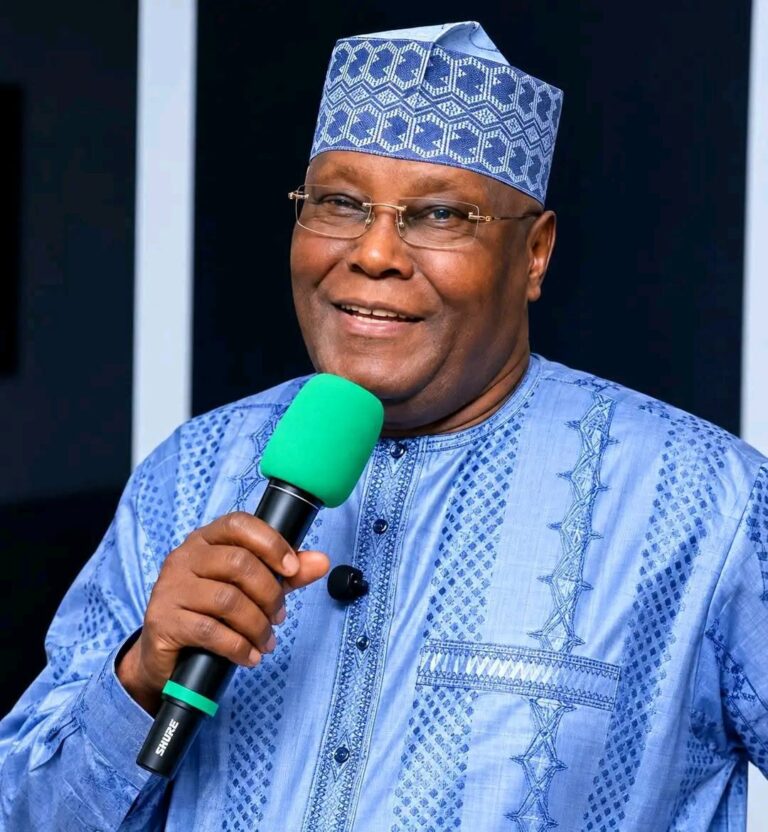
SINCE he served out his tenure as Chairman of the Independent National Electoral Commission (INEC) in 2015, Prof. Attahiru Jega has remained in the minds of many as a substance of strength. His impassioned interest in the political process has not been in doubt. That’s a mark of uncommon patriotism and statesmanship. His unfaltering courage to speak up against the fault lines that divide us, the power struggle in our political system, the setbacks that our democracy has suffered in twenty years, all of these have made him the preferred choice as a guest speaker on issues of democracy and the electoral process.
Perhaps, one of the reasons why Jega was successful on the job as chief electoral umpire after the initial missteps that almost derailed the 2011 general elections, was probably because he treated politics as a science. Prof. Humphrey Nwosu, who occupied the same chair 23 years earlier had almost the same political style, but no two persons are the same. If Nwosu’s political style was in his head and he was more outspoken, Jega’s style seems to be in his blood. For me, Jega is a rational operator and a master of the art of politics. But, don’t take away the reality and sincerity of purpose that Prof. Humphrey Nwosu exhibited even at his own risk.
Jega, like every ex-electoral Chairman, has a dose of benefit of hindsight of what could make or mar elections in the country, what the country and the leadership can do to foster unity and avoid division and disintegration of the country. It’s important that when he speaks on such matters, we should listen to him. Such knowledge that comes from been once on the job, the experience of pressures and pleasures, the uncommon courage, the sincerity of purpose and perhaps, independent of mind and the lessons from failure, altogether, can enrich the conduct of future elections in the country. Last week was one of such occasions that he had to bring his rich experience in the conduct of elections to bear on emerging issues that pose present danger to Nigeria’s unity.
The occasion was the anniversary of 20 years of democracy, organised by TELL magazine, in Abuja. The text and message he came with was foreboding enough. It was an old prediction of possible collapse of the country. That fear is still snapping at our feet. Warning has been repeatedly given, but not heeded. And this is Jega’s fear: Unless preventive measures are taken and urgently too, the prediction on the disintegration of Nigeria may come to pass. The signs are there, he warns. Is anybody listening to him? The tough political road ahead requires that we should not ignore voices of reason.
Recall that it was predicted in the build-up to the 2015 general elections that Nigeria might collapse after the poll. The dreaded forecast was however averted largely by the decision of one man: President Goodluck Ebele Jonathan. Looking back, this is what John Dramani Mahama, President, Republic of Ghana said: “Today, Nigeria has a degree of political stability and it is easy to take that for granted. However, I would want to point out that 2015 marked the first time when a presidential election was held in Nigeria and the results of the poll was not challenged in court”. He was right. But President Mahama added : “When you take this into account, you begin to have an understanding of how one man’s leadership ended a negative precedent and opened up the vista for a better political future for the Giant of Africa, as Nigeria is often called”.
It’s more than four years now since Jonathan showed that exemplary patriotism and leadership and saved Nigeria from doomsayers’ prediction. Again, it is easy to take that for granted. That’s exactly what Jega is reminding us. At last year’s ‘Democracy Day’ lecture, he spoke in the same vein. His lecture last week should be properly assessed in its context and the advice he offered should be heeded. According to him, although the prediction that Nigeria would cease to exist after the 2015 elections did not come to pass, if we are not careful, the prediction may still come to pass. That is why, in his words, “we need to do quite a lot, much more than we have ever done in order to protect the integrity of the electoral process before 2023”. That our politics and politicians are vulnerable to the disturbing facts he x-rayed, provides enough food for thought. Everything that he was concerned about and warned, all came to pass. The disputations are not over yet, especially the presidential election and the outcome.
These are some of the issues that worry him, and most Nigerians as well. They include the often alleged partiality of soldiers and other security personnel deployed to monitor the conduct of elections. Very often their impartiality has come under a blanket of suspicion. That’s why Jega advises them to imbibe professionalism during the election and maintain neutrality in the course of discharging their duties. But the Nigerian public also feels that INEC is yet to discharge that trust and impartiality required before any election can be adjudged free, fair and credible. They cite the 2019 election as one that cannot be proud of. Besides, we cannot fault Jega’s concern about flagrant impunity in the land. And, how do we ensure that the rule of law is obeyed, especially when those who should comply with the law are now the law breakers? That worry is deepening every passing day.
Altogether, Jega’s fears are also our worry. It needs urgent reflection and action. How does Nigeria prevent the problems he has called attention to? Our politicians and political parties must put their act together. Any political party that lacks internal democracy, lacks the oxygen to exist, and may squander the goodwill of the people. On electoral violence, this remains a present danger that can derail our democracy. The truth is that never since this dispensation has Nigeria been this divided along ethnic lines as it’s today. We need to refresh our memory that among the pressure-points the U.S. report was anchored on, were issues of globalisation and its impact on political development, economic growth, patterns of conflict and terrorism.
The U.S report which Olusegun Obasanjo as President presented to the Senate in June 2005, had also considered the existing tenous intra-leadership relations that were disruptive of a precarious balance at the centre and possibilities of revolt of the junior cadre in the Armed Forces leading to a sustained and pervasive warfare. It warned that if Nigeria became a failed state, and millions were dislodged, the rest of the West African sub-region would also be destabilised. Also, the U.S report warned that a disintegrated Nigerian nation would be very difficult to be re-constituted. If anything, that was a pessimistic prediction. But, if truth be told, haven’t we come dangerously close to proving that report right? Even though we dismissed the U.S. prediction as shallow and glib, that it was based on dubious benchmarks, these fears are becoming a grim reality.
For good measures, so much to worry about our democracy. I recall this was the same concern Bishop Matthew Kukak expressed in a paper he delivered in Owerri, Imo state, in January, 2010 at a workshop organised by INEC entitled: “The prevention of electoral violence in Nigeria.” In his usual eloquence and use of anecdotes, Kukah described electoral violence as the “first born child of an illegitimate government”. He said electoral violence “shortens the distance of our path to collective destruction”. Kukah, therefore, cautioned politicians to note that as long as they continue to swim to power through the blood of electoral violence, “one day, they will drown in the pool of that blood”. Harsh words, you may say, coming from a priest, but that dreaded day that doomsayers, are quick to remind us, we must not allow it to come to pass. The lesson in all of this, is that, all hands must be on deck. The governorship elections in Bayelsa and Kogi states on November 16, will once again be a litmus test of how far we have learnt from our mistakes and how prepared INEC is to improve our electoral process.