Follow Us on Google
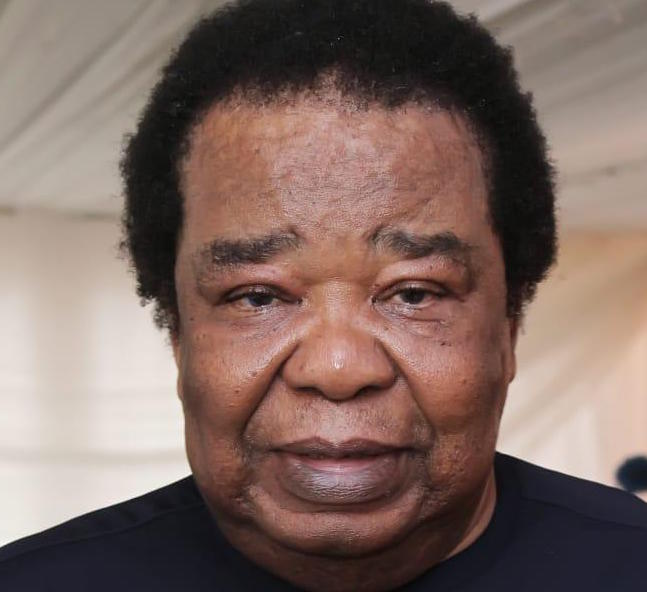
Reputed professor of political science and former Nigerian Minister of External, Bolaji Akinyemi has provided insight into why Nigerian military regimes, more than their civilian counterparts, valued scholarly inputs in the framing of government policies in running the country.
Bolaji Akinyemi is a Nigerian professor of political science who was Nigeria’s External Affairs Minister from 1985 to late 1987. Akinyemi was born in Ilesa, in what is now Osun State. He attended Igbobi College in Yaba from 1955 until 1959, Christ’s School Ado Ekiti from 1960 to 1961, Temple University, Philadelphia, Pennsylvania, United States, from 1962 to 1964, Fletcher School of Law and Diplomacy, Tufts University, Medford, Massachusetts, US, 1964 to 1966, and Trinity College, Oxford, England, from 1966 until 1969.
He was a visiting professor at the Graduate Institute of International Studies in Geneva and at the Diplomacy Training Programme, University of Nairobi, Kenya, both in 1977. He was Regents Lecturer at the University of California, Los Angeles, US, in 1979, professor of political science at the University of Lagos, from 1983 until 1985, and visiting fellow, St John’s College, Cambridge, England in 1984.
Akinyemi was director-general of the Nigerian Institute of International Affairs (NIIA) from 1975 until 1983. The NIIA is an organisation focusing on Nigerian foreign policy; while he was director-general, it was involved in promoting Nigerian-Angolan relations, among other things.
Asked about what such disregard for the academia could portend for the country, Akinyemi stated that: “Scholars have lost their status in terms of access to political office holders, in terms of the respect which political office holders accord views from the universities and what I have often referred to as the foreign policy elite. I was a beneficiary in the environment in the sense that I served under both military and civilian regimes. I served under Murtala Muhammed who appointed me to the institute. I served under General Obasanjo who kept me at the institute; I served under Shagari who kept me at the institute. I also served under General Babangida who appointed me a minister. The military tend to respect scholars than civilians. Perhaps this is because the military needed a civilian constituency that they could rely upon for ideas, propagation of those ideas and support. Civilian leadership feels that they only need the grassroots and the yes-men to run governance. To that extent, they believe they don’t need scholars. Even the scholars that they bring into their government are used to panel-beat their government; they don’t necessarily listen to them. We had more scholarly inputs into policies when the military was in power than we do now.”
The panel of interviewers led by Professor Toyin Falola was made of prominent stakeholders. The panelists were Professor Akinjide Osuntokun, Ambassador Jaiyeola Joseph Lewu, and Ambassador Godknows Igali.
While interrogating the Niger crisis, he stated: “I see President Tinubu using religious organizations which have acceptability in Niger. The door has opened a little bit. The reports have it that the government is ready to negotiate and talk. That is how negotiation starts. There was a misrepresentation of the ECOWAS communiqué from the beginning; this was when ECOWAS said it was not ruling out the use of force. The way they would have put it at the State Department would be that nothing was off the table, nothing is on the table. Nevertheless, it never meant that boots were going in after seven days. All the talks about war were misplaced. That has happened and now soft diplomacy is now being used. This however extends beyond ECOWAS. How does one deal with democracy and coups? I think there must be a charter on democracy proposed at the ECOWAS level, embraced by the AU, and wherever else. That is going to say that bad governance and tampering with the constitution is a civilian coup and if that happens that should not be accepted by the ECOWAS and AU and that such government would stand suspended. It is not enough to have a kangaroo election. That is what happened in Central African Republic where the president there has just amended the constitution to allow him run for another seven years after the spending the time allowed by the constitution.”
He also advocated that Nigeria needs to re-create a more enhancing environment for its foreign affairs ministry and embassies abroad. “The environment needs to be re-created. One, the Ministry of Foreign Affairs must become a separate service. I have been advocating this and I got quite close to getting it under Babangida. The ethnicisation of our domestic policy played a role in getting that proposal defeated when it was debated in cabinet. But it must become a separate service from the domestic service. Two, it must have a first line in the budget. Thirdly, the budget must be denominated in foreign exchange. When your budget is denominated in naira and yet you spend the money abroad, each day the amount available to you diminishes. A lot of our embassies are in debt. There is no respect from the people they owe rent. We spent so much money trying to pay salaries and allowances. We don’t have money to bail out our citizens when they get into trouble. I know I won’t get those conditions met so there is no use saying I would accept if I am given that offer (to be minister of foreign affairs),” he said.
The interview was streamed across Youtube, Facebook, Telegram, and Zoom, and had over 2 million members of the audience.