Follow Us on Google
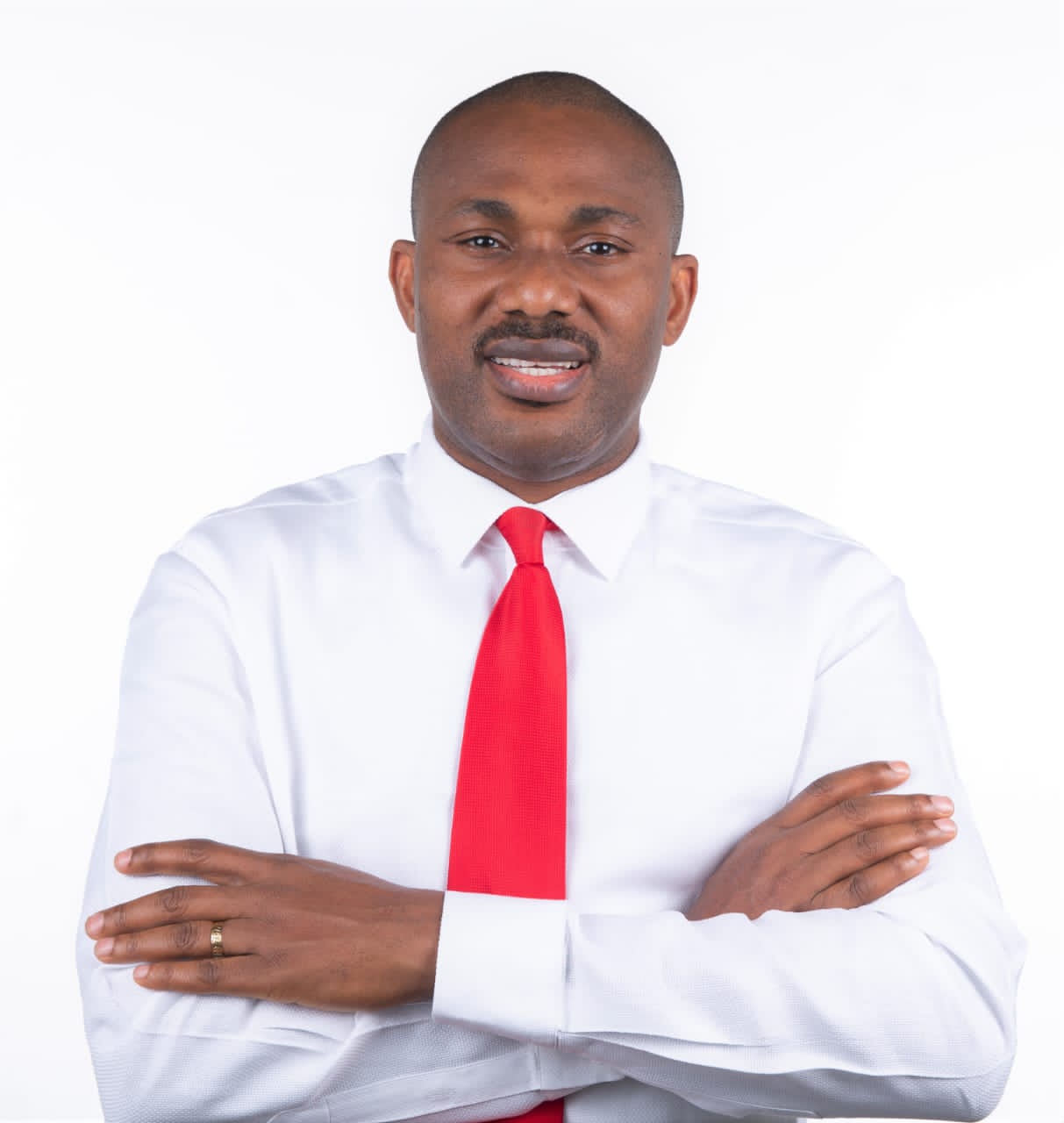
By Fred Itua
At the sidelines of the Grand Challenges Annual Meeting in Dakar Senegal, been hosted by the Bill & Melinda Gates Foundation (BMGF), Daily Sun spoke with Olubayo Adekanmbi, scientist, innovator and founder of Data Science Nigeria on his new start-up which is helping rural women in Nigeria understand financial literacy
Congratulations on your Grand Challenges Award, your proposal is using Artificial Intelligence for Financial Inclusion especially for women. What inspired this idea for you and your team?
As you know, Artificial Intelligence (AI) makes it faster and easier to identify and understand patterns and helps simplify complex everyday process and things around us. AI is particularly helpful for addressing financial inclusion issues, which are critical for building an equitable society. As our world increasingly relies on digital transactions, the lack of access to digital financial services stops many people from enjoying the benefits of modern living. Our solution is built for the segment we call the working poor with limited literacy levels.
What we have built is a solution that allows people, especially women, who cannot read or write to track, plan, document, report and learn about their daily incomes and expenditures patterns just by talking to their phones. Then they wait for a voice-based response in their local language. The solution can also tell them about the loans or financial products that are most appropriate for them based on how much they earn and how they spend money. The personal voice chatbot is like recording a voice-note on the phone and getting the right answers to their financial enquiries with ease and simplicity.
The solution gives the required convenience and privacy, and helps users learn more about their financial position quickly and easily. In essence, this solution supports transaction reporting, simplifies accounting, provides customized financial advice, and guides daily financial decision-making for informal businesses, traders, and smallholding farmers. It bridges the gaps in daily financial decision-making, financial literacy, and daily transaction tracking.
You mentioned this is specifically designed for small holder women farmers and women in the rural areas, why this particular demography?
Enabling financial inclusion is crucial for women. Recent statistics show that at least 70% of rural women in Nigeria are financially excluded. A report by the Enhancing Financial Innovation and Access (EFInA) organisation states that compared to men, women generally lack knowledge of the financial options available to them. The report’s summary mentions that only 25% of the women in Nigeria can spend, save, and manage risks in ways that allow them to be financially healthy, resilient and seize opportunities. These women do not have bank accounts, they cannot save money in banks or get access to loans.
When rural women seek financial options without right guidance, they are led into scams and predatory loans because they have minimal financial literacy. These are serious concerns. This is why we have leveraged the immense advantages of Artificial Intelligence to create a solution that supports women’s economic empowerment in ways that improve household earnings, access to financial systems, and access to guaranteed opportunities to diversify their income portfolio.
These are what this solution is all about— empowering women and closing the gender gap, which is enormous. As you know so well, women are disproportionately underrepresented and often work in the informal economy, which means they have fewer social safeguards – no pension, no end-of-year bonus or all those guaranteed income. By designing a solution that follows the Agenda for Sustainable Development, particularly Goals 1, 2, 3, 5 and 8, these efforts will support women and help them become financially empowered, and help to end poverty, reduce hunger and inequalities. We are excited that by tackling financial illiteracy and inadequate financial planning head-on, this solution can help break the cycle of poverty and foster a more inclusive economic future for all Nigerians, especially women, enabling everyone to make informed financial decisions and take control of their economic destinies.
Now, how big is the problem of the exclusion of women in the informal sector in the economy and what results are you hoping for through your AI solution?
The exclusion of women from digital financial services has massive consequences for our shared well-being as Nigerians. The truth is that when you enable a woman financially, you literally help a family and thereby build a nation. When women are financially empowered, economies grow. When more women have chances to effectively manage their financial realities, they contribute to the nation’s productivity and economic diversification. It is estimated that Nigeria’s gross domestic product could grow by 23% (US $229 billion) by 2025 if women participate in the economy to the same extent as men (CFR, 2022). Unfortunately, this is not the case. For example, in sub-Saharan Africa, only 37% of women have a bank account compared to 48% of men, and the gap has widened over the past several years. Even with the pervasive presence of mobile devices and the drive towards mobile financial access, the fundamental issue is beyond opening a bank account with a phone number; it is about empowering women so they are in control of their financial well-being, even with the little they earn. This is why building an AI system that communicates in the local language is even more critical.
For us at Data Science Nigeria, we believe we need to do much more to include women in the financial system. Inclusion and equity must be addressed intentionally and frontally. The truth remains that when a rural woman wants to open a bank account, seek a loan, or plan a long-term investment, she does not have the basic financially literacy to know what the best deals are. When she visits an ATM or opens a financial app, she should be able to use her local language and get all the facts she needs in a manner that relates to her reality. When she receives a 10-page document to thumbprint for a loan, she needs to know and understand the details of the financial commitment she is making in her local language. This is why we are using the power of Artificial Intelligence to eliminate these complexities in the processes that have excluded many women from the financial sector.
What data is behind this invention and what is the likelihood of acceptance by the women especially small holder farmers?
The informal women traders, small farmers and self-employed artisans in sub-Saharan Africa, particularly Nigeria, represent the largest segment of people living below the poverty level. Their continued poverty has been directly associated with financial illiteracy, poor tracking of daily financial transactions, the absence of self-moderated financial reporting or a simple accounting system, and poor financial decision-making. Statistics show that one out of two Nigerian adults do not use any formal, regulated financial services, and up to 133 million people are below the poverty line. About 31% of the nation’s population cannot read and write, and only 3% of Nigerians have access to loan services. These are worrisome data that clearly show we need to seek simpler and more nuanced channels for making financial services available in the users’ local languages.
To encourage acceptance of our solution, we have designed a simple interface. It is voice-driven as much as possible, and users do not need a smartphone. We are also working on a back-end integration so users can phone a number for an automated response. This means the solution will work even where there is no internet service.
Also, we are working with women’s groups to help them understand the solution and how they can use it. We are also learning from them about additional features we could add to support their everyday financial well-being, focusing on ease, convenience, and privacy without compromising their personal data. We have built an anonymous and de-indemnified interface so that every recommendation and the data input are not traceable to anyone.
Have you done any test runs, if you have, what was the experience like ?
The test data is very promising. It shows that about 93% of the testers confirmed the accuracy of the financial explanations provided by the AI-powered chatbot, which was higher than that of an average person. It was at par with a financial expert’s understanding. In the same vein, 80% of the testers confirmed the high level of convenience and privacy from the AI-generated financial advice compared to working with a human. Also, 90% of the testers confirmed an increased interest in digital financial access because of the AI-enabled financial advice and accounting support.
Two key differentiators of our platform are its abilities to read and explain financial documents. A user can upload their statement of accounts, or a loan agreement and our app solution will explain the details to them. In addition, the solution is based on fine-tuned large language models. We used ChatGPT, which has been fine-tuned with a lot of nuanced and Nigerian-specific financial information and consumer slang. For example, if a user tells the app that it seeks a loan of ‘100 Figo’, the app knows that the user is not speaking about the great Portuguese football player but ₦500 in 100 places. This is street language, and understanding it is a central to our solution.
How soon should we expect the deployment of this innovation and how many languages are you planning to develop?
At the moment, we have piloted our app in the Yoruba language, and we hope to scale it by building more Yoruba language audio datasets that our large language model will learn from. Our approach is to be as inclusive as possible. We have recently opened a language recording lab, which allows us to build the large language voice data required to train the AI to speak and understand more Nigerian languages. However, that takes time and it is a huge investment. We are building the “Siri” of Africa that can speak, understand, and engage in at least the 10 most popular African languages. One additional commitment we are making is to build rich audio datasets that recognize dialect differences in local languages. That will enable the solution to serve as many users as possible in villages and local communities, since helping them is our principal goal. For example, when our system is fully completed, it will be able to support Yoruba spoken in Abeokuta (Egba) or Ijebu, Ekiti, or even the variations in Togo or the Benin Republic.
Tell us about your organization and what you have done in innovation in the past
Data Science Nigeria (DSN) is sub-Saharan Africa’s premier artificial intelligence technology enterprise. It is dedicated to fostering Africa’s AI talent ecosystem and pioneering cutting-edge solutions in health, retail and finance. DSN’s proven track record includes successfully developing major AI solutions in the financial services sector, such as SpotOn, an integrated addressing, marketplace and mobile wallet platform for small businesses. In 2022, the prestigious International Research Centre on Artificial Intelligence (IRCAI) recognised DSN’s AI-powered SMS Fraud Detector and Instant Fraud Prevention Call Alert as one of the Top 100 Global AI Solutions. In 2021, the organization also listed two of our products as global Top 100 AI Products. This wase in addition to earning several academic awards.
Our start-up, DSNai, focuses on health, education, financial inclusion and agriculture for emerging market customers. DSNai is also a global winner for using AI to generate automated and personalized learning content based on learners’ nuances, style and life development stages.
We support many global organizations including the Bill & Melinda Gates Foundation, Mastercard Foundation, World Bank, Microsoft, Google, Meta (Facebook), Tony Blair Institute and TikTok, among others.