Follow Us on Google

By Idu Jude, Abuja
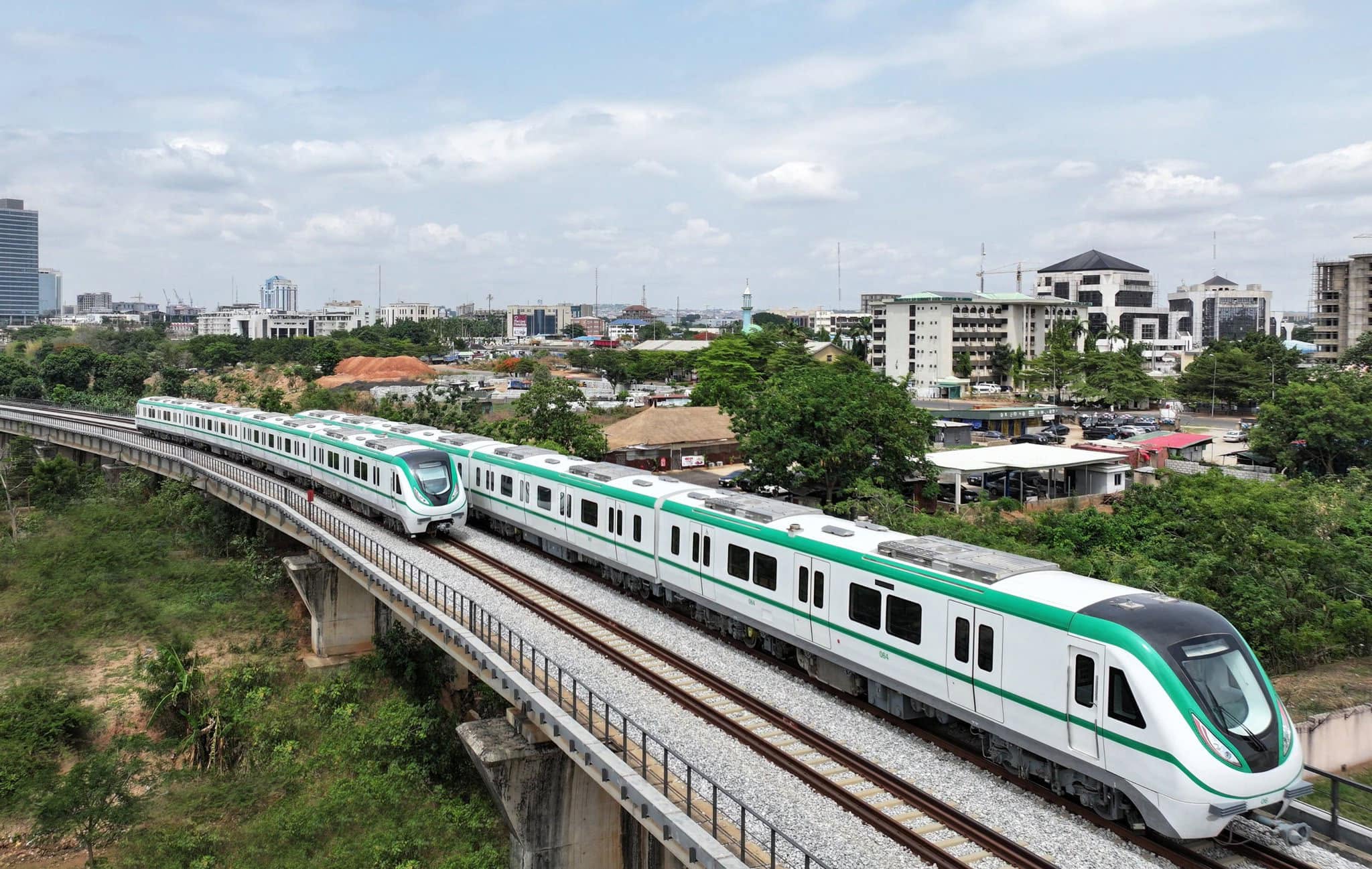
Over the years, Nigeria’s leaders have been expected to match actions with words, given the several years of policies and foreign loans sunk into the railway reformation project.
Despite years of huge investment in the billion-dollar project targeted at boosting the economy, the odds seem to speak against the country as the project becomes an albatross.
With the system presently experiencing retrogression, from a promising springboard for economic stimulus to a near-comatose state, questions are being raised about the benefit of the foreign loans sunk into the project.
Under the late President Muhammadu Buhari, the Lagos-Ibadan rail corridor was launched into operation after several years of reform, with the importation of locomotive engines and coaches. Earlier, the Abuja-Kaduna corridor began with about four to five passenger services running daily, which was followed by the concessioning of the ticketing section to private companies.
But today, what do we have?
From promise to albatross
Nigeria has spent over $2.5 billion on railway modernisation in the last 10 years, largely from Chinese EXIM Bank loans and Federal Government counterpart funding. The Lagos-Ibadan Standard Gauge (157km) cost $1.6 billion. The Abuja-Kaduna Standard Gauge (187km) cost $876 million. The Itakpe-Warri (Ajaokuta) line, after 30 years of abandonment, was completed for $200 million.
Yet operational efficiency has declined. The Lagos-Ibadan service, which started with 8 daily trips, now struggles with 4. The Abuja-Kaduna corridor, once the safest route between the FCT and Kaduna, has suffered from insecurity, poor maintenance and ticketing racketeering. Coaches are failing, locomotives are under-serviced and stations built for 21st-century rail look deserted.
This is why Nigerians ask: where is the return on investment?
Why railway is still the mainstay
Despite the retrogression, no serious economy runs on road alone. Nigeria has a landmass of 923,768 square kilometres. We move goods 1,100km from north to south.
Presently, over 90 per cent of goods in Nigeria move by road. That is why our roads fail every six months. A 30-ton truck does damage equivalent to 9,000 cars. That is why the Lagos-Ibadan Expressway, Abuja-Lokoja and Kano-Kaduna roads are in perpetual repair. We are using trucks to do what rail should do.
The benefit of the railway is not passenger tickets but economic stimulus:
Cost reduction:
Moving a container from Lagos to Kano by road costs ₦1.2m–₦1.5m. By rail, it should cost ₦400,000. That saving reduces the price of rice, cement and fertiliser in the market.
Road preservation:
One freight train with 30 wagons carries 1,200 tons, equivalent to 40 trailers off the road. If we move freight to rail, our federal highways will last 10 years instead of two years.
Safety:
Nigeria loses over 40,000 people annually to road accidents, according to the FRSC. Rail is 20 times safer. The Abuja-Kaduna road alone records hundreds of deaths yearly from accidents and kidnapping; rail removed that risk when it worked.
Job creation:
A functional railway system creates three categories of jobs: direct (NRC, stations, maintenance), indirect (vendors, hospitality around stations) and induced (factories that spring up along corridors). The Lagos-Ibadan corridor has already created jobs at Agbado and the Kajola wagon factory.
Other News
Environmental and fuel subsidy relief:
Rail consumes 70 per cent less diesel per ton-km than trucks. If we remove the fuel subsidy, we must provide a cheaper mass transit alternative. Rail is that alternative.
What went wrong?
Lack of integrated plan:
Mr Oluwase chipped in: “We built standard gauge but left narrow gauge to die. We built Lagos-Ibadan but stopped at Ibadan instead of completing Ibadan-Minna-Kaduna-Kano to link the north. A rail that ends in Ibadan cannot move goods to Kano.”
No freight focus: We focused on VIP passenger service for elites, not freight for traders. Nigeria’s railway makes 90 per cent of its revenue worldwide from freight, not passengers. We reversed it.
Poor concessioning: Ticketing concessioning became ticket racketeering. Maintenance concessioning became contracts for cronies. Without transparency under the Public Procurement Act 2007 and BPP oversight, foreign loans became a burden, not a blessing.
Insecurity and management failure:
After the 2022 Abuja-Kaduna attack, confidence dropped. The NRC has not restored full public trust.
The way forward
If the railway must be the mainstay, as it is in India, China and Germany, the government must:
Complete the backbone: Immediately fund and complete the Ibadan to Kano Standard Gauge. Without Kano, the $1.6bn Lagos-Ibadan line is a bridge to nowhere.
Revive freight:
Make it mandatory for Dangote, BUA and major importers to move 40 per cent of cargo by rail through pricing. Reopen the Apapa port rail spur for direct port-to-rail evacuation.
Privatise operations, not assets:
Let the government own the tracks, but concession operations transparently to private operators with proven capacity, not political allies.
Connect wards to rails:
Under a Labour Direct approach, every rail station should have 30 artisans and technicians resident in the ward, maintaining the track, securing the corridor and feeding passengers. This is how you create 3 million jobs while securing rail.
A country of 230 million people cannot sustain an economy on 4,000km of bad roads and second-hand trucks. It needs 5,000km of functional rail to move its people cheaply, its goods cheaply and its economy efficiently.
The loans are already sunk. What remains is to make the railway work or continue to pay debt for trains that do not run.