Follow Us on Google
By Williams Oladapo
When Asiwaju Bola Ahmed Tinubu became president in May 29, 2023, one of his cardinal aims was to sanitise the nation’s oil and gas sector. It was a strategic part of his Renewed Hope Agenda and those close to the corridors of power attest to the fact that he was truly serious about this. He was said to be very particular about the need to stop crude oil theft, more transparency in the sector and also the need to optimise the nation’s oil and gas production.
Beyond this, President Tinubu was also determined to see through the provisions of the Petroleum Industry Act, PIA, of 2021 which fully made the NNPC a fully privatised entity. It would be recalled that the name has changed from the NNPC to Nigerian National Petroleum Company Limited, NNPC-L. The NNPC-L is now owned 50% apiece by Ministry of Finance Incorporated and Ministry of Petroleum Incorporated.
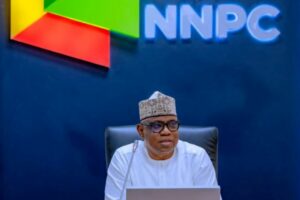
With the appointment of Bashir Bayo Ojulari, a former top hand at Shell Petroleum Development Company, as the Group Chief Executive Officer, (GCEO), of the NNPC-L, a square peg in square hole was said to have been found. And even the President attested to this when he announced the appointment. It must not be missed that the appointment, even for any administration, remains a very strategic one since the oil and gas sector is extremely critical to the nation’s economic and social well-being. And it needed no saying that Ojulari came into the job with a very rich resume.
Ojulari is an internationally trained oil and gas expert in petroleum process and production engineering. He is one Nigerian whose impact in the oil and gas industry has not only been monumental but also transformative. He started his career in Elf Petroleum Nigeria in 1989 and later joined Shell in 1991. He spent three decades in Shell before retiring in 2021 after serving as the Managing Director of one of company’s subsidiaries in Nigeria, Shell Nigeria Exploration and Production Company Limited. The positive events and transformations that have taken place since his coming in board as the new czar of the nation’s oil and gas conglomerate have further proven beyond doubt, that indeed Ojulari’s appointment was not done in error.
It was shocking, therefore, when, recently, the internet was again awash with the unconfirmed reports that the NNPC-L’s had been ‘forced’ to resign. It started like a rumour and within a few days, it gained momentum.
Surprisingly, the news was not reported by any major newspapers or broadcasting stations. But the negative story sprang up on various social media platforms with many bloggers giving different accounts. By the time the dust would settle, the news was everywhere that Ojulari had been sacked or forced to resign. Again sacrificed like Adeosun.
In what some described as being ‘politically motivated’ Ojulari was alleged to have been hobnobbing with those whose political interests were at variance with those of President Bola Ahmed Tinubu, the man who was gracious enough to have appointed him. He was said to have been doing business with them and even patronising them.
“I doubt if Ojulari could have been dealing with those who are after President Bola Tinubu’s job,” an insider in the NNPC-L who did not want his name in print told told this writer last week.
To me, it must have been insane. Here was a man (President Tinubu) who took him to the pinnacle of his career and I believed he clearly knew what the President wanted in the oil and gas industry; which is to clean up the place and ensure increased productivity. He could not afford to fail or disappoint the President.
Going by findings in the NNPC, Ojulari perhaps knew the job at hand and he surely understood that he would be walking on egg shells to ensure that things went as expected and also meeting the President’s expectations. Findings show that Ojulari might have fared well above average since he took over at the NNPC. His private sector background was said to have influenced some of the modest achievements he has recorded so far since his appointment in April.
Since coming on board, his leadership and managerial acumen is said to have ushered in a wave of transformative progress in NNPC, energising the organisation and reaffirming confidence in NNPC Limited’s trajectory in line with the renewed agenda of the President, especially in the area of increasing crude oil production.
It is worthy of note that for the first time in the history of NNPC, there is a very significant increase in the production volume of NNPC Exploration and Production Limited (NNPC E&P). It could be recalled that thay E&P is an NNPC 100% owned exploration and production company, which is fully engaged in direct exploration and production. Five months ago, that was before Ojulari took office, the company was battling to peak at about 250,000 barrels per day. However, as at today, the it is currently producing an impressive 330,000 barrels per day. Interestingly, this was beyond the 300,000 barrels per which was the target/budget. This stands as the highest ever in the company’s history and marks a bold step forward in crude oil production. This increase in production, it must be admitted, did not happen on its own. It was a product of intentional moves to change the fortunes of the company. Ojulari’s commitment to fostering a more inclusive and development-oriented work environment has not only promoted increased productivity but has also boosted the morale of the workforce across all NNPC work strata.
Even before its privatisation with the Ministry of Finance Incorporated and Ministry of Petroleum Incorporated taking fifty oer cent stakes in the conglomerate, the public perception of the NNPC was that of a cash cow but which was operating at a loss and a cesspool of corporate heist. But that, according to insiders who spoke to me, seems to be changing especially in the area of turning the outfit into a robust commercially viable unit with the aim of gaining global attention for excellence and profitability.
Other News
And that is why the NNPC-L management team headed by Ojulari have taken steps to put in place measures that would not only change the face of the conglomerate but also its public perception.
To some extent, his leadership is driven with passion to see a better NNPC woven in excellence, integrity, and patriotism.
Upon assumption of office, he took a bold step to install a performance-based management system, making it clear to all that there is a paradigm shift in the management.
From day one, his statement was clear that he is committed to a people-first culture in the workplace and in less than 100 days in office, Ojulari audaciously demonstrated and proven beyond doubt that he is committed to a people-first culture in the workplace.
He has worked collaboratively, with the two labour unions in the oil and gas industry, and through the instrumentality of negotiations, he was able to fix some teething working condition issues in NNPC.
While this might not have been known to the public, one major log on the operational neck of the old NNPC was a list of commercial contracts and obligations which not only strained the oil and gas behemoth, but an avoidable drain on its resources. These contracts and obligations were of zero value to the bottom line of the then NNPC.
The move at optimising only contracts that benefitted the NNPC-L was the best going by the circumstances Ojulari met on ground when he came on board.
To him, if these contractual deals were not NNPC-L to avoid cost or not increasing its production or revenue nor its capacity and viability, then such contract would not be continued with. It would be politically naive to expect this to go down well with those who have fed fat on the NNPC-L for decades. They decided to fight back and hence the ludicrous allegations against him.
Perhaps another of his achievements and those of the new management was the strong emphasis on transparency and accountability. Ojulari’s first remark in the maiden interactive session he had with entire staff members of NNPC was that it won’t be business as usual and he did not mince words to place strong emphasis on due process, transparency, and accountability. These were not common commodities on the old NNPC and he has not only been living up to that creed, he has been enforcing it.
Ojulari’s leadership prowess has also come to bear on the company’s cultural transformation through engagement. His leadership has driven a much-needed cultural shift characterised by open communication, inclusive town halls, and deeper engagement with staff at all levels. This has fostered a more connected and purpose-driven workforce.
His dynamic and people-centered leadership has reignited a sense of ownership, pride, and optimism across the organisation.
While Ojulari might have made giants strides in an incredibly short period of time, it remains to be seen if he has also balanced these with the requisite political commonsense and optics needed to man such a very strategic post. President Tinubu is known to be a leader who is not over-bearing and dictatorial, especially when it has to do with his aides and how they do their jobs.
However, and even at that, no President will fold his arms and watch a strategic conglomerate like the NNPC-L become a flank where his opponents will undermine his economic and political plans for the country.
While it is not really in the open what the GCEO of NNPC-L might have done wrong, many are aware of what he has done right. But he must also bear in mind that there are many other candidates who could do as well as him. And that is why he has to keep doing the good job but also politically stay in line.
That’s the only way he can remain a strategic partaker of the President’s Renewed Hope Agenda.
Williams Oladapo writes from Port-Harcourt