Follow Us on Google
By Steve Agbota
For maritime experts, Nigeria’s seaports must be pushed to embrace green reforms as global shipping shifts toward cleaner, more efficient operations.
With major maritime hubs already investing in low-carbon infrastructure and sustainable port systems, they warn that Nigeria risks losing competitiveness if it fails to quickly adapt.
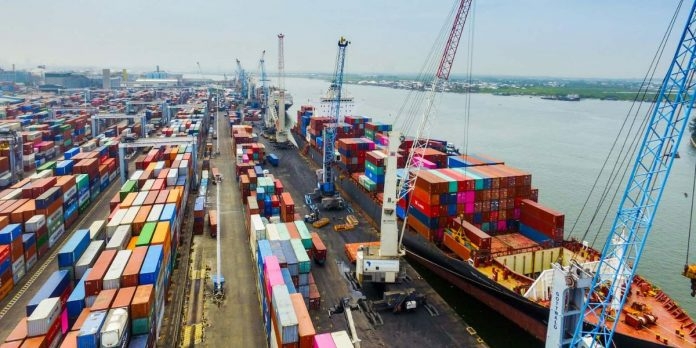
For context, green ports refer to seaports that adopt environmentally responsible practices, including the use of renewable energy, shore power facilities, cleaner cargo-handling equipment, waste management systems and technologies that reduce carbon emissions. Such measures are increasingly becoming key considerations for shipping companies when selecting ports of call.
Interestingly, Nigeria and the United Kingdom recently signed a £746 million deal to upgrade the Lagos Port Complex, Apapa and the Tin Can Island Port Complex.
The funding, backed by UK Export Finance, will support a major overhaul of the facilities, which are among Nigeria’s busiest maritime gateways.
Officials say the project marks the biggest modernisation of the ports in nearly 50 years, aimed at improving efficiency, reducing delays, and boosting trade through the country’s key shipping hubs.
Experts insist that the modernisation should include sustainability and must not not be mere political talks, especially as neighbouring countries are investing in port sustainability initiatives to attract shipping lines and cargo traffic.
So, if Nigeria fails to be in the name league with other maritime nations, experts warned that vessels could gradually divert to other ports offering faster turnaround times, lower emissions and greater operational efficiency.
The debate over green ports ultimately extends beyond environmental stewardship. At stake is Nigeria’s position within an increasingly competitive regional maritime landscape.
The ports that fail to align with these emerging standards risk losing vessel traffic and investment to more sustainable alternatives across the region.
Daily Sun learnt that beyond environmental benefits, green port development offers significant economic advantages. These include improved operational efficiency, reduced energy costs, enhanced investor confidence, and greater attractiveness to international shipping companies seeking to comply with sustainability requirements.
Meanwhile, major seaports in countries like Morocco, South Africa and several emerging maritime hubs are investing heavily in green infrastructure to position themselves for the future of global trade.
Nigeria, however, faces the challenge of ageing infrastructure, inadequate environmental facilities, and limited investment in sustainable port development.
At the recent event organised by the Shipping Correspondents Association of Nigeria (SCAN), agitated that Nigeria must raise its investment in the area of infrastructure and other environmental facilities to position itself as the leading Green Port hub in West and Central Africa.
Experts argued that Nigeria cannot afford to fall behind in this transition, even as they warned that as the International Maritime Organisation (IMO) and other global regulatory bodies tighten emission standards, shipping lines will increasingly favour ports capable of supporting cleaner and more energy-efficient operations. Failure to meet these expectations could lead to a gradual loss of jobs and diversion of cargo and vessel traffic away from Nigerian ports.
Speaking at the event, the Minister of Marine and Blue Economy, Dr Adegboyega Oyetola, called for urgent action to ensure that Nigeria keeps pace with global efforts toward environmentally sustainable port operations.
The Minister warned that the country must not be left behind in the ongoing transition to green ports, saying that the global maritime industry is rapidly embracing sustainability, climate-conscious operations and environmentally responsible practices, making it imperative for Nigeria to align with emerging standards.
The minister, who was represented by the Managing Director of Nigerian Ports Authority (NPA), Abubakar Dantsoho, said that without the commitment and professionalism of dockworkers, Nigeria’s ports cannot function effectively, adding that their role is critical to cargo handling, vessel servicing and the smooth flow of imports and exports.
Reiterating the federal government’s commitment to workers’ welfare, the minister warned against poor labour practices in the maritime sector, insisting that employers of dock labour must comply with all safety and labour regulations.
On the green ports agenda, Oyetola noted that Nigeria must not lag behind in adopting cleaner technologies, improved waste management systems and energy-efficient port operations, which are already being implemented in other maritime nations.
He explained that dockworkers also have a critical role to play in advancing environmental sustainability through proper cargo handling, adherence to safety standards and support for green initiatives within port operations.
Other News
Meanwhile, the president of the National Association of Stevedoring Operators (NASO), Bolaji Sunmola, also called for an efficiency-driven green transition framework to reduce emissions across Nigerian ports, urging regulators to anchor port modernisation on practical, performance-based environmental standards.
He said Nigeria’s push for greener ports must be supported by a realistic equipment upgrade road map developed in collaboration with the Nigerian Ports Authority (NPA) and the Nigeria Maritime Administration and Safety Agency (NIMASA), and aligned with operators’ financial capacity.
He stressed that efficiency remains the most immediate pathway to reducing the maritime sector’s carbon footprint, adding that environmental compliance efforts could fail if treated as unfunded obligations on operators.
“We must also be frank: the equipment our industry deploys- the cranes, forklifts, terminal tractors, and cargo-handling machinery contributes materially to the emissions footprint of port operations. NASO is committed to engaging actively with the NPA and NIMASA to develop an industry-wide equipment upgrade roadmap,” Sunmola said.
He stressed that any green transition framework must be backed by viable financing structures, including access to climate-related funding streams such as the Green Climate Fund (GCF), with participation from institutions like the Development Bank of Nigeria (DBN).
According to him, “green practices must not become an unfunded mandate imposed on operators who lack the capital to comply. That would be neither fair nor effective.”
Sunmola also urged the government to fully integrate environmental benchmarks into Nigeria’s ongoing port modernisation programme, noting that infrastructure expansion without emissions controls would leave reforms incomplete.
He called on the Minister and the NPA leadership to ensure that every investment, operational upgrade, and regulatory reform under the modernisation agenda incorporates binding green performance indicators covering emissions reduction, equipment efficiency standards, waste management, and cargo dwell time.
“Modernisation that expands cargo handling capacity without simultaneously addressing environmental performance is modernisation that is only half-complete,” he said.
Beyond infrastructure and regulation, Sunmola emphasised that operational efficiency remains the most powerful and immediate green intervention available to the sector.
He argued that reducing cargo dwell time, minimising vessel waiting periods at anchorage, and eliminating prolonged truck idling at port gates would automatically deliver measurable emissions reductions without additional capital expenditure.
“From NASO’s standpoint, the single most powerful green port initiative available to Nigeria today requires no imported technology and no capital that we do not already possess. It requires operational efficiency. When stevedores discharge and deliver cargo faster, when dwell times fall, when vessels wait less at anchorage, and when trucks do not idle for days at the port gate, the environmental benefit is automatic, measurable, and immediate.
The carbon that is never emitted is the greenest of all,” he said.
He further noted that sustainability in the maritime sector must also extend to workers’ welfare, warning that a “green port” that neglects safety and living conditions for dockworkers would be fundamentally flawed.
“A green port that exposes its workers to toxic emissions, unsafe working conditions, and degraded welfare is a contradiction in terms. The sustainability agenda must extend to the sustainability of livelihoods,” he added.
Also speaking, the president of the Nigerian Chamber of Shipping (NCS), Alhaji Aminu Umar, said the success of green and smart ports depends largely on the readiness of the workforce.
Umar stressed that Nigeria’s transition to greener ports must not leave dockworkers behind, calling for targeted training and workforce development to prepare workers for emerging technologies and sustainable port operations.
Umar, who was represented by the chamber’s director general, Vivian Chimezie-Azubuike, emphasised the need for a comprehensive needs assessment to determine the number of dockworkers requiring training and the specific skills needed to improve productivity and adapt to technological changes.
“We don’t have the data. We need real data to know how many people are actually in need of training and to conduct a proper needs assessment that will identify who requires what kind of training that adds value to their jobs,” Umar said.
According to him, investments in automation, digital systems and environmentally friendly technologies must be matched by investments in human capital to ensure workers benefit from the industry’s transformation.
Also, the deputy national president of the Nigeria Labour Congress (NLC), Prince Adewale Adeyanju, warned that the global shift toward green ports must not result in job losses or the exclusion of workers.
He noted that automation, renewable energy systems, digital logistics platforms and cleaner cargo-handling technologies are rapidly changing port operations worldwide.
“Any conversation about green ports must place workers at the heart of policy formulation and implementation,” he said, stressing that workers should be equipped with the skills needed to thrive in the changing maritime environment.