Follow Us on Google
By Enyeribe Ejiogu
For many months and years, motorists and commuters have been experiencing trauma on the Apapa-Oshodi expressway corridor in Lagos, on account of the long-running menace of trailers and tankers that block the road, including the service lanes too.
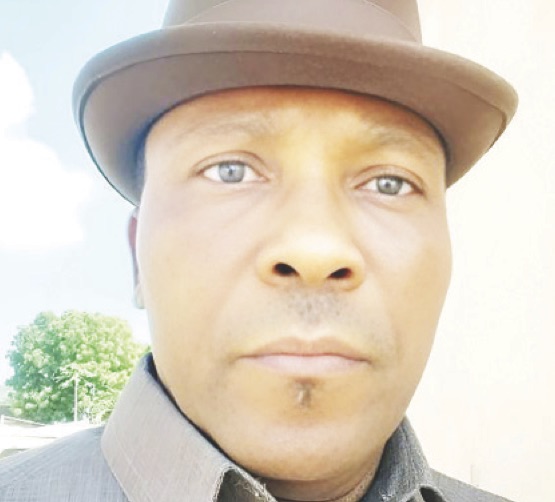
Deacon Pat Nwabunnia is a maritime expert who has been consulting for many successful enterprises engaged in importation, export and production activities.
With almost 30 years of proven track record, Nwabunnia who is a member of Christ Embassy Church and hails from Anambra State, speaks about the challenges of the maritime subsector of the economy, lamenting over the negative impact of government policies on the sub-sector and the country at large.
Along the Oshodi-Apapa expressway, in both directions, trailers and fuel tankers are still parked on the road to the point of narrowing it to one lane. What happened to the trailer park in Apapa area. Is it functional now?
The challenge we are facing today within that corridor started more than 25 years ago, when the Federal Government started selling out the open spaces on that corridor. Apapa Port was built by the British colonialists as the premier port in the country. It was built with a lot of facilities and open spaces. Nigeria is the only place where you see a seaport without trailer parks. You won’t see it anywhere else in the world. It was the General Sani Abacha regime that first sold open spaces in that area to a major, dominant, indigenous manufacturing conglomerate. Then when Olusegun Obasanjo became president, he gave out the remaining open spaces and the place became so tight and congested. You have more than the required terminals in that area, but no space for the trailers and tankers. The menace of trailers and tankers parking on the road will not stop. The so-called trailer park built by the government, how many trailers can it accommodate? If you are serious about having a trailer park, you should think about a facility that can take up to 5,000 trailers and tankers. But where will you find such land in the area around Apapa Port, when the Federal Government has distorted the whole environment? That is why you still see lines of trailers carrying containers on that road. Then you have the issue of petrol importation. You find that trucks come from as far as Sokoto, Maiduguri and Gombe to Lagos, to lift petrol. All that is happening within the Apapa corridor. That is why lines of trailers and tankers stretch all the way back to Cele Express and beyond Isolo on the Oshodi-Apapa expressway.
It has been said that the problem of trailers and tankers in the Apapa-Oshodi corridor is attributable to former President Olusegun Obasanjo who insisted that Lagos will be the only major functional port. For that reason he did not allow Calabar port to function and everything became concentrated in Lagos. In that regard, should Obasabjo not be blamed for this menace?
Some of these claims are not factual. They are up to 70 per cent propaganda. I have been in the maritime business for close to 30 years. I have operated in Port Harcourt, Warri, Lagos, and Calabar. First, Warri does not have a seaport, but a river port. It was functional up to the mid-90s. Large vessels like the BACO LINER container ship could not come into Warri. They would berth at Escravos and barges would then be used to transfer containers to Warri port. The port was functional up to 1996. During the Abacha regime, one local government area was created out of Warri in a place where the Itsekiri and the Ijaws lived together. The headquarters was sited in the Ijaw area. But two or three days later, the headquarters was moved to the Itsekiri part. The Ijaw protested. The Ijaw boys picked up their guns and fight started between the Ijaw and Itsekiri. The vessel owners panicked and moved their vessels to Lagos. In the maritime business, two major things are considered: safety and profitability, but safety is given higher priority because nobody wants to lose his vessel. That was what brought Warri down and it never functioned optimally till today. Now, concerning Calabar Port, the issue is that our people make a lot of noise about what they don’t understand. The question is: where do you go to from Calabar? Calabar is like a dead end; it is either you are going to Calabar or nowhere else. You can’t go to Enugu from Calabar. Calabar is not close to anywhere – the distance between Calabar and Uyo is much. Moreover, the distance between Calabar and the end of Cross River State takes five to six hours drive. So, who would like to take his consignment to Calabar. But Onne Port in Rivers State has been functional all this while, and importers in Aba and Onitsha have been using it. The port called Area 1 in Port Harcourt has been off and on, but it recently picked up. These things are not what people paint them to be. To talk of government having a deliberate policy for these facilities not to work is simply not true. Let me give you a local illustration: you don’t tell the MD/CEO of The Young Shall Grow Motors the route he should put his buses. That decision is determined by where his buses will be safe and he will make profit. Therefore, you cannot force him to run the Lagos Maiduguri or Lagos-Zamfara routes. The Lagos-Benin is cheaper than Lagos-Abuja. As it is in bus inter-state service, so also it is in shipping business. I remember that many years ago a 40-foot container coming to Lagos from China was cheaper by US$600 than the one going to Onne. Moreover, it will arrive one week or 10 days earlier. So, the importer will receive his container in Lagos and get to Onitsha before the one shipped through Onne will arrive. These are the things that people consider before they decide where to ship their consignment. But the problem about Nigeria is that everybody knows everything. These are the issues involved. Lagos is nearer to China and Europe. Moreover, the ships are either coming from Tema (Ghana), Lome (Togo) and Cotonou (Benin Republic). They will discharge in Lagos before going to Onne or any where else. Lagos is the commercial capital of Nigeria; no other place has the capacity that Lagos has. We have to tell ourselves the truth. Most of the time you hear people from my side say they need a seaport in the Southeast. The question is: where will you build it? It is when you have access to sea that you will then begin to talk about building a seaport. That is the major problem and our people don’t want to hear the truth. Some people argue that River Niger could be dredged to allow bigger vessels to come into Onitsha port. Have these people considered the ecological impact of doing that? Nobody is talking about the environmental impact assessment. Every water body has its natural depth. If, for instance, the natural depth of River Niger is six metres, no matter how you dredge it, it will not change. When flood comes the water level will rise and after that it will go down to its natural level. I don’t understand the clamour for a seaport. Are you blaming God for keeping us in the location where we are? Those who have sea in their place are they better than us? The whole of Bayelsa is sea. That we do not have sea, has it made us less prosperous? Everybody has his own areas of strengths and weaknesses. What to do as a wise person is to explore your area of strength and hold firmly to it.
Given your experience in the maritime industry and speaking from a practical point of view, if you were to meet the Minister of Finance and Coordinating Minister of the Economy, Wale Edun, what advice will you offer him regarding the problems in the industry?
The leaders in government should sit down and plan what to do in the short, medium and long terms. You do not apply a long term measure to a short term problem. It will not work. To answer your question, let me lay a background. Some years back, to clear a 40-foot container in Cotonou, we used to buy 1 million CFA for N80,000. But in recent times, it came to like N200,000 for 1 million CFA. Today, as I am talking to you, 1 million CFA is almost N1.7 million. Is that not shocking? Some people think that our problem is just the US dollar. Today, it is difficult for us to do business just across the border in Cotonou because we cannot afford the cost. If we are allowed to clear a 40-foot container in Cotonou to Lagos, it will cost up to N13 million. It will cost about N11 million to clear the same container in Lagos. That tells you how deep the naira has fallen into the mud. The Minister of Finance needs to understand one thing: increasing duty payment every week will not solve anything. It is just robbing Peter to pay Paul. As you are collecting more money from your citizens through excessive taxation, levies and charges, you are creating more problems and worsening the inflation spiral and the attendant social distortions. That is why things are getting worse every day. The man you took all his money through duties, where is he going to sell the goods? So, the people in government have to sit down and think about how to remove all the impediments that make the Nigerian environment hostile to do business. The Ease of Doing Business Act should not only focus on quickening the procedure for registering a business name or incorporating limited liability company at the Corporate Affairs Commission (CAC). There are too many bottlenecks.
Before this government came in, things were already going bad. Some of us had to withdraw from direct importation because of the way the exchange rate was going. But when this government came in, the situation became terrible with the decision of President Bola Tinubu to remove subsidy in his first speech after being sworn-in on May 29. Everything went upside down, there was confusion in the economy, then followed by the policy of allowing the naira to float. It was a horrible policy. The previous government had a way of controlling our foreign exchange rate. When your country has nothing to back its currency why should you allow it to float against the currencies of other nations that have better economies? If you are not exporting other goods and services how will you get foreign exchange to support your currency. Then the Federal Ministry of Finance in collaboration with the Nigerian Customs Service can wake up any day and decide on the duty to be paid. In Nigeria you don’t pay duty based on the value of what you import but on the size of the container. That is what has been happening for the past four or five months. I have never seen anything like that happen before, it is not done anywhere. There are items you can use N80 million to fill a 40-foot container and there are other items you can spend N200 million to fill the same 40-foot container. In Nigeria duty is now charged based on the size of the container, not the value of the goods. It is only in Nigeria that this happens. You don’t develop the economy by over taxing the people. That way, you make them poorer. Today, because of the falling Naira, a lot of people have abandoned the cars they imported at the ports because of the terrible duty rate imposed on them. Before this administration came in, we had over 4,000 abandoned containers of imported goods in various ports in parts of the country. Today, as we speak, thousands of more containers are being abandoned at the ports.
Before May 29, you could clear a container with N7 million but now, you have to spend about N11 million. After spending that amount, how much can you sell the goods? Some Nigerians who had business transactions with Chinese companies, who have not yet paid, you find that by the time the container arrives the port, if you pay the duty you will lose a lot of money such that it wouldn’t make sense even to clear the container. Then few weeks ago, terminal operators in collaboration with the Nigeria Shippers Council increased the storage charges by 600 per cent overnight. When you were paying N15,000 per day as storage charge it was increased to N90,000. When you add 7.5 per cent VAT, it is almost N100,000. So in just 10 days you will pay N1 million. Then after a meeting with stakeholders, it was reduced to 400 per cent, which is still too high. For this reason, more and more containers will be abandoned. Who can you sell the goods to? The same Nigerians who are already pauperised by the policies of this government? What has changed in their income?
This situation is leading to bankruptcy across the country. Assuming you had N200 million before now, how much dollar can you buy with the same amount? This horrible situation is affecting everybody.
The legislators in the National Assembly who received SUVs worth N160 million, is the situation also affecting them?
If you have an SUV like that where will you drive it? If any of them is from Imo State, can they visit home with the SUV? That is the issue. Even if you fly into Imo Airport and land, you will still use the same highway just like everybody else. The insecurity is affecting everybody even if you have a bulletproof vehicle. Those of them from the North, can they still go home with the SUV given the level of insecurity in the area? They are all locked up in Abuja. For how long will that last? The issue is that when the poor man is hungry, the rich man won’t sleep. It is natural. When the boys in Ajegunle are hungry, the rich man in Ikoyi cannot sleep. When things are well, it will be well for everybody.
Today, whether you voted for APC, PDP or Labour Party, we are all buying petrol from the same filling station, we are all buying from the same market. It doesn’t matter whether you are Christian, Muslim, traditionalist or even an atheist. The hardship does not recognise whether you are from the Northwest, Southeast, Southwest or other geopolitical zones. We are all bearing the brunt of the worsening economy equally. This country is in trouble. The hungry man is an angry man. If you are going on the road today, you have to be careful and very patient because you don’t know what the other man is suffering. That is why people react in unimaginable ways these days. The situation has become terribly bad. Businesses are shutting down. The cheapest loaf of bread now in Lagos is 1,000 Naira and two teenagers will finish it. Look at the N30,000 minimum wage that even some states are not able to pay. By now new yam which should be an alternative for breakfast and even dinner is not in the market. It is very scarce and expensive. So, where are we going?
You just mentioned the issue of yams. To what can we attribute the scarcity?
Well, you have the combination of marauding armed herdsmen and bandits who prevent people in farming communities to harvest their crops. That is part of it but not entirely the reason. The farmer has to sell at a price that will allow him buy rice; the person that produces rice also has to sell at the right price that will enable him buy vegetable oil and so on. So, we are moving in a circle of inflation. A bag of rice is now approximately N60,000. In a country where the minimum wage is N30,000. How do you expect the people to survive? Consider a worker in the Federal Civil Service who earns N150,000 and has two or three children in school or even in University. How can that man pay the school fees for those children? He has to spend money on transportation, to get to work. If he has a car, he will buy fuel at N600 or N700 in some parts if the country and pay other bills. In that office, do you expect him to do his in line with the civil service rules? Of course he will find ways to do things in that office to earn extra money to survive. The first law of nature is survival. And he try to survive at expense of society and will lead to massive corruption.
Given the reality on the ground, what advice can you give families on how to cope without corruption?
For people in rural communities, they have to try their hands and cultivate their lands with crops. Government said it will add additional N12,000 for transport. How do you expect a civil servant to still come to work five times a week. Is it possible today? Take Anambra State for example, the government can go into partnership with some known transport companies, acquire mass transit buses and put at various points. From Umunze at the border of the state to Awka, the capital, is not more than one hour and a half. Every morning at 6.30am, a bus will leave Umunze to Awka. Along the way, it will pick workers at Orumba and other places on that route and bring them to Awka. The same for Nnewi, Ihiala, etc. During the office hours, the buses will render intra-city commercial commuter services. At the end of work, the buses take workers home to the communities. This will remove the pressure of house rent in the urban areas, and compel people to return to their villages. The townships will be the congested.
In 2014, the new All Progressives Congress (APC) said Goodluck Jonathan was clueless. How would you characterise the APC administrations that have been in power since 2015?
The unfortunate thing in Nigeria is that no new administration has been better than the previous one. The only exception was the Umaru Yar’Adua administration, but unfortunately he didn’t live out his tenure, to actualise his agenda. Apart from that, no new administration has been better than the previous one in Nigeria. That is why people will say that during the time of Jonathan rice was sold at N8000 and petrol was very cheap too. During Buhari’s time, rice was N30,000 and now N60,000 under President Bola Tinubu. So, Nigerians are suffering the same terrible situation, whether the PDP, APC or LP is in power. It will remain so until the politicians change their attitudes and mindset. Nigeria will continue to grope in the dark. It is not about the party they belong. Some of them in APC were previously in PDP. It is individuals that make up the system. If it had been under a different government, all these policies being implemented now would have set the country on fire with protests. But today, the groups that sponsored the protests against Jonathan are now the people in power. That is why you cannot expect much from the Oganised Labour Movement – because the people they are facing today were their paymasters just yesterday. I don’t bother about the party you belong. The suffering has no boundary, it is not selective, not discriminatory. It does not matter where you come from, your ethnicity or religion, we are facing the same thing.
Do you think that Nigerians should rise up in protest like what happened during EndSARS 2020?
I do not foresee that happening. The reason is simple: Nigerians are too docile and deeply divided along ethnic and religious lines. Remember that at one time during the EndSARS protest, Northern youths started having their pro-government protests. Today, the Yoruba man will tell you that the man in Aso Rock is his brother. The Igbo man would do the same if an Igbo man was in office. That is the sad reality of Nigeria.