Follow Us on Google
By Omoniyi Salaudeen
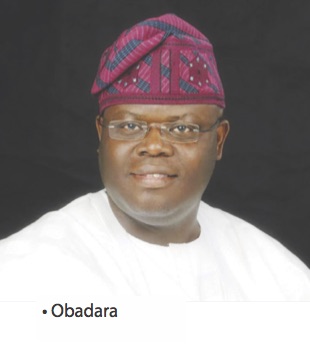
Senator Olugbenga Obadara is a former lawmaker, who represented the Ogun Central Senatorial District in the National Assembly between 2011 and 2015.
In this interview, he gave reasons the Senate President should be a Christian from either the Southeast or South-south.
The issue of leadership of the 10th National Assembly is currently at the front burner of national discourse. What is your take on the ongoing scheming by the various contenders?
There is nothing new in the scheming for the National Assembly leadership position. The Senate President is one among the equals. It is a good development that we have diverse people showing interest in the leadership of the Senate and the House of Representatives, but we have to look at the pedigree of each and every one of them, as well as their experience. The National Assembly is an important institution of democracy that must be managed by people of impeccable character and experience. It is not just enough for anyone to claim the right to the leadership position, we have to look at the capacity of everyone to deliver. Already, we have the likes of Senator Godwin Akpabio, Senator Orji Uzor Kalu, Governor Dave Umahi of Ebonyi State, Abdulaziz Yari, and Osita Izunaso in the race. I do not have anything against any of them. What we should not allow to happen is for a new entrant to emerge as the Senate President because the position requires a lot of experience. That is my take.
Experience is not exclusive to any particular individual or geo-political zone. But based on the principle of fairness, justice, and equity, where do you expect the pendulum to swing?
I am looking at either the Southeast or South-south. And whosoever emerges must also be a Christian because already we have Muslim-Muslim as President-elect and Vice President-elect. In line with the principle of fairness you mentioned, a Christian candidate should be given a chance. It is not healthy for us to have another Muslim heading the Senate. We need to avoid anything that will worsen the polarization of Nigeria. We must be sensitive in everything we do. Either Southeast or South-south should produce the next president who must be a Christian.
The Southeast stakeholders seem to have a better argument in support of their agitation because the closest the region had gone to the seat of power was the Deputy Senate President. Do you think so?
Whoever gets it will be based on the tenet of democracy.
How would you assess the eight-year tenure of the outgoing President Muhammadu Buhari?
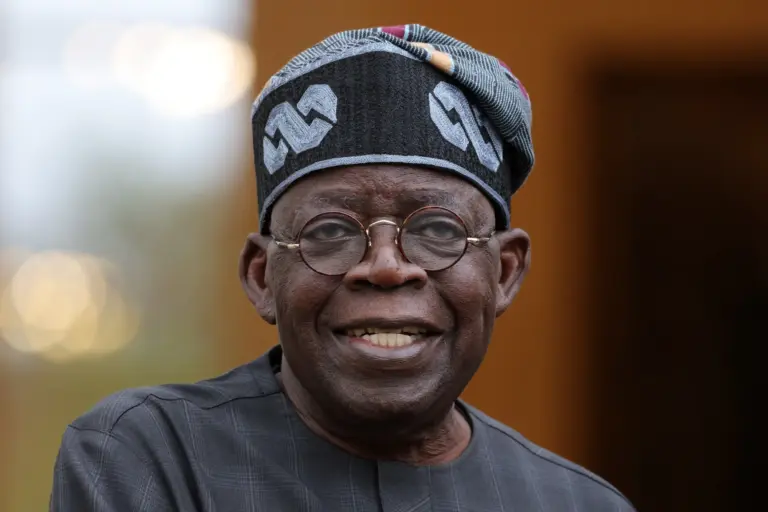
He has done what he could do. We only hope that the incoming president will be able to surpass what the present government has done. And I believe that the President-elect, Asiwaju Bola Ahmed Tinubu, will do well and deliver on his electoral promises as expected of him.
The issue of debt burden is one major challenge the incoming administration would have to grapple with. Are you not worried that the outgoing government of Buhari is still taking more loans even less than three weeks to the end of his tenure?
It is very unfortunate that the new government would have to inherit the liabilities. It is because we have not been generating enough revenue from oil. You can see what is happening to our oil production capacity. It has dropped from 2.1 million barrels per day to barely one million which has brought down our income generation, making it necessary for us to borrow in order to meet our recurrent and capital expenditures. But I am glad that the man that is coming in is an accountant. I am sure with proper financial re-engineering, he will make sure that the economy of the nation stabilises.
In the eyes of the public, the current 9th National Assembly is regarded as a rubber stamp because of the way the lawmakers have always concurred with the executive on almost all issues. What is your take on this matter?
Whether it is a rubber stamp or not the die is cast. In the next five weeks, it will be over. What I know is that things will be better with the Federal Republic of Nigeria under the new coming dispensation.
What do you think should be done for Nigeria to have a vibrant National Assembly without necessarily being antagonist to the executive?
Antagonism in whatever guise is not good for democracy and the country. The legislature must work in tandem with the executive to bring good governance to the country. There is nothing to gain from being an antagonist. If the two arms of the government can work together harmoniously, there will be development. It is not a healthy thing to hold each other’s jugular. We need to work together, but it must be reasonably done. There must be checks and balances so the government can perform well under a harmonious working relationship.
What role are you expecting the APC as a party with the majority to play in the selection of the leadership of the 10th National Assembly?
We have our agenda; we have our programme which we want to deliver to Nigeria. I believe with 56 Senators working in tandem with other lawmakers from other political parties, we will be able to deliver our agenda to the Federal Republic of Nigeria. I am sure that the parties will work together by making sure that we have a harmonious working relationship with the executive this time around. We need a mature Senate President and the Speaker of the House of Representatives. I am sure everybody will toe the line of the party. This is not to shy away from the fact that you have to negotiate and lobby to have a smooth election of the leadership of the two chambers. Lobbying is part of politics.
Looking at the recent election, would you say Nigeria has outgrown religious and tribal sentiment?
You will recall what happened when the late MKO Abiola and Baba Gana Kingibe contested the June 12, 1993, presidential election, and what happened in this recent election. What Nigeria really needs is competence and the capacity to deliver deliverables. Of course, religion played its role in this election, but not overwhelmingly.
Some public affairs analysts have observed that Nigeria is now more divided under the leadership of President Muhammadu Buhari than at any other time in the nation’s history. How do you think the new coming government can address the question of unity and bridge the fault lines among different ethnic nationalities?
In any electioneering period, there will always be an exchange of brickbats, negative comments, and so on. But now that the elections are over, what we should be looking at is reconciliation. We need reconciliation where we have wounded ourselves, we need reconciliation on what we have unjustly said to ourselves, and we need reconciliation that is genuine and national. That is the level we are now. Fortunately, we now have a president-elect who has built bridges across the nation and who understands Nigeria very well. I believe he will sort out those things that will heal the wounds we have inflicted on ourselves individually and nationally. He will surely bring everybody together in this country. He will hit the ground running for the betterment of Nigeria and Nigerians.
There is this big question of legitimacy about the coming government, especially with the deluge of petitions by the opposition at the tribunal to challenge the victory of the President-elect. Do you have worries about the possible outcome of the litigation battles ahead of the new government?
People have approached the tribunal, the Appeal Court is there, and even the Supreme Court. Whatever grievances anybody has would be looked into by these levels of the judiciary. They should allow the judiciary to do its work. At the end of the day, justice will be done. We are not in a banana republic. We are in a country where there is rule of law. Whatever the judiciary says will be the final. I believe all aggrieved individuals will get justice based on the merit of their petitions. People should avoid taking the law into their hands.