Follow Us on Google

An old friend recently asked why I am pessimistic about an Igbo becoming President of Nigeria in 2023. I said, on the contrary, I am more optimistic than ever. I am optimistic when I see contenders from other regions furtively looking behind at the South East. For me, it does not matter that some are sharpening anti-Igbo rhetoric to undermine South East regional contenders. Everything they do further thrusts the Igbo presidency question in the limelight.
However, I also said that my optimism is the reason we all have to look at the hurdles on the way and deal with them. I guess reading these hurdles, which I have serialized in many interventions here, gave my friend an opposite impression.
There are three major hurdles that we must deal with now. By far the biggest and persistent is the attitude of the political class to national geopolitics. This is followed by the perennial matter of bad governance in South East states. The most recent hurdle is the issue of unknown elements enforcing sit-at-home in the region on behalf of IPOB. Together, these hurdles transform the South East into a blinkered political landscape that is so easy to overrun by other regional power players. And that could potentially make it difficult to pick a candidate from the zone.
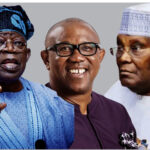
Regional powermongers know and take advantage of this weakness. An example is a recent bold move by former Vice President Atiku Abubakar to canvass for support in the region. I have always said that Atiku will be a capable President, if elected. I worked for him and observed how he calmly coordinates strategic planning, displays confident decision-making skills, and adroitly manages human resources. This is why I was puzzled – and disappointed – that he could display insensitivity to the issue of Igbo presidency by coming to the region to shop for support at this time. This political junket, unfortunately, projects him as a man of blind ambition.
The former Vice President and his political strategists could only have done this for one reason. They understand the attitude of the Igbo political elite class. At this moment in our history, Ndigbo enjoy some measure of sympathy for their cause. This implies that the political class has the opportunity to drum up wider national support. They can exploit this empathy to push up their aspirants to frontrunner positions, but will they? Deep down, it appears that the elite political class is rather unsure of the prospects, an anxiety that their opponents can feel and see.
Optics are important. Save for Gov. Dave Umahi, what are the South East governors saying or doing? We are left with two impressions. One, as already stated, is that they probably do not believe it is feasible for an Igbo to become President. The other is that, consequently, they are unwilling to muster non-partisan supportive actions needed to produce an Igbo candidate for any or all of the two dominant parties.
It is doubtful that South East governors will support a common candidate, not even their chairman (Dave Umahi) who is running. Yet, they are in three ruling parties whose members control affairs of the other 31 states and are present in all the regions. Does this not make them the most effective brand ambassadors for the Igbo presidency, if it were to become an actual project? Intentionally working their phones and doing shuttle diplomacy for the project will at least show them what is feasible and what is not. At this moment, no one can predict with any accuracy which region the presidency wind will favour. The pre-primaries gale gathers strength, blowing silently but ferociously. Being invested in the process exposes the direction of the political wind. It also presents nationwide opportunities to sell a common position adopted at the level of the South East Governors’ Forum. It would have made other regional aspirants think twice before deciding to storm the South East in search of support.
Who would be surprised if it turns out that South East governors, including Umahi, are eyeing the vice presidency slot? Southern governors have become used to angling for subordinate positions at federal level while arranging to remotely control governance at the local. Long before the end of their tenure track, they struggle to invest in three things. Each wants to become Vice President or senator, as well as kingmaker for elective offices in their states. It betrays a blind ambition to continue to control things from outside the seat of power. Even when experience shows that this desired control is never fully achieved, this does not stop the next governor from taking a chance.
This Igbo elite class mindset affects the quest for Igbo presidency. Igbo presidential aspirants understand their common selfish dispositions and stay away from the South East State Houses during their consultations. Instead, they visit stakeholders and governors of other states while some queue up to shake Mr. President’s hands. Yet, their region state houses are the very places from where the most efficient national support could have been coordinated. Reflecting this local optics is equally important, if not more so. It shows other regions that the South East means business. And it won’t embolden aspirants from other regions to approach the South East as a region of low-hanging electoral fruits. Only APC’s Sen. Orji Uzor Kalu has so far demonstrated this understanding. His recent visit to the PDP Governor of his home state attests to this.
The governors’ attitude is the major reason Ndigbo are often accused of not being united politically. Ndigbo bristle at this accusation. They fail to understand that the accusers are merely struggling to describe non-singularity of vision. This failure, in my view, is not fully explained by the famous republican character of the average Igbo. It can also be appreciated in what I described before as “The colors of an Igbo presidency” (February 11, 2021).
The presidency has also become a hurdle from the performance of our governors and from the antics of the EFCC, the anti-corruption agency. Since the dawn of this Fourth Republic (1999 to date), only one South East governor has finished his tenure strongly. By strongly, we mean without becoming guests of the EFCC or being accused of stealing billions of naira from their state’s coffers. Mind you, it does not matter whether the governors did steal and how much, if they did. What matters is that the agency considered them persons of interest on issues of economic and financial crimes. And when the agency considers one a person of interest, it uses the media propaganda to damage one’s image – long before one is charged to court.
Only Mr. Peter Obi, former Anambra State governor, passed this test of integrity. To date, he remains the only one among the political elite class to pass this test in all of the five states. He has, therefore, endeared himself to the Nigerian people as someone deserving of public trust. There are two sides to this state of affairs and they both play into why Igbo may miss the 2023 presidency. The governors are not doing well. They actively place banana peels before their opponents and use these to cancel those who could have stood as tall as Anambra’s Obi to aim for the highest office.
Bad governance is not only about stealing money. It reflects in the ways that the governors make it difficult for people to choose good men for public office. Most of the governors retreat into their cocoons as soon as they are elected and ensure that the people who elected them are given as little information as possible. They easily buy off hapless local journalists whose lives are a constant struggle to make ends meet. To them, democracy is no longer “government of the people, by the people.” Good governance is, however, leadership that recognizes people power and is totally transparent and accountable. So, why is there this tendency to transform governance into a secret cult? Governors grant favours to alleluia singers and punish those who rightly ask how people’s funds are being spent. Our leaders invest in taking as much money from the system into private pockets as they possibly can. President Muhammadu Buhari lamented the attitude of the governors, who force local council chairmen to give them the lion’s share of federal allocations to their local governments. He did not make an exception, which implies that your governor is equally complicit.
The irony of the situation is that governors shoot themselves in the foot with the way they manage public funds. Bad governance transforms the South East into an arid political landscape, difficult to recruit credible candidates for the presidency of Nigeria.
Finally, those enforcing sit-at-home on behalf of IPOB may become the answer to the question of why Igbo may miss the 2023 presidency. In 2014 when Gen. Muhammadu Buhari contested the presidency for the fourth time, he had a similar security smoke in his northern backyard. Like the South East with Nnamdi Kanu and the South West with Sunday Igboho, he protected Boko Haram in words. The group even nominated him at some point to negotiate a ceasefire with the Federal Government. Unlike Igbo aspirants, however, he promised to use his experiences as a general to deal with the insurgency in the North East. And Nigeria gave him the mandate to rule on the strength of his many assurances on security matters.
Look around us. Neither the governors nor other presidential aspirants have had the courage to make such assurances on security of the South East. Unknown gunmen and other faceless criminals are running riot over the land. The President of Nigeria is commander-in-chief of the armed forces. Not one aspirant is speaking or acting like a future commander-in-chief. And Nigeria is looking for a person of character who can tackle headlong the economy and security issues that have defied solution thus far.
I remain optimistic that the South East – or an Igbo – will still emerge President. Equity ad fairness demand it. But governors and aspirants must allow charity to begin at home. How nice it would be if the governor’s forum, in its next meeting, invites all aspirants to assure them of support. And follow this up with such support to emerge candidates. It’s already too late to do anything about good governance. But something can be done about those causing security problems for the region.
Since IPOB says it is not responsible for those disrupting business and education in the South East every Monday, what stops the political class from quietly containing the criminals and giving the region peace? There are enough guns and local intelligence to confront the miscreants, guns in the hands of paramilitary agents under the control the governors.