Follow Us on Google
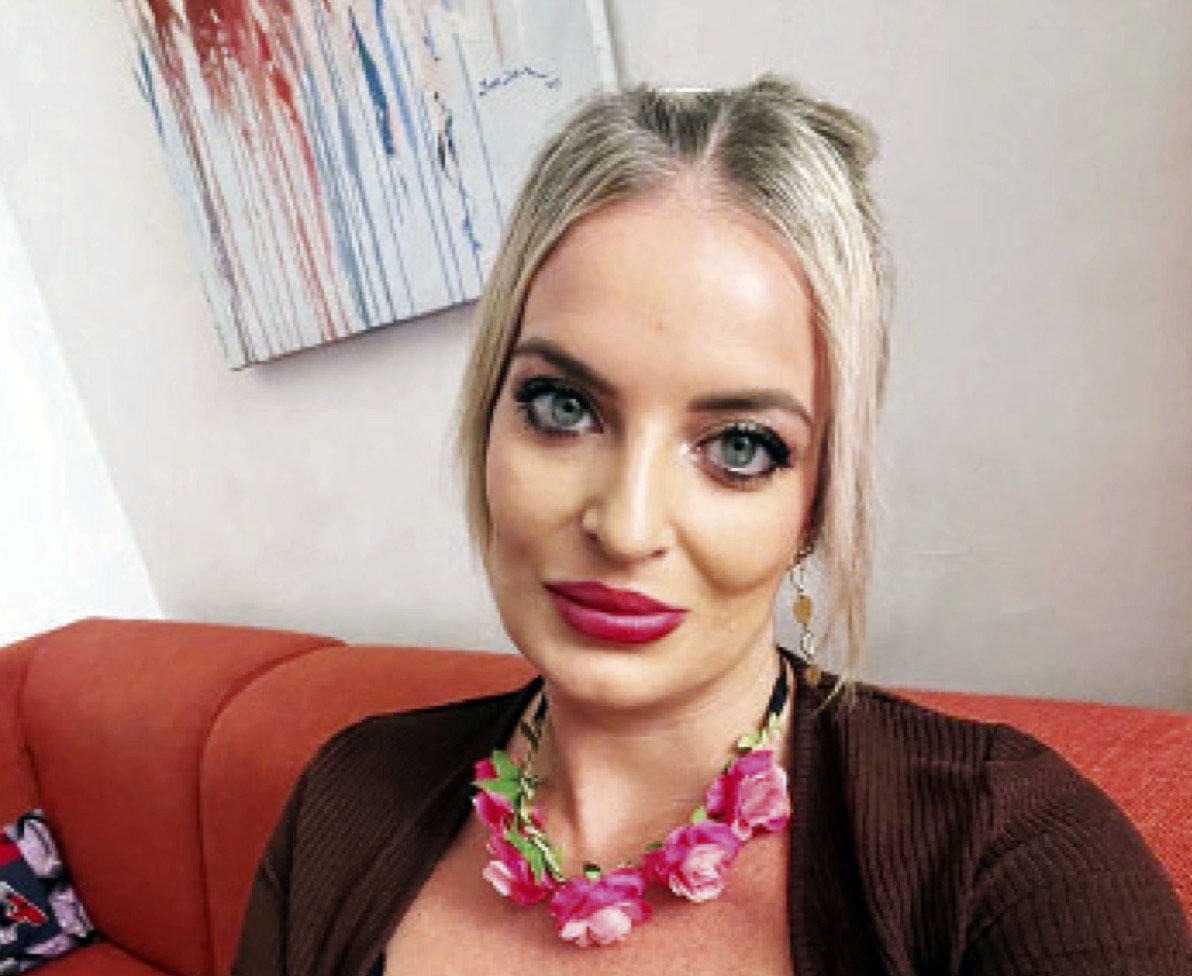
Magdalena Cornford is not your regular celebrity. There are a number of things that make her outstanding in any gathering and make her hard to pigeonhole. She is a teacher, artist, traveller, tourism enthusiast and humanist who volunteers her time and talents towards the care of persons with special needs. And she is an expatriate who has assimilated so well into Nigeria that she embodies the pidgin expression, “Nigerian oyinbo.”
She gives a glimpse of her life and work to Sunday Sun.
It’s a bit hard to figure you out, but how would you describe your pursuits, likes and dislikes?
If you come across my Instagram account, you might think you know me: Random party girl, rooftop parties, travels, glamorous evenings, a little bling-bling, G-Wagon. Beautiful places, beautiful moments and a lifestyle that, from the outside, might look like one long celebration.
And, yes, I enjoy the beautiful things in life. I love fashion and beauty and dressing up, I love enjoying a good party, celebrating life and appreciating the rewards of hard work. There is absolutely nothing wrong with that.
But there is so much more to my story than what you see on social media.
Tell us this story…
My name is Magdalena Cornford, and I am originally from Poland and Germany. More than 11 years ago, I arrived in Nigeria without really knowing what to expect. I imagined staying for perhaps a year or two before moving back to Germany. Little did I know that this country would become such an important part of my story, shaping my life and my understanding of people, humanity and the true meaning of making a difference.
What made you decide to stay in Nigeria?
Over the years, Nigeria has become much more than a place where I live and work. It has become a place where I have grown, where I have found purpose and where I have learned that, sometimes, life takes us somewhere completely unexpected, only to show us where we are meant to be.
Teaching has always been much more than a profession to me. It is a way of connecting with people, discovering their individual strengths, nurturing their potential and helping them believe in themselves. I have had the privilege of working as a teacher at large international schools in Nigeria, where I continue to dedicate myself to education and the development of young minds. Yet, alongside my professional work, there is another part of my life that has touched me in a particularly profound way: my voluntary work with children and young adults with special needs.
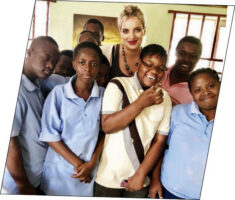
Since November 2016, I have been volunteering at a school run by the Daughters of Charity, teaching art, painting and crafts to young adults with intellectual and developmental disabilities. What began as an opportunity to give some of my time has grown into a deeply meaningful commitment that has become an integral part of my life.
How do you combine your job with your work with special needs kids?
Working with these extraordinary young people has taught me that education is not simply about academic achievement, following instructions, or reaching conventional milestones. It is about seeing the person behind the disability. It is about recognising abilities where others may see limitations, discovering individual ways of communicating and understanding that progress looks different for every human being.
In my classroom, art becomes much more than an activity. It becomes a language through which the students can express themselves, explore their emotions, develop their abilities and experience the joy of creating something of their own. Whether we are painting pictures, experimenting with tie-dye, decorating our classroom, or simply dancing together, my greatest reward is seeing their faces light up, watching their confidence grow and knowing that they feel accepted, valued and included.
I believe that every person deserves to experience the feeling of being capable, appreciated and loved. For children and young adults with special needs, opportunities to experience these things are not always readily available. In a society where disability can still be misunderstood and where specialised education often receives insufficient attention and resources, I feel a particular responsibility to help create a space in which these young people can flourish without being judged by their limitations.
Other News
You must be extremely committed to do what you do…
I approach my work with patience, empathy, creativity and an open heart. I have learned to look beyond words and behaviour to recognise when a student is overwhelmed, frustrated, distracted or struggling to communicate a need. Sometimes a lesson requires structure and clear expectations; at other times, it requires flexibility, reassurance, a little humour or simply the willingness to pause and approach a situation differently. Every student is an individual and I believe that good teaching begins with understanding that individuality.
I also believe that kindness and high expectations can exist together. Having special needs does not mean that a person should be denied opportunities to learn, develop or achieve something meaningful. My role is to encourage my students, support them through challenges and give them the tools and confidence to discover what they are capable of doing. Even the smallest steps forward can represent enormous achievements, and I have learned to appreciate those moments deeply.
The relationships I have built with my students have enriched my life in ways that are difficult to put into words. They have reminded me that connection does not always depend on language, that happiness can be found in the simplest moments and that every human being has a fundamental need to belong. They have also taught me that while I may come into the classroom hoping to give something, I often leave having received just as much in return or mostly even much more.
What are the ups and downs of your journey in Nigeria so far?
After more than 11 years in Nigeria, I remain deeply committed to my work and to the people around me. My journey here has strengthened my belief that meaningful change does not always begin with grand gestures. Sometimes, it begins with showing up consistently, giving your time, looking at someone without prejudice and choosing to care even when the work is challenging and the results are not immediately visible.
I am proud of the life I have built in Nigeria, of the work I do as a teacher and of the opportunity to contribute to the lives of young people whose potential deserves to be recognised and nurtured.
Did you ever imagine you would be where you are today?
I came here believing I would stay for a short chapter of my life. Instead, I found experiences that changed my perspective, relationships that became deeply meaningful and work that continues to give me a strong sense of purpose.
For me, teaching is ultimately about far more than passing on knowledge. It is about opening doors, building confidence, creating opportunities and reminding every student that they matter. I want the children and young adults I work with to feel that someone believes in them, that their efforts are worthwhile and that they have a place in this world.
I cannot imagine a more meaningful way to use my abilities than to continue learning, teaching, supporting others and contributing to the lives of the people around me. My journey from Germany to Nigeria was never something I could have planned in the way it unfolded. But looking back, I am grateful for where it has led me, for the lessons it has taught me, for the decisions I made and for the privilege of doing work that comes not only from my professional skills but simply from my heart.
And perhaps that is the beauty of my life in Nigeria. I can enjoy a glamorous evening on a rooftop and find just as much, or even more, happiness in a classroom full of laughter and young souls whose eyes are pointed all on me. Whose hearts are open all for me, showing their simple joy, hope and happiness. I can appreciate the material things I have worked for while knowing that the most valuable things in life cannot be bought by any money. And I do owe them. And that’s what makes me the happiest and wealthiest person I could ever imagine!
What aspect of your home country do you miss most living in Nigeria?
There’s so much you miss about your home country when you’re living abroad as an expat, far away from everything and everyone you know.
It’s the little things that shaped you during your younger years — the delicious food your parents made at home, the priceless time you grew up enjoying with your school friends, the traditions, the people you met, the places you grew up in, and that special feeling of being surrounded by family.
You don’t always realise how much these things mean to you until they’re no longer part of your everyday life.
But living abroad has made me appreciate them even more. Every time I travel home for the holidays and get to experience all these familiar things again, I cherish them a little deeper. Because sometimes, home isn’t just a place — it’s a feeling, a collection of memories, and the people who will always be part of who you are.