Follow Us on Google
From Scholastica Hir, Makurdi
Farmers in Benue State have lamented the devastating effects of climate change on their crops this year, saying the price of food items may continue to rise in the state and elsewhere in the country.


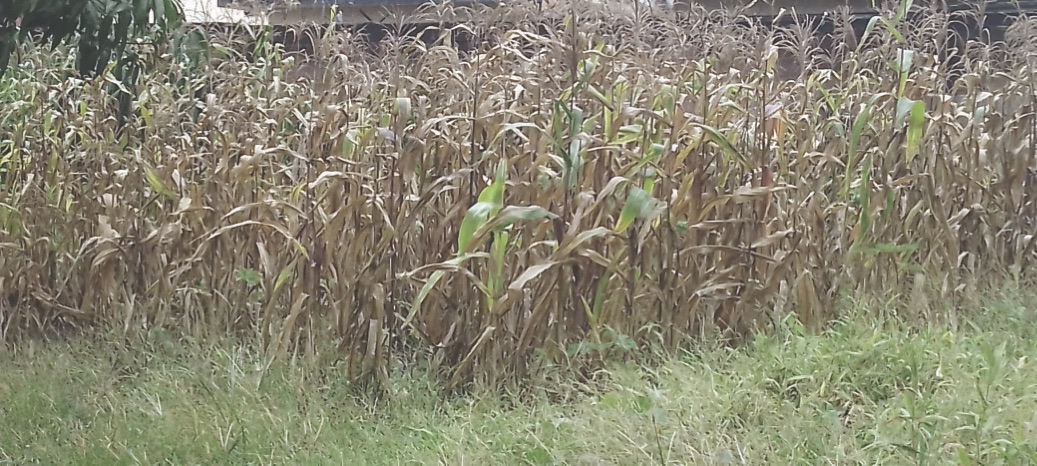
Some farmers, who spoke to our correspondent recently in the state, lamented the devastating effects of insufficient rainfall on their crops, saying most of their crops, including maize, groundnut and rice, dried up.
They called on the state government to expedite plans to save the situation by preparing to assist farmers engage in dry season farming soonest.
The Nigerian Meteorological Agency (NiMET) had in February 2024 predicted delay in rainfall in some states, including Benue.
Accurately, the rain came a few times and and did not even show up in many areas of the state until July when some parts of the state, particularly the riverine areas like Makurdi, Agatu and Guma LGAs, experienced rains for a while.
But hardly had the rains come than the state began to experience shortfall of rain, beginning from the third week of July and overlapping into August break.
Being an agrarian state, farmers, both peasant and commercial, have cried out over near drought situation in the state, lamenting loss of acres and hectares of crops.
Many who disclosed that they borrowed money to invest in the 2024 farming season said they have suffered serious setbacks as a result of insufficient rain.
National president of the Nigerian Association of Women in Agriculture (NAWIA), Mrs. Ngizan Chahul, who spoke to The Sun at a climate change symposium organized by Elim CVTC, an NGO working to combat climate change in Benue State, narrated how she lost several hectares of groundnut farm to insufficient rain, an experience she said she never envisaged.
She said: “Climate change affected me so much this year. I planted several hectares of groundnut farm after the first few rains and after that there was no rain again. So there was no germination. I lost the groundnut.
“Even the yams, we didn’t plant when they were supposed to be planted. Our people were waiting for rain and, with that, it didn’t start growing when it should.
“Many people had yam seedlings but couldn’t plant because they were waiting for rain. Some waited till the seedlings got rotten. So we had setbacks this year and we need help to ensure more food production or we may be the food basket but food price would continue to soar.”
Chairman of the Association of Yam Farmers in the state, Nyiekaa Amua, who stated that farmers returned to the farm after the long break of rain, regretted that some crops, such as rice and corn, were no longer good for planting.
Amua, who was on her farm at the time she spoke, said: “I’m in my rice farm, trying to see if I can still salvage the ones already dried off due to drought.”
Another farmer in the state, Vitalis Tarnongo, who spoke to our correspondent in Makurdi, decried the sudden stoppage of rain at the time it was really needed.
He said: “This is a serious thing. We are just managing the situation. The drought has seriously affected our crops because they are drying off. Even the pesticides are not working.
“Some of the grains like rice and corn that we cultivated, there is no moisture in the soil to make the crops grow.
Tarnongo described the drought as a bad omen, expressing fear of imminent famine in the year, unless government assists farmers with irrigation farming.
“The only panacea is for government to assist farmers during irrigation farming, or else, the nation may experience hunger later this year and next year,” he said.
He also noted that, if rain begins to fall throughout this September there is the possibility that farmers can still have enough harvest of some crops.
“For instance, if we still have rains from September, there are crops that can still be planted and yield good harvest, such as cowpea, mellon, sesame seeds and others.”
Another peasant farmer, Nathaniel Iorkyaa, said almost all the crops he planted dried up. He said: “I planted rice and corn after Adaka community in Makurdi. The crops have all dried up due to little rain.”
Also speaking, the chairman of All Farmers Association of Nigeria, Benue State chapter, Aondongu Saaku, said their losses transcend crops and monetary terms to lives. He said that several farmers in the state have lost their lives while several billions of naira have been lost in the past one year.
While describing the ordeal of farmers in the state as pathetic, the AFAN boss said most of their members took loans before the planting season to purchase seedlings and input but lost them all as a result of the weather.
“So, the thought of how to repay the loans usually lead to anxiety and sometimes death.”
He also lamented that Insecurity was the major challenge of farmers and added that drought further worsened their situation.
He said: “Though, we have not computed our losses in the past one year but definitely it’s in billions of naira. But the worst aspect of it is lives that were lost which is more than monetary terms. So, if you quantify the losses you cannot quantify lives that were lost.
According to him, rice, corn and cassava were the major crops that recorded loses in the past one year. He also lamented that insecurity was also a major problem to food production in the state as the herdsmen militia have now devised new means by grazing in the night within the state.
Corroborating his account, Yam Farmers Association of Nigeria, Madam Nyiekaa Amua, said that losses incurred by her members in the state will be running into billions of naira.
Madam Amua said it is really impossible to quantify the actual losses of her members, adding that most yam farmers have fled their communities.
“For instance, in Sankera axis that is home of yam, 55 percent of food especially yam produced in the state comes from that axis but due to insecurity, farmers can no longer go to farm, even when it is necessary to go in groups,” she lamented.
The farmers called on the government to help them nip insecurity in the bud and to also help them with facilities to engage in dry season farming to enable them produce more food and cushion the effects of their losses.
Meanwhile the Benue State government said it has commenced assistance to farmers to combat the effects of insufficient rain in the state and to go into dry season farming.
Speaking to our correspondent in Makurdi, the state Commissioner for Agriculture, Prof. Moses Ogbaji said: “We have commenced dry season farming in Benue State. We have already distributed farm inputs: fertilizers, improved seeds and agro chemicals to farmers in Benue for dry season farming.
“Under the administration of Governor Hyacinth Alia, we have identified 34 locations that are suitable for dry season farming in the state and we are following up on them. So, dry season farming is on course and I’m advising every farmer who does not know this to come to the ministry for more information.
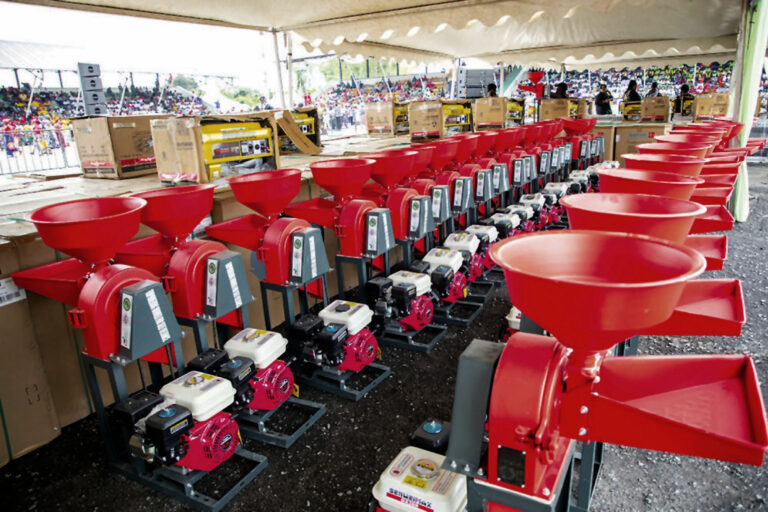
“We are supplying input to farmers and we have given out some facilities, like the pumping machines, generators under the FADAMA and IFAD programme.”
Prof. Ogbaji also stated that the Bureau for Agricultural Mechanization had also been given pumping machines and other machineries to farmers for dry season farming.
He therefore advised every farmer in the state to key into the opportunities provided by the Alia administration Alia to enable them achieve increased food production and food security for Benue and Nigeria as a whole.