Follow Us on Google

By Emma Emeozor ([email protected])
Eighteen years after the National Agency for the Prohibition of Trafficking in Persons NAPTIP was established to eradicate human trafficking, Nigerian has remained a hotbed for the illicit business. According to the International Organization for Migration (IOM), there are no fewer than 1.4 million victims in Nigeria.
Some observers have explained the situation, arguing that NAPTIP is overwhelmed by the activities of human traffickers as the syndicate continues to expand its operations across the country. They point to the non compliance of the citizens to the massive anti-human trafficking campaigns launched by the government. And it is curious that rescued victims still explore the opportunity of another chance to travel abroad through the ‘sponsorship’ of traffickers.
The questions that readily come to mind include: what would make a rescued victim who had experienced the hazards of travelling through the desert and the Mediterranean Sea not be wary of the dream of seeking greener pasture abroad? Why would a rescued victim who had been subjected to slavery and mental torture but had the fortune of regaining freedom still nurse the ambition of seeking means of employment abroad through the same perilous path.
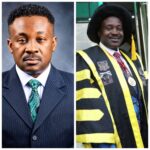
These were among the questions Daily Sun asked a psychologist, Dr. Temitayo Deborah Olufemi Adewuyi, to proffer answers to. Adewuyi is associate professor of clinical psychology and acting head of the Department of Psychology, Faculty of Social Sciences, Lagos State University, Ojo.
Asked why Nigerians continue to fall prey to traffickers despite the sensitisation campaign of NAPTIP and non-governmental organisations (NGOs) across the country, Adewuyi said it was a result of ignorance and the socio-economic situation in the country. “People are tired; they cannot get employment. This is why the perpetrators sell the idea of travelling abroad to people, assuring them that they will get jobs abroad.”
“I was in Italy and I saw Nigerians, male and female, working as prostitutes. They are dumped after being used. Some of them resort to begging, some go into drugs and some contract diseases, especially sexually transmitted diseases. You see them depressed.
“The worst part of it is that, when their stay permits expire, they are not able to renew their visa. So, they become illegal immigrants. They are the ones immigration officer go for. I have observed the situation in at least three countries in Europe. While some do not have the strength and qualification to do the types of jobs available, those who are qualified are exploited. The problem has to do with the situation at home, which makes repatriated victims have the urge to return abroad. Government has no plan for them.”
Is there something the authorities are not doing well enough in the campaign? Responding, the associate professor said, “This brings me to the issue of rehabilitation. Victims of human trafficking need full rehabilitation. It is for this reason we are telling the government that it needs the services of clinical psychologists as well as psychotherapists. You need to treat them first; you need to restructure their cognition (thinking) from what it used to be, for them to come to reality.”
In her view, psychology is the solution to societal problems, human trafficking inclusive: “But government does not seek the intervention of psychologists, and, if they do, they do not want to pay the fees commensurate with the services rendered. I have clients abroad and I know the bill I charge them. But in Nigeria, it is different. That is our problem.”
Adewuyi maintained that clinical psychology and counselling were a necessity.
She said, “There are people who say, I feel like talking to somebody. Yet, instead of talking to an expert, they talk to those who will compound their problems. Have you ever heard of established rehabilitation centres for human trafficking victims? Only the NGOs are working; government is not working, it is not doing anything, and that is why some of the victims feel like going back. And when they do, they cause more harm to themselves and make society sick.”
Adewuyi was confident as she said, through rehabilitation, victims can become new persons: “Yes, that is what I’m telling you. The victims need to be treated through therapy. We don’t use medicine. The thinking of the victims matters. Like I said earlier, we need to make them face reality. At the time they are returning to the country, they are expecting that somebody will come to their aid by way of treatment and bring them back on board, that is, to normalcy. But in the absence of such intervention, they will be tempted to go back.”
Adewuyi did not agree with the thinking by some observers that greed was a factor motivating victims of trafficking. She said, “You call it greediness but it is not. Rather, it is the traffickers that are being greedy. The situation of the victims is that of hopelessness, when there is no help forthcoming to them. They believe they have been living their life (on what they get abroad), providing them square meals.”
Asked to react to a situation where somebody would see death coming and still stick out his neck, the don responded thus: “When a person believes that nobody cares for him, no support is forthcoming, there is no way out, he is useless, he will think about the essence of living. This is why they need the intervention of a psychologist through the process of rehabilitation.
“There is need to conduct vocational inventory to know the kind of vocation that is good for them. You need to train and empower them to be able to earn a living. This will change their thinking and encourage them to face reality. But, oftentimes, this is not the case. Rather (governments) repatriate them and dump them. Some can connect to their families, some can connect to NGOs, but those who cannot connect to either their families or NGOs are frustrated, physiologically, they lack good medical attention, and so on.”
If the professor meets the parents of a victim, what advice would she give them? Hear her: “Let me tell you a story. I had a client who was coming from the United Kingdom. At the Nigerian Embassy, they packed them (returnees) like sardines. So, he had mental torture. Immediately he remembers the way they were treated at the embassy, you will see the reaction in him. The first thing I did was to refer him to a psychiatric hospital for mental test. After the drug therapy, he now came to have thought therapy. Today, he is about to marry.
“So, if I meet the parents of a victim, first, I will request to administer psychological test on him to know his mental status. This will enable me to determine whether to refer him elsewhere first, because we work with other health professionals. But if it is something I can handle without drugs, I will go ahead with the treatment. There is what we call ‘Support System,’which helps reinforce and return the victim to normalcy and reality. By meeting the parents, the ‘Support System’ is assured. But where there is no support system, the process is difficult. So, we need to get support from the society to succeed. Here, government has a great role. But the Nigerian government does not have this in its policy.”
NAPTIP is the government’ agency charged with the responsibility of eradicating human trafficking. But how is it faring? It was a mixed bag when Adewuyi reacted.
The professor said, “You may think they are not working. But they are working. If you are working with them, you will know that some of them are working; some of them are collaborators, because of corruption.
They allow the traffickers to go. This is corruption. Most of us that travel, we see what happens. Corruption is a more deadly virus than COVID-19 in this country. It is a cankerworm. To treat corruption in this country, we need therapeutic intervention. But they will not come to psychologists.”
In addition, when it comes to payment for the service of psychologists, Adewuyi noted that, apart from government, even individuals fail to pay. But the problem is that “government does not have a policy.”
“It was only recently that they gave us a scheme of service. They have recognised that they need to employ psychologists, we now have psychologist cadre in the civil service. I believe they will give psychologists the opportunity to perform. But it is not enough to employ psychologists; they need to empower them because there is a lot of training outside the university system that psychologists need to get empowered for psychological services.
“There is what we call ‘Forensic psychology.’ Psychologists are also involved here. Psychology is a rich, all-embracing profession; it cuts across all professions. That is why, when you engage them to solve some of these problems, you get solutions.”
Asked to advice government on the handling of victims of trafficking, Adewuyi said: “the Federal Government should enact a rehabilitation policy for victims of human trafficking, rape and insecurity. Consider the trauma of those who are being attacked by Fulani herdsmen, armed robbers, their experience; there is what we call ‘brain transmission,’the impulse from the society is being transferred, it is in their memory. The moment they remember such past experience, the shock comes again. If you don’t treat the trauma immediately they remember, it becomes post-traumatic disorder.
“By the time it becomes post-traumatic disorder, the victim lives under threat, this results in self-isolation. Some will scream at mere shouting or hearing a gunshot, etcetera. Abroad, you don’t see the police carrying guns the way Nigeria police and army do here. Tell me how somebody who has been attacked with a gun by armed robbers will feel if he or she sees the police carrying guns. We are living under anxiety, under threat. Nigeria is sick.”
Does Adewuyi foresee government winning the war against trafficking in persons soon?
“We can win the war against human trafficking, if corruption is treated, if poverty is treated, if unemployment is treated, if gender imbalance is balanced, and if there is security, yes.”
On how to deal with the perpetrators of trafficking, she said whoever is involved should face the law, irrespective of his or her socio-economic status: “There is a law that says all animals are equal but some are more equal. Nigeria is practising this law. But nobody should be above the law. Look at what happened in South Africa. Jacob Zuma violated the law and he was sent to prison. Yet, Zuma was an ex-President. The same punishment should be given to those the law catches up with, no matter who is involved.”