Follow Us on Google
From Isaac Anumihe, Abuja
The Forum of Commissioners for Power and Energy in Nigeria (FOCPEN) has stated that the Enugu Electricity Regulatory Commission (EERC) conducted a rigorous assessment before downgrading its Band A tariff from N209 per kilowatt-hour (kWh) to N160/kWh.
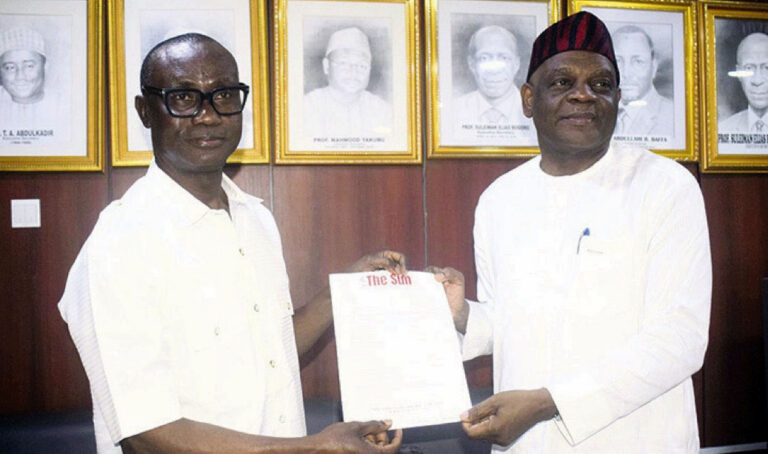
In a joint statement, Commissioner of Power and Renewable Energy, Cross River State, Prince Eka Williams, and Commissioner of Power and Energy, Benue State, Omale Omale, said that EERC has lifeline customers paying N4.00/kWh on Band A feeders, including a former two-time military administrator and former Chief of Naval Staff.
“The EERC, acting within the ambit of its regulatory provisions, has set tariffs appropriately based on these findings, aiming for a cost-reflective and fair market for consumers and operators alike,” the forum said.
FOCPEN used the occasion to clarify that the EERC did not violate the law; rather, its action is in consonance with the provisions of the Electricity Act 2023.
“It is crucial to understand that Enugu State’s actions are fully aligned with the provisions of the Constitution of the Federal Republic of Nigeria, the Electricity Act 2023, and Enugu State electricity laws and regulations. These legal frameworks empower states to regulate their intra-state electricity markets, including determining and implementing electricity tariffs within their jurisdiction, which are fair to electricity consumers and sufficient to allow licensees to recover their operating expenses and investments,” the commissioners said.
Other News
According to the commissioners, EERC’s tariff order followed a comprehensive and meticulous review process that involved a thorough examination of the capital expenditure (CapEx) and operational expenditure (OpEx) assumptions of MainPower Electricity Distribution Company, the state electricity distribution company.
“This rigorous assessment was conducted using data and information provided by the distribution company itself. EERC also carried out a rigorous assessment of MainPower’s existing customer tariff classification and regulatory asset base,” FOCPEN pointed out, adding that while Enugu State has, based on its specific market conditions and regulatory findings, adjusted its Band A tariffs downwards, this does not dictate a uniform approach for other states.
“For instance, several state electricity regulatory commissions (SERCs) (e.g., Ekiti State, Ondo State, etc.) have issued tariff orders maintaining the present Multi-Year Tariff Order (MYTO). Without any equivocation, each state electricity regulator is uniquely positioned to determine and implement appropriate electricity tariffs that are fair to customers and, at the same time, catalyse investments within their electricity markets, depending on their peculiar electricity market dynamics, licensee cost structures, consumer needs, and regulatory assessments,” the group said.
The group, therefore, informed investors in the Nigerian Electricity Supply Industry (NESI) that states are not seeking to arbitrarily downgrade tariffs, nor depend on unsustainable electricity subsidies by the Federal Government.
“On the contrary, states are resolute in their call for the removal of untargeted and opaque federal subsidies, advocating, instead, for the establishment of truly cost-reflective sub-national and wholesale electricity markets,” it further explained.