Follow Us on Google

From Timothy Olanrewaju, Maiduguri
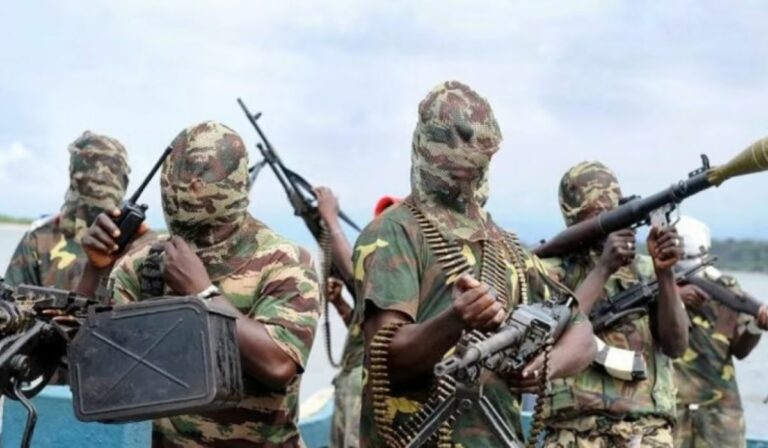
Doubts and fear have continued to trail the mass submission of suspected Boko Haram members in Borno, the epicentre of the 12-year-old insurgency in the Northeast.
Residents are currently confused as to whether the scores of suspected Boko Haram members surrendering to the military should be accepted into the society.
“I have my doubts about these people. We’ve seen Boko Haram surrendered in the past especially in 2018 during the rainy season only to learn that some of them turned to become informants to their group,” Abdullahi Saleh, a resident and retiree, told Sunday Sun.
In two weeks, roughly 1,300 suspected Boko Haram members reportedly escaped from the insurgents’ enclaves in the bushes in Borno State and surrendered to the military.
Ibrahim Gwamna, a Maiduguri-based journalist said that accepting back the repentant Boko Haram may be dofficult.
“People are still grieving and families of those killed won’t forget in a hurry the guy or guys that killed their beloved ones. The surrendering Boko Haram too won’t enjoy mixing freely with the people in the same community they once tormented,” he said.
Why Boko Haram are surrendering
The fallout of Boko Haram/ISWAP clash, absence of clear leader after the death of Abubakar Shekau, break in the command’s communication and logistics supplies, increasing hunger and hash environmental condition fueled by torrential rainfall may have contributed in making many of the insurgents to leave the fight to submit themselves, security sources and residents said.
“It is clear from those who have surrendered now that hunger is dealing with them. Some of their logistics supplies are blocked. Likewise their command structure has been broken with the death of Shekau,” a retired police officer who preferred anonymity told Sunday Sun.
But some residents think otherwise. For instance, Abba Mustapha, ex-civilian JTF warned that some of the surrendering insurgents could turn to be spies if not properly profiled and monitored, adding that the biggest fear was accepting them into the community.
“People can forgive the killers of their father, sons, brothers and uncles, but they won’t forget those involved though we believe everything comes from Allah,” he said.
Surrendering Boko Haram not in IDPs camp –Army
Army spokesman, Brig.-Gen Onyema Nwachukwu said that the Boko Haram members who surrendered are not kept in IDPs as speculated in some media reports.
“The surrendered insurgents are not camped with the IDPs. These are two different categories of people. Surrendering insurgents are held in different holding facilities, not IDP camps,” he said.
He disclosed that counter-insurgency operation requires a combination of military warfare and peace-building approach, adding that such approach is now yielding results.
“A combination of kinetic and non-kinetic approaches to tackle the security situation in Northeast Nigeria is yielding results. The surrendering insurgents have decided to abandon their cause and struggle, having realized that it is a struggle in futility,” he said.
He also explained that strategic conflict mitigation provides avenue for surrendering insurgents.
He said that contrary to claim of union of ISWAP with Boko Haram, many of the insurgents have realised that ISWAP was working on its own interest and even continuously eliminating Boko Haram commanders, a development that triggered mass surrendering of insurgents.
On the handling of the surrendered insurgents, General Nwachukwu assured Operation HADIN KAI, a Joint Task Force in the theatre handling the surrendering insurgents was in conformity with the provisions of the international humanitarian law and treaties of conflict.
He pointed out that under the law and treaties which Nigeria is also a signatory, it is unlawful to target an enemy who has surrendered.
“This provides that surrendering combatants be taken into custody, investigated and processed and not to take extra-judicial actions against them, as is the expectation in some quarters, no matter the enormity of their offence,” he said.
He said that the military major role is to take the surrendered Boko Haram into custody, profile them and hand them over to relevant government agencies of the state for further action.
“The military does not have the power to prosecute them. It is not in the purview of the military to prosecute or set them free,” he maintained.
Meanwhile, Borno State govenor, Babagana Zulum has held meeting with the Chief of Defence Staff, General Lucky Irabor in Abuja over the surrendered Boko Haram members.
Zulum’s spokesman, Isa Gusau in a statement said that the meeting was in furtherance of the governor’s resolve to “widely consult security and Borno stakeholders towards developing a framework that would.address concerns raised over the Boko Haram/ISWAP members.”