Follow Us on Google

There does not appear to be much argument among dispassionate Nigerians at the moment, about whether their country is in ruin or not. It is. The evidence abounds. While the route to the prevailing predicament of a once vibrant economy has, obviously, been accentuated by the policies of the current government, a look at the acts of the immediate past government will reveal a lot more.
It used to be a common refrain, in speeches and public commentaries, that Nigeria is “a potentially great country”. This self-inflating expression was anchored essentially on another trite refrain, that Nigeria is “richly endowed” and that it is “the most populous black country in the world”, whatever that means. Reality of escalating poverty and decline in the standing of the country, occasioned by failure of governments, have since knocked off any validity in hollow phrases. You hardly hear them these days, except from unrepentant government officials, politicians and hired hands, who have a duty to be seen to be saying something that sounds positive, about any government in power.
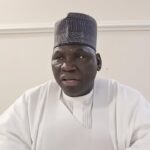
In the face of manifest decline of Nigeria, leading to such depreciative step as hundreds of thousands of citizens literally running away from their once reposeful country, the question of who destroyed becomes pertinent. A comment in a national television programme over the weekend by Senator George Akume, Secretary to the Government of the Federation, makes the question about responsibility for the ruination of Nigeria, germane.
Any detailed interrogation of the critical question of who destroyed Nigeria, will find very incisive help in Why Nations Fail (The origins of Power, Prosperity and Poverty), a seminal work by Daron Acemoglu and James A. Robinson, two American development experts.
The thesis of Acemoglu and Robinson’s book is not very complicated. In trying to understand Why Nations Fail, all that essentially needs to be looked at is the nature of the predominant politics and policies of the state. According to their assertion, any political structure with institutions that are anchored on political and economic inclusiveness prospers. On the contrary, any state with institutions that are “Extractive” in nature, will, inevitably come to ruins. Governments with Extractive institutions are those “bent on grabbing wealth and resources away from one part to another”
In its review of Why Nations Fail, in 2012, Washington Post Review answered the critical question in the title of the book thus; “Institutions. Institutions. Institutions”. In other words, nations fail by the conscious acts of their institutions.
Why Nigeria has come to ruins is not difficult to understand, against the backdrop of the thesis of Why Nations Fail. Here is a heterogenous country that purports to be pursuing development, but has been condemned by its political leadership, at least in recent times, to excluding substantial parts of the whole. And this self-destruction is even made to appear hip in some quarters.
For emphasis, the authors of Why Nations Fail, further assert that Extractive institutions lead to poverty and failure (they do not create incentives for people to thrive and invest and innovate on sustainable basis. This is an exact description of the current disposition of institutions in Nigeria. Is there any surprise that the country has come to its present pass?
Every government in Nigeria claims that it is repairing the damage done by its predecessor. Even President Muhammadu Buhari who inherited a relatively buoyant economy said so, too. He subsequently rebuilt the country into coma.
The government of Bola Tinubu, coming in the wake of Buhari’s ruinous administration, found itself in a rather tricky situation, as far as the familiar messianic claim to repair damage by a preceding government goes. For one, the Tinubu government has the same DNA with its predecessor. Indeed, it owes its coming into being, to its predecessor. But then, the government will like to proclaim too, that it is out to rebuild what its predecessor destroyed. How to resolve this small snag has been a major headache for the Tinubu government. Even when evidence abound that the Buhari government verged on national calamity, the Tinubu government, just cannot find a way to say so.
Once in a while, as Senator did last week, a top official of the Tinubu government will refer to the rot they inherited. The next moment, they will run back behind line, wishing as it were, that there was a way to say that Buhari’s government did not exist.
Speaking on a national television programme last week, Senator Akume, pleaded with Northerners to support Tinubu’s policies, for as he said it, “it is very easy to destroy but difficult to rebuild. The various reforms being rolled out (by the Tinubu government) are meant to rebuild the Nigeria destroyed by previous administrations”.
Note, that Akume was a two term Peoples Democratic Party (PDP) – elected governor and a former All Progressives Congress (APC) senator. Cumulatively, he has been in prime government position, in the last twelve years preceding joining the Tinubu government. So, say, which previous administrations destroyed Nigeria that Tinubu is out to rebuild?
Now, this is the fact. Olusegun Obasanjo was president between 1999 – 2007. Under him the Nigerian economy had average Gross Domestic Product (GDP) growth of 6.99%. Inflation rate at the end Obasanjo’s administration, according to BusinessDay analysis, stood at 4.6%. Umaru Musa Yar’ Adua succeeded Obasanjo, but had his presidency cut short by death after three years. Under him, the economy posted 7.13% GDP growth. As at the time of his death, the inflation rate was 15%. Goodluck Jonathan succeeded Yar’ Adua. Under him the average growth of the GDP was 6%. As at the time he left office in 2015, inflation rate was 9%. In fact, Jonathan grew the Nigerian economy to be the biggest in Africa, standing then at $475 billion, driving South Africa to the second position.
Then Buhari arrived in 2015. Through his eight years presidency, the average GDP growth was 1.3%. At the time he left office in 2023, the inflation level was 22%.
Everything that leads to the failure of nations, Buhari did. The economic indicators under his presidency were not standing on nothing. His government promoted institutional exclusion rather than inclusion. As the referenced study said, the outcome of such ruinous policy, has nothing to do with geography or culture or even educational level. It has everything to do with mindset and policy inclination.
If the Tinubu government says it is out to rebuild Nigeria destroyed by past governments, it surely cannot be referring to the PDP governments under Presidents Obasanjo, Yar’Adua and Jonathan. The government needs to find courage to point exactly at the direction the bomb.
Alarmingly, when Tinubu succeed Buhari, he promised, or rather threatened, to continue where his predecessor stopped. He has kept his word. Such plea by Senator Akume that Tinubu means well, is of course, expected of a prime officer of the government. However, that offers neither hope nor meaningful promise, to beleaguered citizens. The recent national uproar over Tinubu’s proposed tax reform should be properly seen by government for what it is. It reflects trust deficit for it. The government cannot be doing all these good that only those in government have the binoculars to see its long-distance impact. Nigerians are not so poor that they cannot appreciate redemptive policy if they see one. In any case, institutional inclusiveness remains a precursor for progress and development. Absence of that breeds failure. It is possible that the Buhari-Tinubu APC regime have alternative models that will render the thesis of Why Nations Fail obsolete.