Follow Us on Google
• Health experts warn of looming outbreak of cholera, typhoid, dysentery, others
• Why waste is piling up on Lagos streets – PSP operators
• We’re implementing measures to address bottlenecks – LAWMA
By Vincent Kalu, Agatha Emeadi, Christy Anyanwu, Vivian Onyebukwa, Lukman Olabiyi Ngozi Nwoke and Kehinde Aderemi
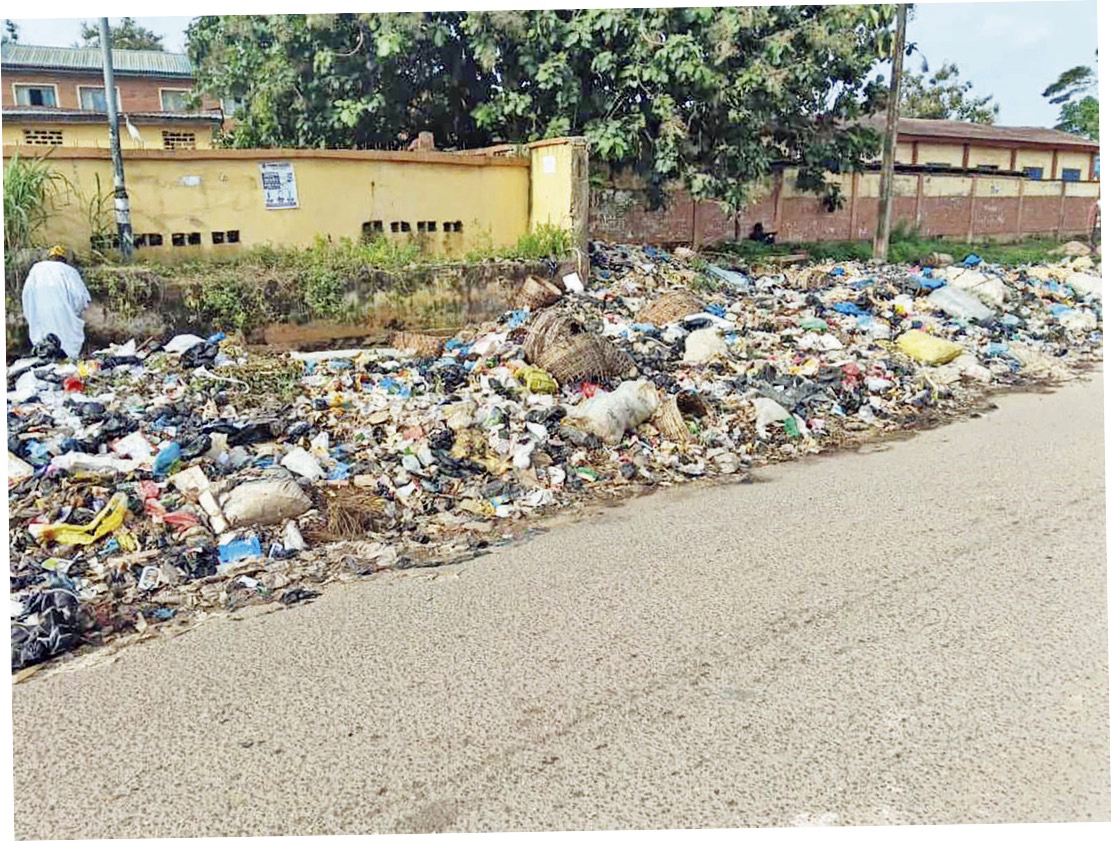
From the median of Ikorodu Road to the bus stops and markets at Idimu, Oshodi, Bariga, Egbeda, Mile 2 and other parts of Lagos, the streets of Nigeria’s commercial capital seems to have become a long refuse dump,
In June 2026, the state governor, Mr. Babajide Sanwo-Olu declared zero tolerance for waste dumping on roads and announced a new “Waste Police” to support enforcement.
The order came after viral videos showed refuse taking over major roads and bus stops. Several weeks later, the reality on ground tells a different story. The directive given by the governor has made little or no difference as Lagos continues to wear the filthy garment of waste at every bus stop.
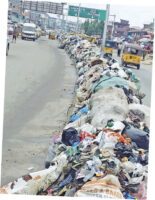
A city drowning in refuse
Along the Ikorodu Road axis including Owode Onirin and Owode Elede, the median has been taken over by heaps of refuse. Black polythene bags pile up and the stench hits passersby from 50 metres away.
Mile 12 market at Ketu, a popular foodstuff market that attracts people from different parts of Lagos, is one of the worst hit. Oshodi, a major hub for trading and road transport has also turned into a horrible site of waste dumps. At the time of filing this report, some parts of the popular bus terminal had been taken over by refuse heaps.
At Ire Akari Estate in the Isolo area, heaps of refuse comfortably sit in front of buildings in the entire neighbourhood. From Ilasa to Iyana Isolo along the Oshodi-Apapa Expressway, the median has been littered with refuse. Even the popular Daleko Bridge, a commercial hub in Mushin, has a huge refuse dump.
The scene runs across most parts of Lagos. From Gbagada Expressway, Anthony Oke, and Oworonsoki, road medians meant for aesthetics are now dumping points.
The garbage dumped on the median of Orile-Mile 2-Badagry Expressway, an international route that connects other West African countries to Lagos are bad advertisements for the city that prides itself as the Centre of Excellence.
At Okokomaiko, sacks of refuse are dumped on the roadside. At Alaba Rago, fresh plants are beginning to grow on the refuse heaps that have not been evacuated for long.
A drive through parts of Alimosho into Ikeja is also a tour of refuse sites. Moving from Okoko to Mile 2 and Orile, the ubiquitous refuse heaps at the various bus stops – Iyana Iba, Volks, Trade Fair, Abule Ado, Agboju, Mile 2, Alaba Suru, Alafia and Orile assault the sensibilities of visitors coming from other countries in the West African sub-region with offensive odour oozing out from the waste bags and refuse that litter the floor.
The deep drainage system built during the construction of the Mile 2-Okokomaiko ten-lane Road, to solve the flooding problem on that stretch has become a dumping space for empty containers of water, soft drinks, and sachet water, among others.
Thursdays are declared environmental sanitation days for markets and shops. However, all the waste brought out during the desilting of the drainage system is left for the next rain to wash them back into the gutters. This is noticeable along the Egbeda-Akowonjo Road.
Along the LASU-Isheri Road, the refuse dumps on the median at Igando Bus Stop constituted another eyesore, expanding, displacing street beggars and roadside hawkers who often occupy the space.
Respite came last weekend when evacuation of the wastes began. Yet, the environment remained filthy.
Urgent attention is required to evacuate huge refuse dumped at Ejigbo, Idimu- Orisumbare towards Egbeda as well as Ijegun, Iyanna Ipaja on both the streets and roads. As they are littered, the rains help to spread the refuse and create discomfort for residents.
Along Ijegun/Isheri Osun Road to Jakanda Estate gate in Isolo the garbage heaps have continued to pile up day after day. Also, commuting from Lawanson Bus Stop to Itire in Surulere has been cumbersome and hectic in recent times. This is due to heaps of garbage on the road.
After Lawanson Bus Stop, going to Itire is a daunting task; the smelly refuse heaps are an eyesore. The garbage heaps are high and vast.
When asked about the unchecked proliferation of dumpsites along the road, an official of the Lagos State Waste Management Authority (LAWMA) said they were short of vehicles, and where they dump the refuse these days is an area near Ogun State.
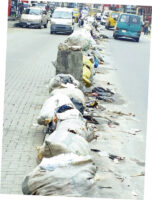
What residents say
Residents are concerned about the capacity of the PSP operators and the Lagos Waste Management Authority, pointing at service gaps, zero efforts by the waste management authorities to evacuate the wastes, and lack of strict enforcement.
Stella Nkam, a business woman in Ejigbo noted that sensitisation campaigns, and community policing all matter, but are not sustainable.
“They made announcements in Ejigbo against indiscriminate dumping of waste, and it went on for months, but as soon as they stopped, the people continued dumping refuse there.
“When enforcement pauses, the refuse returns. We need daily or every-other-day pickup in high-density areas.”
Gift Essien, a resident of Agege area said: “Some people don’t have toilets. They drop their waste in a refuse sack. When it falls, we go and pack it ourselves. The worst part is that they pack faeces alongside the refuse. After packing the waste, before the next day, it gets filled up again, so we do the cleaning repeatedly.”
“A mega city should be known for its cleanliness, not odour. For progress, not piles of waste. And until the Lagos State government, PSP operators, and the people who call Lagos their home decide to act together, Lagos will continue to wear this filthy garment,” Segun Adesanya, a resident declared.
An old landlord, who spoke on the condition of anonymity, recalled what some past governments did to manage waste.
“In the days of Alhaji Lateef Jakande as the governor of Lagos State, he built five dumpsites at various locations. The authorities then used to convert the refuse into fertilisers and sold to farmers at a subsidised rate. Today, all those dumpsites have been shut down, including the nearby ones where refuse is dumped.
“I learnt that refuse is now disposed towards Badagry. That distance alone is a challenge, and the reason garbage is littered on the streets and roads.”
At Tejuosho Bus Stop in Yaba, Chinedu Anyatuonwu was blunt: “We pay for waste, but the PSP man comes when he likes. So people get tired and throw it on the median. If there’s no consequence for not collecting, and no consequence for dumping, what do you expect?
“Also, children see their parents and other adults throw nylon and garbage on the road. They grow up thinking it is normal and do the same. We need to teach in schools that cleanliness is not the government’s job alone.”
Risikatu, a LAWMA sweeper around Cole Street, on Lawanson, blamed residents and the authorities around the area, saying their lapses are the reason the road is overtaken by filth.
“They come to dump their waste on the main road at night, simply because they don’t want to pay their LAWMA bills.”
A resident, Ikenna, who sells second-hand refrigerators around Zamba in Lawanson, pleaded that the government should come to their rescue since the foul smell from the refuse dumps could be injurious to their health.
Mukaila, a motor park worker, chipped in: “This was exactly what killed an elderly man and his son at Johnson Bus Stop, Ijesha, recently. The baba was crossing the road holding his young boy. Unfortunately, they stepped on banana peels from the garbage heap on the road, and father and son fell, and an oncoming trailer crushed them.
“Lawanson refuse dump is a child’s play compared to that in Idi-Oro, Mushin,” Lamidi, a bus driver, loading at Abiodun bus stop said, pointing at the mountain of trash. “They come from Idi-Araba and Idi-Oro at midnight to drop trash here. They dare not try it during the day because we always chase them. After chasing them, when we resume work in the morning, the whole place is littered with refuse.”
Emeka and his team fry buns, puff-puff, and doughnuts along Mushin Road, close to Idi-Oro. Making his snacks and displaying it opposite the refuse heaps is bad for his business, but he has to survive. To maintain hygiene, he covers his food items every time, especially when the sun is out, to avoid the perching of flies.
We’re brewing next outbreak, physicians warn
The mountain of refuse in some parts of Lagos has its health implications for which health experts have warned of dangerous consequences. Folake Akinwumi, a public health physician said, “We are brewing the next outbreak. Indiscriminate dumps are basically open-air laboratories for disease. We are seeing spikes in gastroenteritis, especially in children under five, during the rainy season. Leachate from waste enters shallow wells and drainage. When it rains, that water crosses into homes in low-lying areas like parts of Ajegunle and Makoko.
“We are also treating more cases of typhoid and cholera. Rats and cockroaches breed in those heaps. That means leptospirosis and Lassa fever risk goes up. The flies move from waste to food in 30 seconds. If you eat akara by the roadside next to a dump, you’re essentially eating the dump.
“We can build all the transfer stations in the world. If people still throw waste into the gutters because the bins are full and the trucks don’t come to pack the wastes, we haven’t solved the waste issue.”
Confidence Nelson, Environmental Health Officer, noted, “My biggest fear is antimicrobial resistance and respiratory disease. When people burn waste to reduce the pile, they release dioxins and particulate matter. Asthma admissions go up.
“Then there’s the vector issue. Mosquitoes breeding in stagnant water trapped by plastics cause malaria and dengue. We have also started seeing more skin infections, fungal and bacterial, because people wade through flood water mixed with refuse.
“The implication for residents is simple: your medical bill goes up, school attendance drops, and productivity drops. A city cannot be healthy with dirty streets.
“What breaks my heart is the sanitation-poverty link. In areas where people lack toilets and dump faeces in sacks with refuse, you get direct fecal-oral transmission. That’s cholera, dysentery, Hepatitis A.
“We tell residents, keep your environment clean, but if there’s nowhere to put waste, the message doesn’t land. We need collection, we need toilets, and we need behaviour change together. If we don’t act, we are one heavy rainfall away from a major outbreak. Flood plus waste equals epidemic.”
PSP operators give reasons wastes are piling up
The President of the Association of Waste Managers of Nigeria (AWAMN), Dr Olugbenga Adebola, has dismissed claims that Private Sector Participants (PSPs) engaged in waste collection in Lagos State are at loggerheads with the state government.
Adebola said there was no basis for such allegations, insisting that the operational challenges confronting waste operators were largely caused by inadequate access to waste disposal facilities rather than political considerations.
According to him, the major obstacle facing PSP operators is the time spent at disposal sites, which limits the number of waste collection trips they can make daily.
“There is no magic about it or any political affiliation. When waste is dumped promptly, the trucks are freed to return and collect more waste from residents and businesses,” he stated.
Adebola urged critics to visit Lagos disposal facilities to assess the situation firsthand, asking whether they had recently observed the long queues of refuse trucks waiting to offload waste.
He noted that the Lagos State government and the Lagos Waste Management Authority (LAWMA) were already implementing measures to address the operational bottlenecks through improved waste management infrastructure.
His remarks came as LAWMA commissioned the rehabilitated Road E and newly constructed disposal platforms at the Olusosun Disposal Facility in Ojota to improve access and reduce delays in waste evacuation operations.
Speaking at the commissioning, LAWMA Managing Director and Chief Executive Officer, Dr. Muyiwa Gbadegesin, described the project as a strategic intervention aimed at eliminating operational bottlenecks and improving the efficiency of waste evacuation across the state.
He explained that heavy rainfall had damaged sections of Road E, slowing the movement of compactor trucks responsible for evacuating municipal waste from different parts of Lagos.
According to him, the rehabilitated road and additional disposal platforms would allow more trucks to discharge waste simultaneously, significantly reducing turnaround time at one of the state’s busiest disposal facilities.
“This project represents another important milestone in our commitment to building a more efficient and resilient waste management system for Lagos. By improving access to the disposal facility and expanding operational capacity, we are addressing immediate challenges while laying the foundation for long-term improvements in waste evacuation across the state,” Gbadegesin said.
He disclosed that the intervention formed part of Governor Babajide Sanwo-Olu’s broader strategy to strengthen critical waste management infrastructure through collaboration with the private sector.
Gbadegesin commended Zoomlion Nigeria Limited for rehabilitating the road under its Corporate Social Responsibility initiative, adding that the partnership had evolved into a broader technical collaboration supporting the engineering and management of waste infrastructure in Lagos.
He further revealed that Zoomlion was constructing Transfer Loading Stations at Olusosun and Solous III, each with a processing capacity of 2,500 metric tonnes of waste daily, while the state was also investing in Material Recovery Facilities, waste-to-energy plants, biogas facilities and additional compactor trucks to improve waste evacuation capacity.
The LAWMA boss said Olusosun currently receives about half of the municipal solid waste generated daily in Lagos, making sustained investment in infrastructure essential to maintaining efficient waste management operations.
He expressed confidence that the rehabilitated road, additional disposal platforms and ongoing investments in transfer loading stations would significantly reduce operational bottlenecks, improve turnaround time for compactor trucks and strengthen environmental management across the state.
Meanwhile, LAWMA has intensified enforcement against environmental offenders, sealing shops and business premises along the Tejuosho-Ojuelegba corridor over persistent indiscriminate dumping of refuse on road medians.
Gbadegesin said the enforcement followed repeated warnings and sustained non-compliance by traders, stressing that the affected premises would remain sealed until they complied with the state’s environmental sanitation regulations.
He reiterated that road medians, drainage channels and other public spaces were not designated waste disposal points and warned that the authority would continue to enforce environmental laws against violators.