Follow Us on Google

(Letter to Anthony Joshua)
Dear Anthony,
You won! Thank God you won!
The record books will tell future generations that Anthony Joshua knocked out Kristian Prenga in the second round in Jeddah and marched triumphantly toward the long-awaited showdown with Tyson Fury. Statistics have no emotions. They merely record victories and defeats. They do not record the fear that grips millions of fans when their hero suddenly looks vulnerable.
Sure, you won your last fight. But you also frightened the boxing world. When an obscure heavyweight from Albania—a man many casual boxing fans had never heard of before the opening bell—puts you on the canvas twice inside the very first round, something has changed. Yes, champions are measured by their ability to recover. Yes, your comeback was dramatic, courageous and worthy of applause. Yes, your right hand in Round Two was vintage Joshua, and it finished the job with authority.
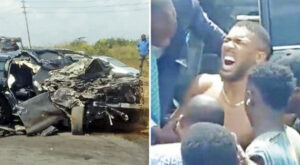
But boxing aficionados were watching something deeper than the final result. They were asking one uncomfortable question. What has happened to Anthony Joshua’s chin? Another. What has happened to Anthony Joshua’s confidence? And perhaps the hardest question of all: Has Anthony Joshua fully recovered from that horrific motor accident in Lagos, Nigeria? The accident was more than a news story. It was a life-changing trauma. Two of your close friends died. You survived. The body heals faster than the mind. Bones knit together. Cuts disappear. But memories linger. Sometimes they hide in the subconscious until they reveal themselves at the least expected moment. There are injuries doctors cannot detect with MRI scans. There are scars no X-ray can expose. There are wounds that exist only in the mind of a fighter. Watching your last fight, I could not help wondering whether that terrible experience has taken away something priceless—the carefree confidence that once made you one of the most intimidating heavyweights in the world.
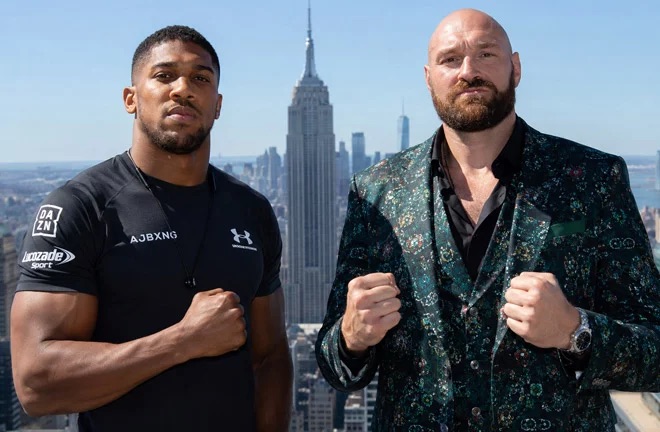
This was not the Anthony Joshua we knew. The old Joshua walked opponents down. The old Joshua looked physically imposing before a punch was even thrown. The old Joshua possessed an aura that made lesser fighters nervous before entering the ring. That night, it was Joshua who looked uncertain. Prenga caught you with an uppercut almost immediately. Then came another knockdown. For a few unforgettable seconds, the entire heavyweight division seemed to stop breathing. Another punch or two and one of boxing’s greatest attractions might have disappeared forever. Fortunately for you, Prenga made the mistake inexperienced giant-killers often make. He admired his own work instead of finishing it. He allowed you to survive.
Against Tyson Fury… Against Oleksandr Usyk… Against Daniel Dubois… Against Deontay Wilder… Such mercy might never come. That is why your victory feels strangely incomplete.
Other News
A boxing match is not only about whether you win. It is about how you win. Muhammad Ali was knocked down many times during his career. Joe Frazier suffered knockdowns. Larry Holmes kissed the canvas against Earnie Shavers. Lennox Lewis was flattened twice by Oliver McCall and Hasim Rahman. Great champions can be hurt. But repeated vulnerability changes perception. The heavyweight division is built as much on psychology as on punching power.
Mike Tyson won many fights before entering the ring because opponents had already surrendered mentally. George Foreman’s terrifying strength intimidated challengers. Sonny Liston’s glare alone could freeze courage. You once possessed that psychological advantage. Now your opponents know something. Anthony Joshua can be hurt. That knowledge changes everything.
I spent time reading what boxing followers were saying after the fight, and while opinions vary, a clear pattern emerged. Many praised your courage and your ability to recover from disaster. Others admired your heart, saying that only true champions get up after being dropped twice and still find the strength to knock out their opponent.
But there was another, louder chorus. Some fans believe your punch resistance has diminished. Others think the Lagos accident permanently changed you physically or psychologically. Several argued that the performance strengthened Tyson Fury’s chances in a future fight, while others even suggested retirement after one last blockbuster payday. These are opinions rather than established facts, but they reflect the anxiety surrounding your performance.
Perhaps the harshest criticism concerned your defensive awareness. You were caught too cleanly. Too early. Too often. Heavyweight boxing is unforgiving. One mistake is enough. You know that better than anyone.
The irony is that your greatest strength saved you. Your heart. When the referee counted, you rose. When the crowd doubted, you believed. When defeat seemed inevitable, you produced the knockout that reminded everyone why Anthony Joshua remains one of boxing’s biggest attractions. Afterward, you spoke emotionally about your late friends, saying your comeback came from spirit as much as from punching power. That honesty touched many people.
Yet courage alone cannot defeat Tyson Fury. Heart alone cannot overcome elite heavyweights. You need more than bravery. You need the old authority. You need to make opponents fear your jab again. You need faster head movement. You need sharper reflexes. Most importantly, you need to convince yourself that you are still the destroyer you once were. Because if you don’t believe it completely, your opponents certainly won’t. Some fighters lose their legs. Others lose speed. Others lose timing. Sometimes, without realising it, a fighter loses something invisible—the willingness to take risks because life outside the ring has taught him how fragile existence really is. Perhaps surviving tragedy changes a man forever. Perhaps it should. No sensible person would expect you to emerge from such an ordeal unchanged. But boxing is a cruel profession. It rewards only what happens between the ropes. It does not compensate fighters for emotional pain. It does not award extra points for surviving grief. It simply asks one brutal question.
Can you still perform? On the night you fought, your answer was both yes and no. Yes, because you won spectacularly. No, because you showed vulnerabilities the boxing world had never seen to this extent. That is why I write this letter. Not to diminish your comeback. Not to ignore your courage. Not to overlook the magnificent right hand that rescued your evening. But to remind you that victories sometimes conceal warnings.
Your last fight may have been one of those victories. Every great athlete eventually faces the mirror. Roger Federer faced it. Serena Williams faced it. Tiger Woods faced it. Muhammad Ali faced it. The mirror asks no cruel questions. It simply reflects reality. Only you know what that reflection is telling you today. If the old Anthony Joshua is still there, buried beneath months of recovery and emotional healing, then bring him back before Tyson Fury stands across the ring. If he is not… If that terrible night on a Lagos road stole something that no trainer can restore…Then remember that greatness is not measured only by the courage to fight. Sometimes it is measured by the wisdom to know when the fight has changed forever. Whatever you decide, history has already secured your place. Olympic champion. Two-time world heavyweight champion. One of Britain’s greatest sporting icons. No one can take those achievements away. But after your last fight, one truth hangs over your career like a heavyweight left hook waiting to land. Anthony Joshua can still punch.
Whether Anthony Joshua can still absorb the punches of the very best—that is the question only the next fight can answer.