Follow Us on Google

By Juliana Taiwo Obalonye
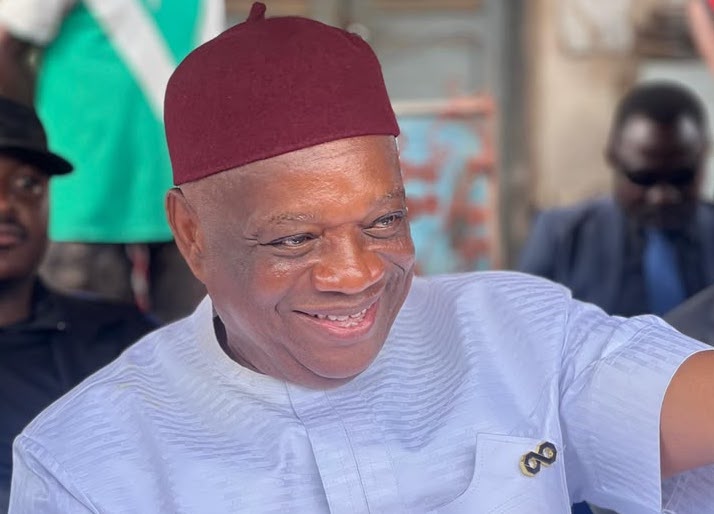
Minister of Budget and National Planning, Atiku Bagudu on TVC Journalists’ Hangout spoke on various issues particularly what President Bola Tinubu’s administration is doing to boost the nation’s economy.
What do you make of the nationwide protests?
Before what I make of the protests, one has to appreciate that our President spoke like a statesman. Not surprisingly, statemanly, nationalistic, and in a compassionate manner. And a leader who takes responsibility and who has called on all to appreciate the challenges, to synthesise those who lost their lives and properties and commend those who behaved responsibly while giving warning to those who are hiding behind the desire of a segment of the society to express their pain to cause mayhem and in summarising key number of initiatives that have been put in place by this government.
We are not where we used to be that he said as much but it is getting better. Governor Charles Soludo, Anambra State Governor, went as far as suggesting that President Bola Ahmed Tinubu inherited a dead economy. So, today, that dead economy is breathing and that is why the allusion to let us not starve it of oxygen.
The protesters have been heard, all of us public officials who have been mandated by Mr. President in various ministries, departments and agencies have been listening attentively throughout the period, to hear the arguments, the message to be incorporated into what more we can do differently, how we can calibrate things differently.
For us in the ministry of Budget and National Planning, we have maybe the most important task because just as Mr. President said in his speech, to build a just and prosperous society, through national planning function, which is coordinated by this ministry, which is found in the chapter two of our Constitution, fundamental objectives and Directive Principles of state, which contains both the economic, social and political objectives of our existence, of our coming together as a nation to build a just society that works for us. And from where we derive an agenda 2050, which is the perspective plan where we Nigerians came together and say, this is where we want to be by 2050. Mr. President summarised this in his vision, The Renewed Hope Agenda by which he campaigned upon, which is our strategy document in order to lead us, to set us on the way to the utopia where we want to be.
Choices have to be made and because of where we are, meaning we do not have enough revenues as much as we wish. We are existing in a world that is not as generous; interest rates are rising around the world affecting our ability to service our debt, trade barriers are enacted, investment flows are stunted. And in all these, we have to craft what we need to do as a nation in order to achieve the objectives we set for us. Meaning, a macro economy that works for us, that is secure, that is food secure, that unlocks the potentials, that provide adequate infrastructure, unlock the potentials in the energy, invest in human capital development, as well as innovation and technology, and creative economy as well as a world with a governance structure that will make us deliver on those with the least pain.
So, this involves making choices and sometimes choices for a responsible leader involves both those that are painful and not painful. And in order to give the objective of generating an economy that works for all, some of the measures that are needed, may appear painful. So, even before the protest, we heard people who are expressing different opinions, but what we invite all to do is that this is an honest conversation, where you point to us where we are wrong in what we are saying. We don’t have enough revenue. We don’t have revenues to fund our priorities. We need to either find investors to come and raise revenue somehow or borrow the money so that we can fund the dream of our populace and include all. And the measures that were taken to restore mirco credit stability does provide more revenue to the Federal Government, to the sub national, meaning both in states and local governments and sending the message to investors and creditors alike. That we are putting in place the parameters of an economy that can absorb it, reward investors that can demonstrate ability to pay creditors. And we are encouraged by what we have seen so far. Mr. President has led engagements with investors, domestic and international. The reforms have been acknowledged by world leaders and we have seen beckons of light in terms of generation of investment, and ability to assess credit contrary to what was before.
In all these, we are not playing a blame game. Mr. President assured Nigerians that he inherited both the assets and liabilities of the government. He acknowledged that some of the challenges we face as a nation come from decades of choices not taken or choices not sustained, or choices that were taken wrongly. But be that as it may, the moment has come to confront them. And I think that is a defining moment in our nation that a statesman in the person of President Asiwaju Bola Ahmed Tinubu, has said that whatever was wrong before, let us confront our reality. And we have heard our younger ones, we have heard others who participated in expressing their views and we, like Mr. President, are conscious that whatever we think we are doing right, we are being called upon to do more.
Nigerians want to see good prices go down. When we talk about some of the steps the government has taken that are yielding dividends, they don’t want to listen. They are concerned about rising food prices and no one seems to be ready to step in and stop the sometimes arbitrary increase in food prices. What is the government doing to bring down food prices at this time?
On the food prices just like I said earlier, our food situation was a reflection of many factors. Ever since COVID, the world economy was affected by a free flow of inputs; energy prices have affected inputs, we had flooding, we had the challenges of insecurity because even while it is abating courtesy of the commendable effort of all our security agencies because of fear, many places, confidence had not yet returned. And in addition, we have the currency redesign which affected a whole cropping season because of absence of liquidity and it affected farming activity in particular, as well as the fact that 2003 was a transition year. The Russia Ukraine war has affected global food prices, have affected the trade in goods. So, with these cumulative effects, we are not an island. But a multiplicity of actions that the President has spoken about, intervention to ensure that the agricultural sector is supported. Not only farmers, a lot of support is going to farmers, two million bags of fertiliser among other interventions are being distributed to all the states to support farming communities. Grains from strategic storage were distributed in order to lower food prices in addition to additional distribution of food to both states and directly into the market, so as to lower prices. As well as gains that are being made already in this wet season because in most parts of the country, the wet season farming is going on strongly and we are already hearing stories about prices responding downwards in connection with the wet season.
Equally, Mr. President has announced the creation of your livestock ministry, which is another component of the agriculture sector that we believe we can do more about. So, these gains will be sustained. A National Agriculture Development Fund has been put in place, a number of approvals have been given for the importation and assembly of mechanical items including tractors that will support agricultural production, to the extent that we believe our agricultural production will expand.
But let us also keep in mind that there is a structural issue, because the agricultural system that we require to feed 230 million people is different from that which is required to feed 119 million people that we were 25 years ago. So, transformation. And this goes to the issue of the Renewed Hope Agenda that we need to transform, we need to do things differently. We need to support our agricultural sector with fast yielding, higher yielding seedlings and production methods, we have to drive production efficiency. So, these measures shall be sustained and food prices we believe will gradually and continuously be coming down, because even our inflation, the main contributing factor is inflation, so this will also impact on inflation, and indeed the exchange rate.
We’ve seen two African countries now, Egypt and Ethiopia floating their currency. Why are African leaders going along this route when it is a big driver of spike?
On the question, why are African countries floating their currencies? Just over the last three days, African finance ministers and central governors were in Abuja for an African caucus meeting, which is the first of its type, that took place in our county, where the African caucus of the World Bank, meaning all the finance ministers and central bank governors met and deliberated on Africa’s specific issues. And speaker after speaker, they all acknowledge Africa’s fate. We are facing a combination of difficulties. The industrialised world is not as generous with credits or in both quantity and pricing that will help us fund our development. The needs are growing all across Africa. Most of Africa, there are challenges that are similar to those that are being faced in Nigeria, a young population that is desirous of taking on the world but we have to find the resources for them, we have to create the enabling environment for them and we have to give them the skill set.
Most African countries do not have the foreign exchange to find the streams. So, not because they like it, but they have to take measures that can ensure sustainability that’s floating the exchange rate, which may lead to temporarily initial pains, but in the long run will help put the economies on the pedals. And that again is a lesson for our young ones to know that we are even relying upon them because of their access to information much more than us, to know that global challenges are affecting every country. And if we pretend that they do not exist and get angry, rather than finding innovative ways of solving them, we will be harming our economy and other economies will be prospering. I have said on a number of occasions that, politicians like to be heard, but a responsible politician will lead and encourage and convince the populace, let’s take the difficult measure that will lead to a greater tomorrow. And our president has done that.
Perhaps what Nigerians are worried about is that the level of hardship would not have been as harsh as it is at the moment. Why was it necessary to carry out three very serious policies at the same time. The President withdrew fuel subsidy on the day he was inaugurated, followed by withdrawal of subsidy on electricity. And then shortly after, the currency was floated which has taken the economy into a freefall. If these things were done one at a time, don’t you think there would have been some level of help for the Nigerian people because after all, the government exists primarily to make the citizens happy and be able to live with hope and confidence?
Indeed, when you inherit three subsidies, a petroleum subsidy and electricity subsidy and an exchange rate subsidy, at a time when you don’t even have the revenues to fund the subsidies, it is a very, very big challenge. But let’s also remember that even before Mr. President was sworn in, the Petroleum Industry Act had been passed into law. And that Act legislation has made the Nigerian National Petroleum Corporation a private liability company that is supposed to make profit. So, the foundation has been set for the removal of petroleum subsidy by the act and equally there was no provision for subsidy as at the time Mr. President was sworn into office.
We reckoned that the removal of subsidy cause shops and vulnerabilities especially to those at the lower end of the income strata. And that is why, Mr. President, immediately upon being sworn in, renegotiated the N819 billion budget he inherited and told the National Assembly, look you have to allow me use N500 billion of this money to find social interventions, about N200 billion was allocated for agricultural intervention, N40 billion for Nano, N75 billion for micro and small scale enterprises as well as support to other types of government equally.
Equally, after doing that, an additional supplementary budget was proposed and passed, which is a N2.17 trillion budget, which was made mainly available for security so that more of the security gains can be cemented and more people can go back to normal livelihoods. Infrastructure as well as cash awards to labour unions and additional money for cash transfer to support the vulnerable populace. Why must government also allow electricity prices to go up? Not all the subsidy in the electricity sector has been and the situation we found ourselves with that is that the electricity sector has been regulated; it is owned by distribution companies, but they are not recovering costs. They complain and they are owing banks. So, some select customers, Band A customers who are deemed to be in a position to be able to pay and that will be better off paying the grid electricity rather than generating it themselves, were moved to a new tariff. All these things are designed to correct the distortions so that our economy can be saved from the pit it had fallen.
Equally, the exchange rate reform, the Central Bank of Nigeria was unable to defend the exchange rates regime we inherited. We were indebted and a lot of contracts were not paid. So, foreign exchange flow into the economy is basically frozen. And Mr President said look, we must meet all contracts, the central bank should be independent and therefore they should be allowed to act in the way to restore confidence into the economy which of course has its own short term gains. Exchange rate movement will affect prices but can also stimulate exports. And we acknowledged that the combined effect of these three measures, bold and courageous as they might be, must be acknowledged and we must generate tools for supporting the economy better and a lot is being done. But even as it were, more money has been found now to the extent that we have youth-centric programmes that our youth can take advantage of only limited by imagination, agriculture centric programme, women centric programmes, women centric medium and small scale centric programmes. We believe the combination of these enablers in the sense that we are finding money that will fund opportunities in the different sectors of the economy that can compensate for the short term gains and put us on a path to sustainable all-inclusive recovery while at the same time paying attention to the vulnerable and ensuring that the social transfer system is made stronger that it serves the needs of those who have been affected, including the recent innovation that all those who have participated in the National Youth Service and are unable to find a job to register and continue to be supported until they find one.
Let’s talk about our currencies. Many Nigerians are disturbed that currency has become so weak even when placed side by side with the currencies of the countries that are our neighbours. What steps are being taken to make these currencies stronger or are we simply condemned to having this currency in its current states? Are we going to be seeing a resurgence of our currency in the coming days?
Oh certainly. I believe currency-wise, we are almost in our worst position because we decided to confront the situation. We don’t have foreign exchange coming in at all. We did measures that now we see it trickling in. We are not pouring yet but the data is that it’s trickling in and is bound to grow. Combined with the measures being taken to boost domestic production, demand for foreign exchange may reduce because of those measures. And then the investments that have been done will pay off. Mr. President took the most commendable steps to show his confidence in the Nigerian economy and our Naira by directing that domestic refiners should be sold crude oil in Naira. That is the biggest statement of confidence because we are confident that the Nigerian economy will rebound and our exchange rate will improve vis-a-vis other countries. But even while doing that, let us also not miss sight of the opportunity, what we even hope is that our exports will grow so that we are selling more to the world than just buying from the world.
You talked about the desire to have our exports grow. Some years back, we’re actually doing above 2 million barrels a day as an oil producing nation. Now we’ve gone back and based on latest figures, we are actually doing 1.6 million barrels a day. If we were to do above 2 million barrels a day, maybe in the region of 2.5 million barrels a day, many people believe that we’ll be able to earn good enough foreign exchange to the point that it can begin to have impact on the strength of our currency. What steps are being taken to move us to that period when we were doing about 2.3 million barrels a day or probably will take us beyond , after all, we see Saudi Arabia and the rest of them doing far higher than that?
Not only that, we need to be at 2.3 million per barrel, we even need to be higher because 25 years ago when our population was 119 million, we were doing 2.2 million barrels a day. So, if one is to extrapolate from that to maintain the same level of value, we need close to 4 million barrels a day. But cumulative years of under investment whether in security challenge or under investment in production has brought us to where we are today. Now, we have a president who is saying I don’t care whose fault it is, Nigerians. I’m not going to blame anybody. You have given me a mandate to lead us to a more prosperous future. The challenge is what choices are before us. The choice does not lie in lamentation, but saying this is where we found ourselves, let us tell ourselves the hard truth and do better. Yes, we will. We are blessed. But as we know from the stories in the scriptures of Christian and Muslim, blessings should make you do more rather than less. We have seen how prophets have worked. So as a country, he is inviting us that let us appreciate that we need to take bold, courageous, sometimes firm measures in order to be where we want to be. Because if we continue with what is inherited, certainly the future will be scarier.
Is the government worried at all about the fact that as a country, we have not been able to run the four refineries that we have in Nigeria, two in Port Harcourt Rivers State, two in Warri, Delta State and one in Kaduna. And for a whole country with 200 million people, does it worry the government that these refineries have remained in comatose state. And one of the ways Nigeria would have been able to stop importation of fuel and then end foreign currency to run its economy would have been the production of fuel locally. Why has it become impossible over the years to make these refineries, even if it’s not all, to produce petroleum products to serve Nigeria, even locally, so that we stop importation? And if we produce more, we can sell and earn forex?
I don’t have all the answers. But it’s illustrative of what I said has been numerous years or even decades of under investment. And for President Ahmed Bola Tinubu, it is not even about having the four refineries working. Why is Nigeria not a destination for refiners? Why are we even not marketing ourselves so that we can refine all the crude oil that is produced in Africa? Why not? Why can’t we be 20 million barrels refining capacities that we can do refining as a business? Those are the kinds of deals that Mr. President supports. Because we have seen countries that are not producing oil at all having refineries. So that means we should even look at refining as an industry in itself and do better. But all these things are transformative and imaginative ideas. And I’m sure by the time the investment community sees the kind of support President Asiwaju is providing resonating with them, we will see more investment in those sectors. So yes, we wish our refineries can work but more than that, we are an evolving country, where we even pray that other investors will be motivated to come and set up here.