Follow Us on Google
• From Oko Poly to UNICROSS: A zonal roll-out takes shape
From Fred Ezeh, Abuja
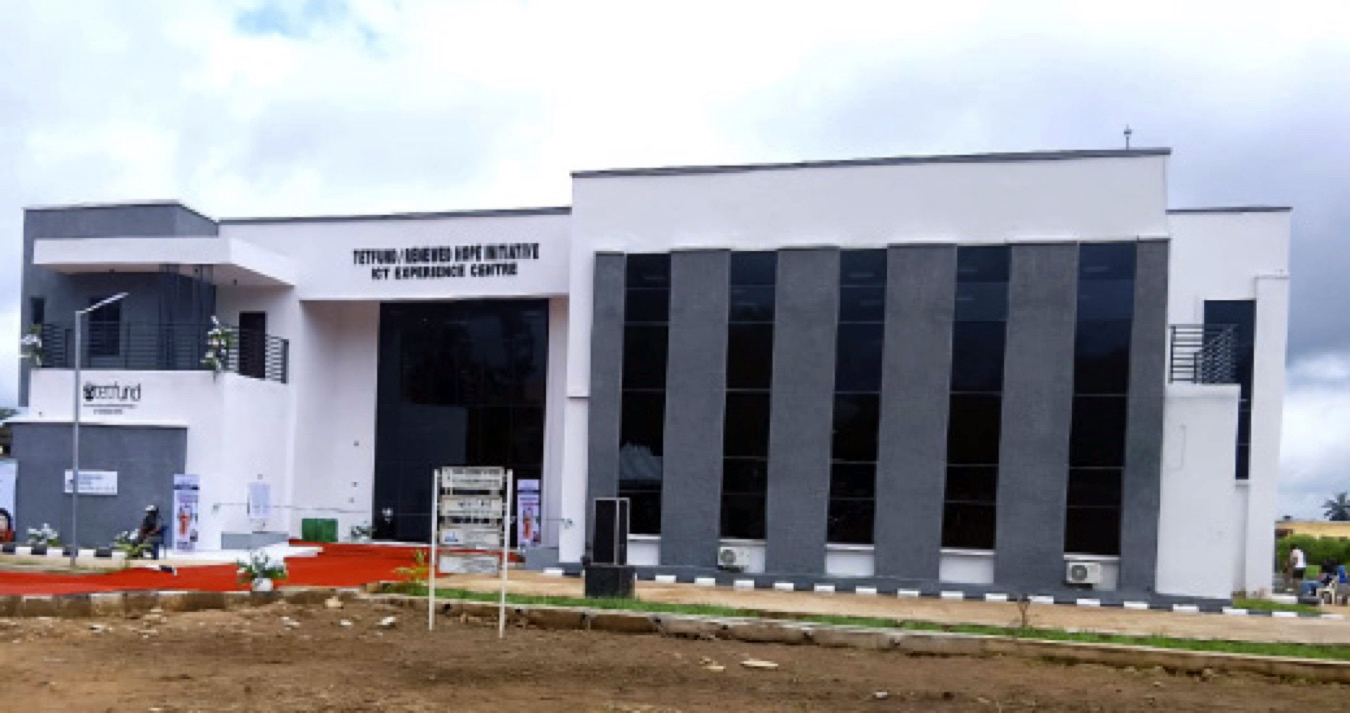
In the space of a one week, Nigeria’s First Lady, Senator Oluremi Tinubu, has inaugurated two of the six zonal ICT experience centres built by the Tertiary Education Trust Fund (TETFund), in support of the Renewed Hope Initiative of the Federal Government.

First was at the University of Cross River State (UNICROSS), Calabar, on September 4, and then at the Federal Polytechnic, Oko, Anambra State, on September 10. Four more are on the way at Ekiti State University, Ado-Ekiti (South-West), Kaduna State University (North-West), Kwara State University (North-Central) and Taraba State University (North-East), completing a geographic spread that touches every region of the country.
At N1 billion per zone, the N6 billion investment is deliberately structured: each centre is sited in a different geopolitical zone, and host institutions span the full spectrum of Nigerian tertiary education, federal and state universities, a federal polytechnic, with colleges of education also designated as beneficiaries.
It is, in effect, a pilot programme with national coverage, testing whether world-class digital infrastructure can be seeded across vastly different institutional and regional contexts.
Bridging the digital divide on campus
For decades, the biggest gap between Nigerian graduates and their global peers has not been intelligence or ambition, it has been access. Many institutions lack functional computer labs, reliable internet, or exposure to the tools that define the modern economy such as artificial intelligence, cybersecurity, robotics, data science and software development. These centres are designed to close that gap directly.
Each facility serves as a hands-on hub where students and lecturers can move beyond theory into practical, project-based learning such as digital literacy, multimedia production, e-learning, and entrepreneurship.
As TETFund Executive Secretary Sonny Echono put it at Federal Polytechnic, Oko, Anambra State, the Centres are an investment in people, and an investment in possibilities.
The Rector of the Institution, Dr. Chioma Awuzie, in her remarks at the project commissioning framed it just as pointedly: “the world is driven by technology and AI, and our youths must be equipped not merely to participate, but to excel and lead. The ambition of turning Nigerian students from consumers of technology into creators is the core promise of the programme.”
She described the project as a landmark achievement for the institution, and that the Centre would provide students with opportunities for digital skills development, employment, entrepreneurship, innovation, access to educational resources and networking.
Dr. Awuzie said the ICT Experience Centre, alongside the Chemical Engineering Building and Students’ Examination Centre, underscored the significant impact of TETFund’s interventions at the polytechnic.
The Rector further expressed appreciation to the Federal Government and TETFund for the intervention, while appealing to the First Lady and other stakeholders for urgent assistance in addressing some of the challenges confronting the Polytechnic particularly the threatening erosion affecting parts of the institution’s environment.
Other News
Balancing TETFund’s intervention model
The centres also signal something subtle but significant about how TETFund is evolving under the leadership of Sonny Echono as Executive Secretary and Aminu Masari, the chairman of TETFund Board of Trustees.
Historically, the Fund’s interventions tilted heavily towards physical structures such as lecture halls, laboratories, libraries. Though they remain necessary, but the ICT Experience Centres represent a shift toward human capital and capability-building as infrastructure.
Notably, the programme is being delivered in partnership with the Renewed Hope Initiative, embedding the centres within a broader national agenda that places young people at the centre of development. And the pilot may be just the beginning.
Nevertheless, TETFund has signalled plans to take free ICT centres to more than 270 institutions nationwide, which would transform six flagship projects into a systemic upgrade of digital capacity across public tertiary education. If that scale-up materialises, the six zonal centres will be remembered not as endpoints, but as proof of concept.
Employability, innovation and the global economy
TETFund said the economic logic is straightforward. Nigeria’s graduates face a brutal job market, yet the digital economy locally and globally suffers from a chronic shortage of skilled talent. A graduate trained in AI, data science or software development in Calabar or Oko can compete for remote work, build startups, or plug into Nigeria’s growing tech ecosystem without relocating to Lagos or Abuja.
The centres are explicitly designed to enhance graduate employability, foster innovation and position Nigeria to participate more effectively in the global technology-driven economy,” according to TETFund board chairman, Masari.
“There is a second-order effect too: lecturers gain exposure to current industry tools, which feeds back into curriculum and teaching quality. An institutions such as the Federal Polytechnic, Oko, has already paired the centre with other interventions like the Chemical Engineering Building and a Students’ Examination Centre, suggesting the ICT facility can anchor a broader culture of innovation on campus, from research commercialisation to entrepreneurship incubation.
Maintenance, access and sustainability
This is the real test. The hard questions begin after the ribbon-cutting. Some Nigerian campuses are littered with “white elephant” projects. Equipment that decays, facilities that are locked away, and laboratories that serve a privileged few.
The TETFund Board of Trustees, Masari, also acknowledged the risk at Oko, thus urging the institution to ensure proper maintenance and security of the facilities, and to regularly upgrade its equipment in line with technological advancements. “In an era where technology becomes obsolete within three to five years, a N1 billion facility can quietly become a museum without continuous investment,
“Hence, the key challenges remain: who manages and funds operations after commissioning? Will access extend beyond the host institution to neighbouring polytechnics, colleges of education and surrounding communities as the zonal model implies? Will there be structured certification, trainer pipelines, and integration with curricula rather than ad-hoc workshops? And will the promised scale-up to 270+ institutions proceed on schedule, or stall after the high-profile pilots?
Regardless, the centres commissioned at UNICROSS and Federal Polytechnic Oko are undoubtedly a milestone, visible, well-funded and nationally distributed. But their true meaning for Nigeria’s tertiary institutions will be measured not in commissioning ceremonies, but in what graduates build, earn and invent because of them.