Follow Us on Google

By Faheem Lawal
The Nigeria Revenue Service (NRS) has introduced new initiatives and tax incentives to promote business growth, attract investment and open up opportunities in Nigeria’s creative economy.
The initiatives are an Investment and Tax Advisory Hub and a Creative Economy Tax and Investment Initiative. They are meant to give entrepreneurs and investors practical guidance on tax compliance, available incentives and business formalisation.
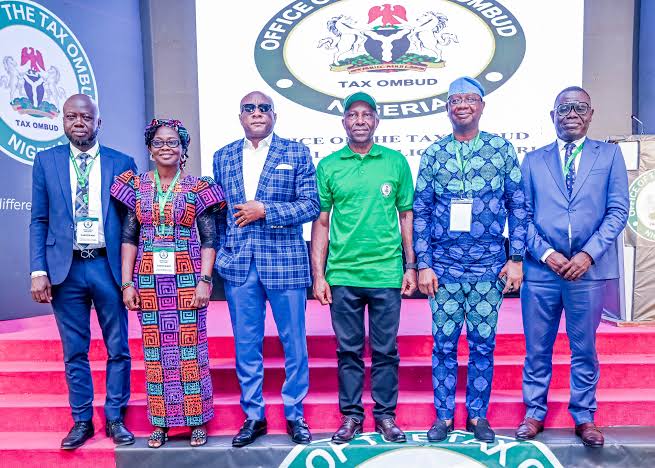
The NRS announced them at a tax policy dialogue held on the sidelines of the Creative Africa Nexus Weekend (CANEX WKND) 2026 in Lagos. The session brought together tax officials, policymakers, investors and creative industry stakeholders to discuss how Nigeria’s evolving tax framework can support businesses, especially those in the creative and cultural industries.
The NRS Executive Director, People, Stakeholders and Communication, Obinna Ihedioha, said the two platforms would allow closer engagement between the tax authority and operators in the creative economy.
He said the advisory hub would help businesses understand their tax obligations, incentives and investment opportunities, while the creative economy initiative would deepen collaboration with industry players.
Ihedioha said the service recognised the creative economy’s potential to contribute to Nigeria’s gross domestic product (GDP) and the wider African economy. He added that the NRS would keep exploring policy initiatives and, where necessary, legislative adjustments to meet the sector’s peculiar needs.
The NRS Director, Government Business South Directorate, Abuja, Mustapha Akaje, outlined incentives under the Nigeria Tax Act 2025 and other laws.
He said qualifying investors in designated sectors, including the creative and cultural industries, could get a five per cent tax credit on eligible capital expenditure, subject to conditions including a minimum investment of N250 million.
Akaje said small companies with annual turnover of N100 million or less and fixed assets below N250 million could qualify for zero company income tax and exemption from the four per cent development levy.
He added that there were also reliefs for qualifying start-ups, research and development spending, and eligible investments under the Nigeria Startup Act 2022. Businesses in export processing and free trade zones might enjoy company income tax exemptions if they met prescribed export requirements.
On cross-border business, he said eligible taxpayers could get credit for qualifying taxes paid in other countries against their Nigerian tax liabilities, subject to agreements and conditions.
Other News
He stressed that the incentives were not automatic and that businesses must meet the statutory requirements to qualify.
The NRS Assistant Director (Tax), Kazeem Lawal, urged creative entrepreneurs to formalise their businesses. He said many were commercially successful but limited their growth by operating without formal structures, often routing business transactions through personal accounts without proper records.
According to him, formalisation gives a business a distinct identity and credibility, and makes it easier to attract investors, partnerships and deals with local and international companies.
“Formalisation is about moving from being a successful creator to building a sustainable business that can outlive the creator,” he said.
Lawal clarified that small businesses exempted from collecting Value Added Tax (VAT) as agents of government were not automatically exempt from paying VAT on taxable goods and services they bought. He added that VAT refunds had been streamlined, with eligible refunds expected within 30 days without a prior audit, although later verification was still possible.
The NRS Assistant Director, Field Operation Monitoring Department, Simeon Onyegbula, advised businesses to obtain tax identification numbers and keep proper accounting records to benefit from incentives.
He said not every expense qualified for deduction and that personal expenses could not be passed off as business costs. Taxpayers, he said, must keep invoices, receipts and ledgers to support claims, and only expenses incurred wholly and exclusively for business qualified. Where an expense served both purposes, only the business portion was allowed.
The NRS Executive Director, Finance and Corporate Services, Mohammed Abubakar, called for more engagement to simplify the technical provisions of tax laws. He cautioned that earning income abroad did not automatically qualify a taxpayer for double taxation relief, as that depended on the taxpayer’s circumstances and whether a double taxation agreement existed with the other country.
He also noted that personal income tax matters might fall under the relevant state tax authorities, depending on an individual’s residence, and urged the NRS to sustain engagements with industry stakeholders to bridge the knowledge gap and improve voluntary compliance.
The officials said the evolving tax framework was meant to create a more enabling environment, encourage formalisation and attract investment into strategic sectors.
They added that sustained collaboration between government and the private sector would be critical to unlocking the creative economy’s potential and advancing Nigeria’s ambition of building a trillion-dollar economy.