Follow Us on Google

Lukman Olabiyi
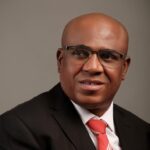
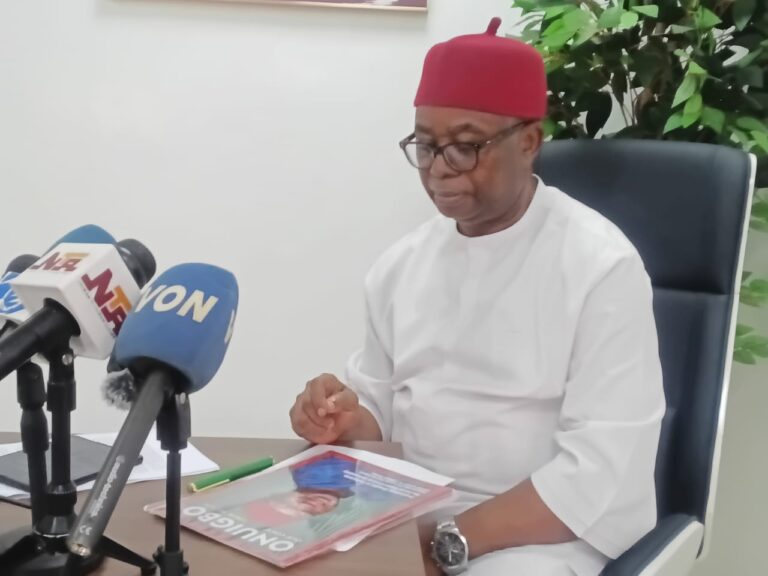
A member of Council for the Regulation of Engineering in Nigeria (COREN) and a Senior Special Assistant to the Governor of Edo State, Godwin Obaseki, Lucky Igbinedion, speaks on what President Muhammadu Buhari must do to succeed.
President Buhari had in 2015 merged several ministries cutting down their numbers to 25 what is your opinion on this?
The objective was to reduce government spending, streamline supervision and create better efficiency in the system. To crown it all Mr. President appointed former Lagos State Governor, Babatunde Raji Fashola, a lawyer by profession to head the ministry of Power, Works and Housing.
When this decision was made I personally had my reservations on the action but since we were still basking in the euphoria of victory it was unwise to publicly have an opposing view to that of the presidency. Though I made efforts at internal communication to correct it, there was no result.
But, first I knew that the merger of the ministries wouldn’t attain the projected result that was anticipated. Secondly I knew it would only add to the unemployment problem of the country as the action meant fewer hands would become employed. Thirdly it made no sense to me that a ministry of power which is supposed to be an area of specialisation for specific engineers like Electrical, Mechanical, Nuclear, Solar and Production Engineers would be merged with ministry like works and housing which fall under specialisation of Civil and Building Engineers and other related field of specialisation. Although the practice have subsisted for long, it was empirically wrong to think that a lawyer like Fashola without prior knowledge of power or engineering would have performed effectively and efficiently.
It was like engaging an Engineer as a minister of Justice and Attorney General of the Federation. Irrational isn’t it?
No matter the angle we view it from, four years down the line, the projected objective have not been achieved as efficiency in power generation, transmission and distribution have continued to perform below average.
Also housing deficit has not been reduced and unemployment and poverty have continued to rise. In works many federal roads that needs palliative repairs have been neglected, a typical example been the Uromi Junction point at Agbor in Delta State where commuters and motorists plying the Abuja Onitsha/Warri/Owerri/Port Harcourt roads pass through hell at that point. This normally should be a point that should be repaired in weeks with little cost but have remained in bad state for several years thereby adversely affecting economic activities in that area. The above shows that the minister is overwhelmed and overworked by briefs on his table and may definitely not be aware of so many places that requires government attention at minimal cost even with so much correspondence to his office on such spots.
As this administration prepares to deliver the dividends of democracy to Nigerians, it is important to do things right and propel our economic advancement while quickly checking ugly projections.
The world is in an economic competition and most nations of the world are already on the fast lane in economic development and advancement. It is therefore time for Nigeria to join. And to do this, we must correct all anomalies in our system. Nigeria should therefore declare a state of emergency in major ministries that directly affect our economy.
Where specifically needs urgent attention?
Already Power Generation Statistics shows that the power generation capacities of countries of the world like China, United States of America, Britain, South Africa and Egypt stand at 5,388,000, 4,103,000, 335,000, 235,000 and 162,000 Megawatts of Electricity while Nigeria still produces just 5,000 Megawatts. This position is unacceptable and must change. It shows that we are not yet on the fast lane and what we have on ground shows that we haven’t prepared for that either. As we all know to enjoy competitive and comparative advantage in manufacturing and production which will create jobs, increase exports and ultimately boost our Gross Domestic Products (GDP). We must have an appreciable level of power to be generated and distributed to the end users.The responsibilities of the Power Ministry itself is so enormous that it needs to be split. It is therefore recommended that the presidency should split Power, Works and Housing Ministry into five ministries to be headed by specialised professionals in each field. He should unbundle many other ministries. In fact it is my opinion that he should further unbundle ministry of power into ministries of Generation, Transmission and Distribution. In that vein the various ministers manning those ministries will have the political will to achieve result. It will also give the government an opportunity to determine where and where we have problem that has made it difficult to produce adequate or desirable amount of energy despite putting in so much. It will be an avenue to track progress of every ministry and put an end to blame games presently being observed between Transmission, Generation and Distribution agencies.
Also Ministry of Information, Culture, Tourism and National Orientation should be split into four. Another agency should man and sell our cultural values and heritage while National Orientation should be manned specifically to drive orientation of citizens of Nigeria on government programmes and projects, policies, laws, developments and many critical areas where information dissemination to citizens needs attention.
What is your position on involvement of youths in Buhari’s second term?
Involvement of youths in Buhari’s second term is good idea, to succeed; Mr. President should try younger hands. We have tried older hands and they didn’t perform as expected.
What approach do you think government can deploy to turn around the country’s economy for good?
The approach we used to patiently wait for Dangote Refinery and other modular refineries to start production before we will ban importation of refined petroleum products should be applied to all sectors. We should reduce the items we ban and ensure we put our house in order first and be able to produce locally before imposing bans on some items as it is causing suffering, job loss and poverty as indicated in our poverty and unemployment indices both by our local National Bureau of Statistics and international statistics agencies. We must engage in aggressive capacity building.