Follow Us on Google
By Christy Anyanwu
Adedamola Aminu has built an enviable reputation as a ‘champion of change’ in all the organisations he has worked with in the United Kingdom.
In the bustling landscape of British politics and academia, Aminu stands out as a formidable impact.
He has won several awards such as Nigeria High Commissioner award for meritorious services to Nigerian community in the United Kingdom, Gathering of Africa’s Best award, Grassroots Diplomat Award as honouree and Nigerian Centenary Award recognising 100 outstanding Nigerians in the UK to mention, but a few.
Aminu wears many hats – he was a local government councillor for 12 years in the UK, former chairman and founding member of Association of British-Nigerian Councillors and Mayors in the UK.
He is the president of the Association of Nigerian Academics UK. He is the author of a book, Nigerian-British Politician in United Kingdom and Republic of Ireland, “A Book of Profile”.
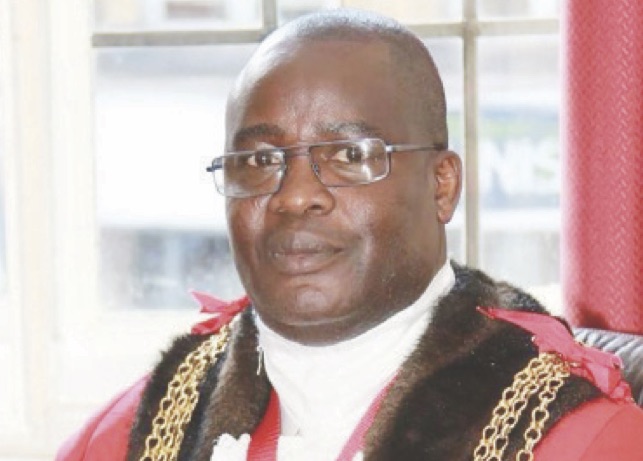
He is also the past Mayor of London Borough of Lambeth.
As an educationist, how do you feel about the policy announced by the Minister of Education that SS3 students must be 18 years old to be eligible to write the WASSCE in Nigeria?
I think this is a good idea because this will give them the opportunity to be more matured, I don’t see any rush to finish education early and they cannot fit well with more mature people they meet or work with more matured people in the industry. They need to play and enjoy their youth with their mates. Here is UK that is not possible as they must be in school till they reach the age of 18 years.
Looking back, how have we fared in the development of our democratic process?
Nigeria political development is going on well, at least we have successful democratic change of government since 1999. Nigeria two major political parties are APC and PDP, other small ones hardly get enough support or recognition. Nigeria politics is about who have the largest money to spend, not based on grassroots members. Also, after elections no effective opposition to the ruling party as the losing parties go to sleep until about a year to the next election. This is due to lack of structure or plan to position their party for governance.
What are your fears for Nigerians?
My fear is about the current economic climate in Nigeria with lack of securities in some states, poor supply of electricity, bad roads and the high cost of goods and services in the country is creating an environment that creating hostility to the government. This leads to citizens agitating for change of government or for each region to go separate ways. Hope the government will do something soon to make life better for citizens.
How will you briefly assess the President Tinubu-led government since its assumption of office?
The introduction of student loan is a good idea which I like as this will help less privileged families to be able to send their children to university without financial pressure. President Tinubu needs to fix the problem of epileptic electricity, security issues around the country, provide good roads. To have good government who cares for its citizens and reduce the cost of governance. I would like the government to reduce corruption because I don’t think corruption can be totally eradicated in any country. Government should also think through their policies well and carry out Equality Impact Assessment (EIA) of their policies before implementing it not the other way round so that they can mitigate the effects and make provision for measures that will not put more stress on people. I am a bit optimistic about Nigeria, we need to have hope that things will get better. The current President Tinubu administration has good policies, but the way they are implementing it is wrong. President Tinubu is a strategic person who knows what he wants to do, but for people around him, I am not sure some of them want better things for Nigerians, their policy implementation is not thought out through properly to consider effects on people, for example, the removal of petrol subsidy and recent proposal to increase electricity tariffs might be a good idea, but people don’t have regular supply of electricity as of now, before you can think of increasing tariffs you have to make sure you fix the infrastructure to supply regular electricity and people will be willing to pay more to use the service. Government can also encourage the use of solar energy by helping people to reduce the cost of installing solar inverter at home.
If you were to advise the president seeing him face to face, what would you tell him to move Nigeria forward?
Sort out security issues in the country, fixe electricity, provide good roads and reform the banking sector so that people and business can take loans at interest rate not more that five per cent that is affordable which will attract investment to set up new business that will lead to job creation and employment. The use of two-colour currency in Nigeria is not a good idea and it does not portray us as a serious nation, this needs to change. I will also advise the introduction of coins to address the issue of inflation as products are priced at minimum note currency.
What are your thoughts on Nigeria’s current economic downturn, and how can it be mitigated?
We all need to be optimistic about Nigeria, despite the current economic climate. The current President Tinubu administration has good policies, but the way they are implementing it is wrong. President Tinubu is a strategic person who knows what he wants to do, but for the team around him is the same set of those who have been in government for a long time, the president needs to bring more new people with fresh ideas. Government can encourage the use of solar energy by helping people to reduce the cost of installing solar inverter at home, this will reduce pressure on the national grid for electricity. Other mitigation could be to investigate the banking sector, the cost of borrowing is too high, this will discourage borrowing and investment. Government should make the interest rate single digit to make it easier to borrow for investment. Government can do Equality Impact Assessment (EIA) of their policies before implementing them and mitigate any effect on citizens.
What inspired you to write “Nigerian-British Politician in United Kingdom and Republic of Ireland: A Book of Profile?”
The inspiration is to highlight the laudable contributions of Nigerian-British politicians in United Kingdom and Republic of Ireland, individuals listed in the book having achieved success in their chosen careers are getting involved in politics to impact positively on their community. Documentation plays a significant role in the preservation of history of both rested and serving politicians as if we don’t keep or write our own history others will write it the way they want that may not be accurate or we might not have record for future generation to know our contributions to British political system. Nigeria continues to project greatness at all fronts, and well-meaning citizens wherever they are, continue to aspire to lofty placement for themselves and their offsprings. Leaving a laudable trail that is worthy of emulation is great. The inspiration is also to encourage more people to get involved in politics.
How do you think Nigerians in the Diaspora can contribute to Nigeria’s development?
Nigerians in the Diaspora are already contributing through remittances and investments in various sectors active fields.
What the government needs to do is to tap into wide knowledge of diasporans in policy areas such as education, health, politics, governance, engineering, civil service, etc. There is a lot of diasporas who excel well in the areas listed and many more that the current administration is not making it conducive to be involved.
In my case apart from investment in Nigeria, I have organised training/workshop free for two local government schools in Lagos and my old secondary school with my colleagues from Association of Nigerian Academics UK, which I am the president. I have also provided training for some businesses in Nigeria.
What would you say about the Japa syndrome?
I will not tell or advise people not to Japa, but people need to plan properly. As an employer of labour in the UK, my advice is that don’t sell your property and businesses to japa. Where you’re going to, it is not certain that you will make it quickly, don’t come with family. Principal applicant needs to go and settle down for about six months to understand the life in the country you want to settle in. It is difficult for someone to accommodate you free for more than one month, your income cannot sustain you if your family you’re coming with is large because after paying your bills you have little money left. It also takes time to understand culture and ways of life abroad.