Follow Us on Google
From Tony John, Port Harcourt; Noah Ebije, Kaduna; Ighomuaye Lucky, Benin; Okey Sampson, Umuahia, Femi Folaranmi, Yenagoa and Scholastica Hir, Makurdi
Public power supply has been a major challenge in Nigeria; a militating factor generally viewed as against the nation’s development.
President Bola Tinubu had before assumption of office, promised to tackle electricity problems, but the situation is not getting any better, as factories and businesses are closing shop because of high operation costs associated with running generators.
Even the Presidency is migrating to solar as major source of power in Aso Rock.
In this report, some Nigerians came up with suggestions on how to solve the hydra headed public power supply challenges.
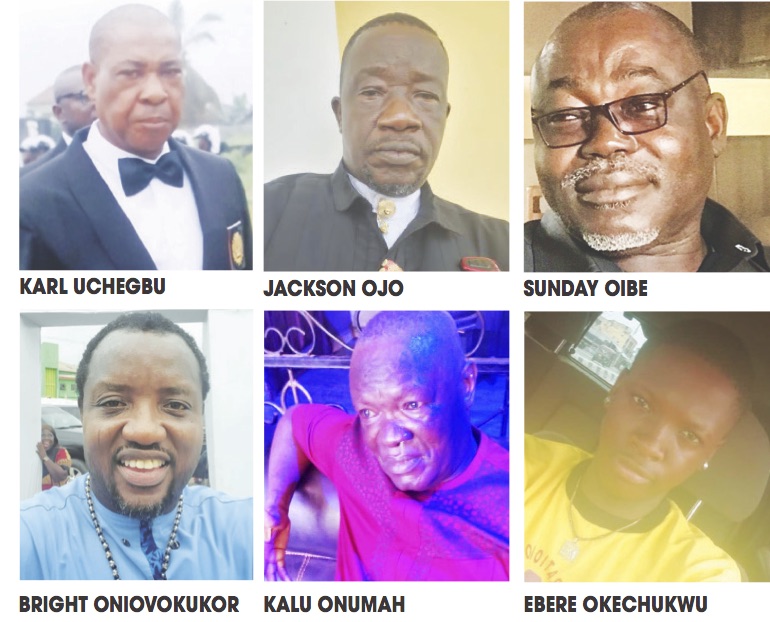
Govt should encourage regional, state grids – Sir Karl Uchegbu, activist; Port Harcourt
Nigeria’s energy (electricity crisis) rests on three legs. The first leg is inadequate power generation. For a population of over 216 million people, Nigeria generates roughly 4,000 megawatts. This is grossly inadequate. Secondly, Nigeria relies on antiquated and over extended transmission lines to deliver energy across the country. Thirdly, the distribution network is not only chaotic, but inefficiently managed. These factors make uninterrupted power supply in Nigeria a difficult task. Also note that prior to now, electricity generation, transmission and distribution was on the exclusive federal list, which, therefore, made it impossible for state governments and private investors to participate in the power sector.
The present administration has remedied that situation by signing the electricity act into law. The act removed power generation, transmission and distribution from the exclusive to the concurrent list. This has yielded results in Abia State, where the partnership between the Abia State Government and Geometric Power (a private company) has ensured uninterrupted power supply to eight local government areas in Abia. The Geometric model rests on one entity being responsible for its energy source (natural gas), power general, transmission and distribution. The result is power efficiency as all bottlenecks are removed.
For power efficiency, Nigeria needs to decouple its present national grid and encourage regional and state grids.
Present administration can’t resolve power crisis – Jackson Ojo, security expert; Port Harcourt
It is quite unfortunate that Nigerians are experiencing this electricity issue till now despite the fact that Mr. President promised Nigerians uninterrupted power and even said that we should not vote for him again if he failed to give us constant and affordable electricity. Lack of stable electricity is causing an aggravated harsh economy and that is one of the factors leading to the high degree of insecurity we are experiencing today in Nigeria.
While electricity is not available, petrol price has skyrocketed, which means that most Nigerians cannot afford to run generators anymore.
I doubt if it will be resolved by the present administration. An administration that sought alternative power supply to the seat of power has indirectly signalled hopelessness in the power sector.
President should take over ministry of power – Sunday Oibe, Chairman, Northern States Christian Elders Forum (NOSCEF); Kaduna
The government should declare an emergency in the power sector by allowing the private sector to take over the complete management of all issues that have to do with power generation, distribution, and installation of equipment.
Secondly, the current discriminatory policy where certain groups of Nigerians are being forced into what they call Band A, B, C and D, should be discouraged. No Nigerian should be discriminated against by a very harsh policy.
Lastly, Mr. President should take over the ministry of power and to be assisted by a minister of state to ensure his campaign promises are kept. It is unfortunate that we are still talking about the challenge of power supply in this stage of our national development.
When President Tinubu was campaigning, I can still remember him using the issue of the sorry state of power as a tool for seeking Nigerians votes. He made a categorical statement that if he failed to solve the issue of power; if he comes seeking our votes, we should not vote for him.
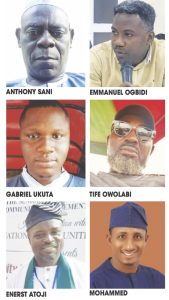
President should deliver on his campaign promises – Anthony Sani, ex- scribe, ACF; Kaduna
The government should prioritise its campaign promises with a view to doing the needful by delivering on the promise of democracy. How I wish you come to terms with the reality that no aspects of our national life that include security is doing well. Security is the first responsibility of government to the citizens. I always tell you not to forget the fact that being a third world country is not a matter of choice but of capacity.
Govt should create enabling environment for investors in the sector -Emmanuel Ogbidi, activist; Benin
The government should create an enabling environment for investors to come into the business of generating and distributing power to consumers if development and economic boom will see the light of the day in this country.
This will further open the electricity market for healthy competitions, thereby breaking the monopoly of the conventional DISCOs we are used to at different regions. As it is today, there is a huge trust deficit between the consumers and distributors because a large number of customers are not metered. They are compelled to pay for what they are not consuming.
Govt should focus on completing ongoing power projects – Dr. Bright Oniovokukor, medical doctor; Benin
Other News
Solving Nigeria’s public power supply challenges requires a multifaceted approach, which includes short-term, medium and long-term. The government should focus on completing ongoing power projects and optimising existing power plants to increase generation capacity, implement smart grid technologies to reduce transmission losses and improve distribution efficiency.
The government should also roll out smart meters to improve revenue collection and reduce power theft.
On the medium-term solutions, the government should expand solar and wind energy integration, like the N100 billion solar programme for public institutions, to reduce dependence on fossil fuels, encourage private investment in power generation and distribution through public-private partnerships, promote energy-efficient appliances and practices to reduce demand.
For the long term, I will suggest that the federal government should implement policies like the National Integrated Electricity Policy to attract investments and improve sector governance, invest in modernising transmission and distribution infrastructure to reduce losses, promote mini-grids and off-grid solutions for rural areas.
The government has taken steps, like the $122 billion plan to fix the power sector, and the Electricity Act 2023, to address these challenges. So much research and talks have been on in the power sector, it’s time to really put action in place with defined times lines.
However, before President Bola Tinubu openly declared his intention to run as president, he has spoken of the ills in the country as an opposition. The best time to fix them is now and Nigerians must demand accountability in this regard from him.
Govt should hand DisCos over to competent private firms -Prince Kalu Onumah, businessman; Aba
It is unfortunate that Nigeria is still grappling with the issue of public power supply challenges in this 21st century. Before now, we were told the country was generating 4,000 megawatts of electricity, which is a far cry from what the country requires for a steady power supply. Presently, available information has it that the country is generating only 2,000 or less megawatts of electricity, which has succeeded in putting many parts of the country in darkness for weeks now.
Some years back, the federal government unbundled former NEPA and sold them to private companies to run. But instead of selling the assets to competent firms, the unbundled NEPA was sold to cronies of those in government who have no experience in the power sector.
Instead of looking for means of generating funds to run the firms, the owners of the firms went cap in hand to government for subsidy. The challenges can only be handled if government should take over the running of the DisCos or hand them over to competent private firms.
Govt should take back DisCos – Ebere Okechukwu, student; Aba
When NEPA was in charge of power supply across the country, things were fairly better. But since they unbundled the company and sold its assets to private individuals and gave them authority to be supplying electricity, things are getting worse. We hear that this DisCos claimed that government is owing them subsidy money that runs into trillions of naira. It does not make sense that Government should unbundled NEPA, sell its assets to private firms and turn around to give such firms subsidy. For me, if we are to get out of this quagmire, government should take back these DisCos and fund them adequately.
Govt should invest in research to generate green energy – Gabriel Ukuta, lecturer; Yenagoa
The federal government should invest heavily in research that will generate green energy as opposed to the nation’s overdependence on petrol-generated power. It should also harness the rich estuarine Niger Delta water bodies to generate energy that will serve the whole of the Niger Delta and other parts of Nigeria.
Each state should act upon decentralisation law to provide constant power – Tife Owolabi, journalist; Yenagoa
The issues are with the gas supply, which is at its lowest ebb. The energy sector has been decentralised; so, it is for the various state governments to act upon it. While most states are suffering from no energy supply, a state like Abia isn’t because of its independent energy programme. In Bayelsa State, not all areas are having power problems due to the mini grid there.
Oloibiri and other communities enjoy a relatively 24-hour power supply due to mini grids. Each state should act upon the decentralisation law to provide constant power to its residents.
While states should develop their own independent power system, the issue of paying outstanding GenCo debts and guaranteeing gas supply/payments should be addressed by the federal government.
As it stands now, Bayelsa will have to buy gas to power its turbine, and it has to pay in advance, which runs into billions of naira.
States, LGs should invest in hydro power – Enerst Atoji, chairman, All Farmers Association; Makurdi
I’m into local oil production and I produce a lot for local and even exports. In the region, we produce Dogoyaro oil, castor oil, moringa oil and all that, but the factories where we normally produce these oils are closed down because they have been given prepaid meters. You cannot run industries with prepaid. So, that policy to give prepaid to all companies or businesses is totally a failure because nobody can run machines with prepaid. That policy is already going to affect local content or local economies that have to do with local industries.
Solar power can work for normal households, but most industrial machines cannot be powered by the same technology. So, that policy needs to be reviewed.
However, for a solution, there should be intentional effort by the states or local governments to invest in hydropower. They should be able to generate electricity and supply to other states because we have water.
Meaningful reforms urgently needed in power sector – Mohammed Mohammed, politician; Lafia
Nigeria’s electricity crisis has remained one of the most persistent failures of successive governments since the return to democracy in 1999. Politicians have repeatedly promised stable power supply, yet the reality for most citizens remains far from that goal.
Huge sums of money have been committed to major projects such as the Mambilla Power project, with billions of naira approved over the years, but the project has yet to deliver the expected transformation in the power sector.
At the same time, the government’s spending on alternative energy for official residences, including billions earmarked for solar power and fueling generators at the Presidential Villa, raises concerns about priorities, especially when millions of Nigerians continue to live without reliable electricity.
The situation has forced many communities and individuals to take responsibility for their own power needs, often contributing money to buy transformers, repair damaged lines, or rely on generators and prepaid meters to manage irregular supply. Despite these efforts, power outages remain frequent, sometimes lasting days or even weeks in some areas. Many Nigerians therefore believe that meaningful reform is urgently needed. During campaigns, the current government asked us to vote them out in 2027 if they fail to give Nigerians power.