Follow Us on Google
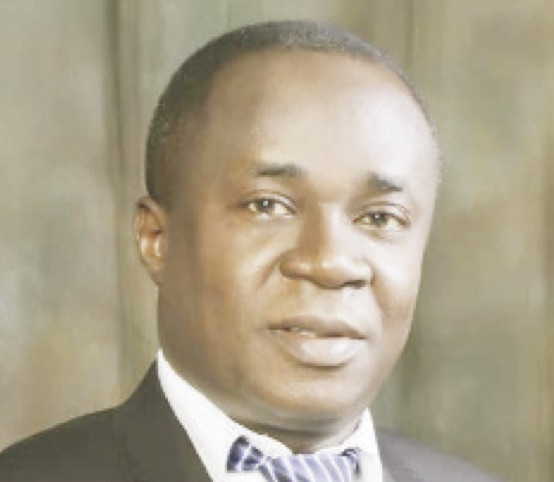
By Olakunle Olafioye
A financial economist and Professor of Capital Market at the Nassarawa State University, Uche Uwaleke, has said that despite the hitches and hue and cry that dogged the Central Bank of Nigeria’s naira redesign policy, the CBN has recorded some achievements in terms of the objectives the policy was set out to achieve.
Uwaleke, who is a former Finance Commissioner in Imo State and the chairman, Chartered Institute of Bankers (CIBN), Abuja branch, believes that the December 31, 2023 time frame set for the re-circulation of the old bank notes provided an opportunity for the apex bank to re-assess the policy and improve on its implementation without causing distortions to the economy.
He speaks more on major national economic challenges and sets an agenda for the incoming administration. Excerpt:
The crisis over cash is gradually easing off with many expressing the view that the policy has caused more problems than it was meant to solve. What is your take on this?
It is cheering to note that the cash crunch occasioned by the CBN currency redesign is gradually easing off and the long queues inside the banking halls and ATMs have reduced. To be fair, the objectives of the currency redesign are laudable considering the fact that, contrary to global best practice of between five and eight years on average, Nigeria had not embarked on the redesign of her currency for several years until last year. The key objective of the policy, you will recall, was to encourage cashless transactions by mopping up a large chunk of cash circulating outside the banks. There were other goals, some of them unwritten though, which the policy was meant to achieve such as reducing money laundering and the incentive for rampant kidnapping which thrive on huge ramson payments in cash as well as the influence of cash on electioneering activities. In this regard. I think the policy recorded some achievements. Even critics agree that the rate of kidnapping has relatively reduced. Ditto for rate of vote buying which would appear to have dropped during the last general elections. The CBN also reports that the volume of cash in circulation has substantially reduced. Regrettably, the well-intentioned policy has been associated with untold hardships on the part of the citizens. This is especially so for small businesses in a cash-based economy with huge informal sector. I think the adverse consequences could have been mitigated if the implementation of the policy had been preceded by adequate planning. I say this against the backdrop of the fact that the new naira notes were not in circulation many weeks after the policy was announced in October 2022. In many rural communities, it was not until the end of January 2023 after the cash swap programme came into effect on January 23, 2023 that the new naira notes were made available. So, it would seem that adequate plans were not made from the beginning for the huge logistics involved including measures that should have been put in place to discourage hoarding and diversion of new notes by commercial banks. By extension, the policy was equally meant to tackle inflation. You will recall that as a result of the cash scarcity and low demand, many traders who deal in perishable items were forced to sell them at below purchase price or cost of production due to lack of storage facilities. In my opinion, the use of cash scarcity to stifle demand is not a sustainable way to tackle inflation as it hurts economic growth and could lead to loss of jobs thereby fuelling unemployment. Be that as it may, it’s important to recognize that the CBN has recorded some achievements in terms of the objectives it set out to achieve. The reduction in huge cash circulating outside the commercial banks, the surge in electronic transactions, increase in financial inclusion are part of the achievements recorded thus far. The time frame till December 31, 2023 provides an opportunity for the CBN to re-assess the policy and improve on its implementation without causing distortions to the economy.
In the last few months, Nigerians have witnessed persistent hike in price of PMS and queues at filling stations. And with the plan to remove fuel subsidy, how is this likely to impact on Nigerians?
The reality is that fuel subsidy is causing incalculable damage to the economy. This year alone, the government budgeted about N3 trillion in fuel subsidy for just the first half of 2023. It is not in doubt that the fiscal situation of the government can no longer support it given the rising fiscal deficit and public debt profile. Again, it has been one scheme that is fraught with corruption given the fact that there is no accurate figure of volume of domestic fuel consumption. More importantly, fuel subsidy is regressive in the sense that it benefits the rich more than the poor. It also crowds out developmental funds which benefit the poor, as well as encourages smuggling of petroleum products across the borders, causing scarcity and long queues at filling stations. Expectedly, the removal of fuel subsidy will lead to some hardship by way of rising inflation in the near term. But in the medium to long term, it is in the overall interest of the economy as it will free up more resources to fund critical sectors of the economy. It goes without saying that the fuel subsidy regime has been a clog in the wheels of the country’s economic growth and development. The end to fuel subsidy will create a conducive and competitive environment for the implementation of the Petroleum Industry Act, which promises to open doors to investment in the petroleum downstream sector. It will equally create favourable conditions for the privatisation of the refineries.
A major crisis appears to be brewing between government and labour over government’s plan to remove fuel subsidy. How best do you think this could be resolved?
I think this crisis is avoidable and should not be allowed to brew. It is the duty of the government to sensitize the public on why subsidy on consumption should be taken off and that engagement has to begin in earnest. As I earlier pointed out, fuel subsidies have become a drain on government’s low revenue. These subsidies actually benefit the rich and over the years have become avenues for massive corruption. The opportunity cost is high considering the pro-poor projects that the government could have embarked on with the huge amount that is sunk into subsidies annually. So, the call to do away with fuel subsidies is in order. It will make way for more investments into the downstream sector of the petroleum industry in line with the Petroleum Industry Act which have potentials to create more job opportunities in the economy. I am sure organized labour is favourably disposed to policies that will reduce corruption and unemployment. In order to cushion the impact of fuel subsidy removal on the ordinary Nigerian, the government should quickly roll out compensation schemes in the area of health, such as expanding the National Health Insurance Scheme, education and mass transportation. I think these compensation schemes should be in place before implementing removal of fuel subsidy. Doing otherwise would amount to putting the cart before the horse which is what usually creates avoidable conflicts.
Nigeria’s public debt has been put at over N44 trillion. What does this portend for the nation and the incoming administration?
I am glad that you brought up this burning issue. The reality is that the next government will have to deal with the country’s precarious debt situation for many years to come due largely to Nigeria’s low revenue generating capacity- a situation made worse by oil theft and fuel subsidy regime. This is not just about the over N44 trillion reported by the DMO, but also the over N20 trillion owed the CBN. This grim fiscal position is not lost on the international community and has recently reflected in downgrades of the country’s credit rating by Global Rating Services such as Moody’s and Fitch. A worrisome aspect is that some of these loans are not applied to capital projects. Else, how does one explain a provision of N8.8 trillion new borrowings in the 2023 budget proposal whereas capital budget is about N5.3 trillion even below cost of debt service at N6.3 trillion. It goes without saying that the country’s debt burden is already unsustainable in view of the high debt service ratio at over 70 per cent. We tend to miss the point each time the argument is made that the country’s debt profile is sustainable simple because debt-GDP ratio is below country specific threshold of 40 per cent. Frankly speaking, this metric does not speak to a country’s capacity to meet future obligations. One obvious implication of rising government debts which are largely non self-liquidating is increase in debt burden which manifests in unsustainable debt service ratios. The huge debt service obligations come with huge opportunity costs as they crowd out funds which could have been applied to critical sectors of the economy. For example, in the 2023 proposed budget, a whopping N6.3 trillion is appropriated for debt service alone – an amount higher than the capital provision of about N5.3 trillion. It is for this reason that future borrowings should be tied to self-liquidating projects. In this regard, my advice to the next administration is to rely more on infrastructure bonds such as Sukuk, as opposed to the current preference for the issue of FGN bonds, when borrowing from the domestic capital market. With respect to the proposed securitization of CBN Ways and Means, I think the nine per cent rate offered for a 40-year bond is unrealistic. The rate is too low to attract investors and the amount involved of over N20 trillion is so large for the domestic market. Much as increasing the interest rate will impose huge burden on the government, the way forward, in my opinion, is to explore ways of getting the CBN write off a substantial part of it given that much of the Ways and Means were advanced on the back of COVID-19 pandemic and the two economic recession cycles in recent times. This approach will affect the balance sheet of the CBN negatively, but the burden on the economy will be lighter than going through the route of securitization.
What is your take on the recent policy rate hike by the CBN? Do you think the rate hikes have helped to control inflationary pressure?
It’s apparent the Monetary Policy Committee of the CBN is still concerned about rising inflation and the pressure in the forex market against the backdrop of its primary mandate of maintaining price stability. However, I had expected MPC to maintain a hold position considering the significant drop in currency in circulation occasioned by the currency redesign policy and the fact that inflation rate actually decelerated month on month between January and February 2023. The adverse impact of the recent cash scarcity on productive activities, as well as the conclusion of election season should have provided justification for a hold position. That said, I think that the increase in the MPR by 50 basis points is a signal to financial markets that the CBN has begun the process of rate-hike pause and I expect that a complete halt in policy tightening will most likely happen at the next scheduled meeting of MPC in May. This is necessary in order to stimulate economic activities and create job opportunities. I submit that to tackle inflation, the first step is to identify the major drivers. Gladly, the National Bureau of Statistics has been publishing CPI data promptly which point to cost-push, as opposed to demand-pull, causative factors. If the price pressure is coming from rising cost of petroleum products – no thanks to the Russian-Ukrainian conflict – electricity, transport costs from weak infrastructure and food shortages due in part to insecurity, floods and smuggling, the CBN becomes hamstrung and can do little. The reality is that the traditional monetary policy tools have reached their limits. Therefore, I do not think that continuous rate hike is the best way to tackle inflation that is primarily supply-side induced. Raising rates at a time the economy’s growth is still tepid and government has mapped out plans to borrow to finance deficit will only create distortions in the economy. To be sure, when rates rise on account of MPR rate hikes, it becomes more difficult for the private sector to raise cheap funds since companies will have to issue securities at rates higher than that of the government if they must succeed. So, it increases cost of capital for firms which negatively impacts their earnings. It’s not surprising, therefore, that the stock market is negatively affected as fund managers tend to switch from equities to fixed income securities. Higher cost of funds on the part of firms could equally contribute to higher inflationary pressure as cost of commodities rise. To deal with the inflation challenge therefore, effort should be geared towards increasing production especially food output and dealing with insecurity and fuel crisis. These should be more in the fiscal than monetary domain. At best, the CBN should continue to improve on its development finance function especially its interventions in Agriculture to ensure increased output given that the major inflation challenge is coming from rising food prices.
Unemployment remains a major challenge confronting Nigeria. How best do you think the incoming government should address this?
I strongly maintain that dealing with the seemingly intractable challenge of unemployment is not rocket science. It simply involves creating an enabling environment in which the private sector is on the driving seat. Come to think of it, the role of the government is actually to provide this conducive environment. This speaks squarely to the ease of doing business indicators especially infrastructure, security and promoting the right skills. Take power, for example, a major challenge has been the inability of the country to decentralize the power sector – one that relies so much on the National Grid infrastructure to the extent that we have become a generator-driven economy. This has stunted growth of SMEs, hindered ease of doing business and discouraged foreign investments. It goes without saying that incessant power failures contribute to low GDP growth and high unemployment rate. The recent effort by the government to decentralize power through a constitutional amendment which has just been signed by the president is a step in the right direction.
The Nigerian economy is currently challenged by rising inflation, tepid economic growth, exchange rate volatility, widening budget imbalance/deficit, increasing poverty, unemployment, among others. The way forward, in my view, is fiscal and monetary policy synchronisation involving ensuring security of lives and property, including through state police; ensuring increased power supply through decentralization, mini and off-grids solutions; ensuring availability of petroleum products by decentralizing refining, encouraging modular refineries and privatising government refineries; actively engaging the private sector in massive infrastructure projects especially roads and railways, as well as reforming the education system with emphasis on technology and skills acquisition.