Follow Us on Google

Tope Adeboboye
For months now, the world has virtually remained at a standstill, as COVID-19 ravages the globe. Millions have been infected while hundreds of thousands in different countries have met their deaths in the hands of the pandemic.
Even though COVID-19 is apparently in no hurry to end its siege, many countries have started opening up their economies gradually. In Nigeria, the lockdown that was imposed in late March is being steadily relaxed.
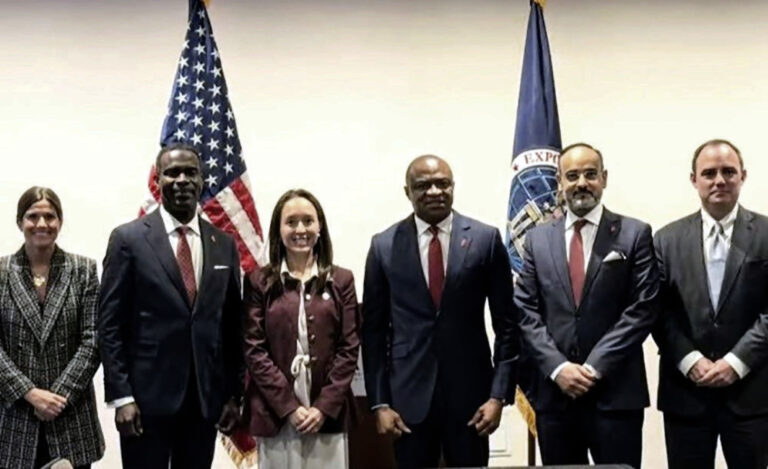
On Tuesday June 30, the Sustainable Energy for All (SEforALL), an international organisation that partners with the United Nations (UN), released a new guide that sets out clear and practical steps on how investment in clean energy could help African countries to recover better from the COVID-19 effects, reset their economies and close energy access gaps.
The guide, which was released at SEforALL headquarters in Vienna, Austria, is titled “The Recover Better with Sustainable Energy Guide for African Countries.” It is part of a series which includes guides for countries in the Caribbean region and Southeast Asia region due to be released soon.
The guide notes that countries that commit to an ambitious ‘Recover Better’ strategy immediately could deliver long term economic growth, new jobs, and sustainable energy for all in the long-term.
“This is particularly key for Africa after COVID-19 has highlighted the deep regional divide on energy access progress. Africa is a region full of promise and a growing economic powerhouse, yet this progress is stifled without access to sufficient, reliable and affordable energy,” the document noted.
At the moment, the indices for Africa are certainly unflattering. The latest data on Sustainable Development Goal 7 (SDG7) – access to affordable, reliable, sustainable and modern energy for all by 2030 – indicates that there is little cause for cheer as the progress in Africa is still far from meeting global targets. On the continent, 565 million people are believed to have no access to electricity, with about 900 million lacking clean cooking solutions. Analysts have argued that COVID-19 could make things even worse.
The international organisation has noted, however, that the enabling measures advanced in The Recover Better with Sustainable Energy Guide would ensure that African countries benefit from increased GDP, affordable energy provision, and improved agriculture, gender and health outcomes.
“This re-set can also spark progress at the speed and scale needed to meet SDG7 and help put the global economy on a trajectory in line with the Paris Agreement and Sustainable Development Goals.
“COVID-19 has changed the world as we know it. As countries rebuild economies from the impact of the pandemic, they are faced with a unique, once-in-a-generation opportunity to ‘Recover Better’ with sustainable energy.
“There has never been a better time to invest in clean, efficient renewable energy. Countries that recover better with sustainable energy will see the pay off in the form of resilient economies, new jobs, and faster energy development. By making this investment, African countries can develop a competitive advantage,” Damilola Ogunbiyi, CEO of SEforALL, asserted.
Ogunbiyi is also Special Representative of the UN Secretary-General for Sustainable Energy for All and Co-Chair of UN-Energy. Until last year, she was the managing director of Nigeria’s Rural Electrification Agency (REA)
Among the key policy measures highlighted in the SEforALL guide is ease of doing business, with the organisation suggesting that governments should create a supportive business environment that ensures that investments are driven as fast as possible. SEforALL also wants governments to significantly reduce red tape as well as reduce the number of permits required and time it takes to get permits (or waivers, if available) for renewable energy and clean cooking equipment and appliances.
The document advises African governments to set robust policies and empower national institutions to drive development.
“Governments need to work now to establish or empower institutions such as regulators and rural electrification agencies to ensure that the right frameworks are in place to successfully drive the development of renewables, increased electrification and access to clean cooking.
“With the price of oil the lowest it has been for 18 years, governments must take this opportunity to eliminate fossil fuel subsidies. When the price of fossil fuels rises again, governments should refrain from re-introducing the subsidy.
“The natural tendency for countries will be to cut the cost of electricity, but this should be avoided. The reality is that electricity is largely consumed by wealthier residentials or by industrial/commercial clients. Governments should allow cost-reflective tariffs that allow utilities to perform better and increases investments in energy access and clean energy.”
Other key elements outlined in The Recover Better with Sustainable Energy Guide for African Countries are that governments should invest in robust data, declare a moratorium on new coal-fired power, invest in energy efficiency and invest in people so they can take advantage of new clean energy jobs.
While commending the launch of the guide, Nigeria’s Vice President, Prof. Yemi Osinbajo, SAN, noted: “COVID-19 has presented a unique opportunity to accelerate transition to that clean, affordable, reliable and renewable energy source offered by the sun. Nigeria is committed to the full utilisation of this abundant solar energy source.
“The Federal Government has already removed fossil fuel subsidies and included five million solar connections in our post-COVID-19 economic sustainability plan – first steps to new jobs and a cleaner, healthier environment.
“We commend Sustainable Energy for All for producing this practical ‘Recover Better’ guide that will help African governments close the energy access gap and deliver economic growth for the benefit of our people.”
It has been ascertained that the global economy is increasingly being powered by clean and efficient sources of energy. Research has shown that dollar for dollar investments in clean energy create three times the number of jobs compared to fossil fuels. Every 1,000 customers connected to decentralized energy solutions – solar home systems or solar mini grids – supports approximately 25 jobs.
Deputy Secretary-General, United Nations, Amina Mohammed, also lauded the release of the guide.
Her words: “Access to sustainable energy is pivotal to achieving the Sustainable Development Goals and Paris Agreement. As we work to recover better from the impacts of COVID-19, African countries have the opportunity to drive faster progress on the energy transition with efficient, renewable energy that protects the most vulnerable, delivers sustainable growth and supports climate action.”
In his remarks, Riccardo Puliti, World Bank Global Director for Energy and Extractive Industries and Regional Director for Infrastructure in Africa, noted: “Access to energy is crucial for Africa to recover from the ongoing health, economic and social challenges caused by the pandemic. We welcome this new guide from Sustainable Energy for All that outlines ways in which African countries can seize this unique moment, and in return, unleash economic growth with clean, sustainable energy.”