Follow Us on Google

From Abdulrazaq Mungadi, Gombe
In recent years, Gombe State has been at the forefront of efforts to mitigate deforestation and the dangers of unchecked tree felling for charcoal. The Gombe Goes Green (3G) Task Force is at the centre of this campaign, a special initiative charged with curbing environmental degradation, tree planting, and driving reforestation.
In this interview, the chairman of the task force and Mai Tula, Dr. Abubakar Atare Buba, opens up on the challenges of the assignment, the successes recorded, and the steps taken to secure the state’s green future.
As chairman of the 3G Task Force, how would you describe the journey so far?
The work has indeed been very taxing. Protecting the environment is never a walk in the park. We are dealing with entrenched habits, livelihoods, and, in some cases, ignorance. At times, the demands far outweigh the resources at our disposal. Yet, I can confidently say we have recorded important successes. People are beginning to see the dangers of deforestation, and more communities are embracing tree planting, which gives us hope that the tide can be turned.
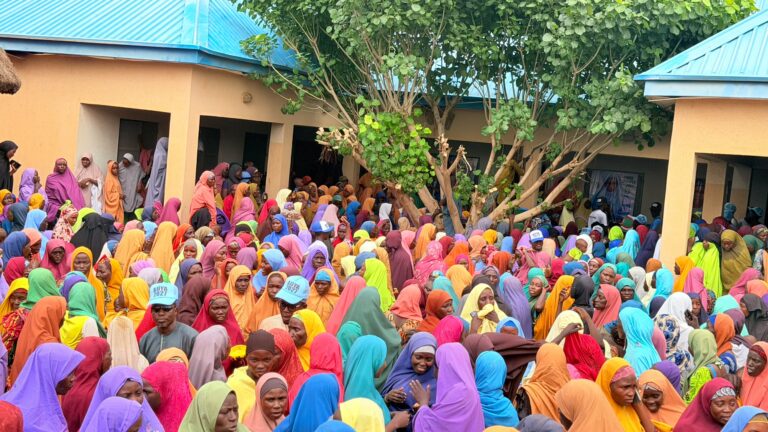
It has been particularly challenging because the majority of households in the state depend on charcoal, which unfortunately remains the number one cause of deforestation. To address this, we launched campaigns across all 11 local governments, sensitising people on the need to plant trees and to stop the illegal felling of trees for charcoal production.
We have also engaged the charcoal association in the state to regulate their activities while working on a sustainable solution which is briquettes. These can be made from coal or agricultural waste such as groundnut shells, orange peels, coconut shells, and other biomass. Briquettes burn slowly, produce little or no smoke, and are healthier and cleaner for cooking. This is where we see the future.
Beyond households, how do you plan to address industrial users like rice millers and oil producers who consume a lot of firewood and charcoal?
That is one of our next targets. We are preparing to engage the rice milling and groundnut oil industries, which use a huge amount of firewood and charcoal. We want them to invest in briquette use. The raw materials are available in Gombe, so we have the capacity to move away from tree cutting and produce briquettes on a large scale.
Apart from sensitisation, what are the legal or policy steps you are taking to protect forests?
The state government is currently reviewing the forestry laws of Gombe State, and soon the bill will go to the State House of Assembly for legislation and eventual assent by the governor. In the meantime, we are pushing for an executive order to clamp down on illegal felling of trees and charcoal production. That will help us protect the environment while waiting for the law.
Governor Muhammadu Inuwa Yahaya declared tree planting an official policy in the state. How close is Gombe to meeting its targets set by the governor?
Since the inception of Gombe Goes Green (3G) in 2019, over 5 million trees have been planted across the state. When the current task force took over in March 2025, we intensified the campaign. Local government committees are also doing outstanding work at the grassroots. Our goal is not just to meet but to surpass the targets. By next year, 2026, Gombe will plant the highest number of trees in Nigeria, Insha Allah.
Apart from the tree planting, what other specific successes would you say the project has achieved so far?
We have reduced the rate of indiscriminate cutting of trees in critical areas. Our sensitization campaigns are resonating with the public, farmers now better understand how cutting trees affects soil fertility, water retention, and even crop yield. We have also strengthened community participation in tree planting. These may look like gradual wins, but they are foundational to restoring Gombe’s green cover.
How is the task force doing in terms of finances? Are they receiving support from donors to keep up the project?
Financing has been one of our greatest challenges, but we must commend His Excellency, Governor Muhammadu Inuwa Yahaya, who has been very supportive. We also receive backing from Agri-Climate Resilience in Semi-Arid Landscapes (ACReSAL), which has partnered with us since inception. Most importantly, we are grateful to the people of Gombe, who have shown tremendous support. From offering water to volunteers during tree planting to donating time and resources, their contributions have been invaluable.
At the early stage of the project, the state government announced the employment of about 27,000 youths to water and care for the trees planted. Are those youths still engaged under the programme?
Yes, we are aware of that initiative when we took over the project as a task force. And while we recognise the importance of creating jobs for young people, we also realised that employing thousands of youths to look after trees is not the best long-term practice. It may provide short-term results, but it is neither sustainable nor cost-effective.
What we have done instead is to focus on community buy-in. When people are sensitized and understand the importance of tree planting, they naturally adopt the project as their own. That sense of ownership is far more valuable than hired labor because it ensures continuity. Today, we see individuals and communities caring for the trees voluntarily—not because they are paid, but because they understand the benefits. That, in my view, is the true success of the 3G campaign.
You lead both a traditional council and this demanding task force. How do you manage the balance between the two offices?
Leading people is not new to me, but yes, it has become more demanding. Thankfully, I have excellent teams both at the task force and at the Tula Traditional Council. Even in my absence, I am confident they will handle things well. That makes it possible to manage both responsibilities effectively.
Gombe must move away from cutting trees for charcoal and embrace cleaner, sustainable alternatives. With millions of trees planted, laws under review, and the push for executive orders, the task force is setting the stage for a greener, healthier, and more resilient state. For Gombe, the fight against deforestation is more than an environmental struggle, it is a fight for the future.