Follow Us on Google
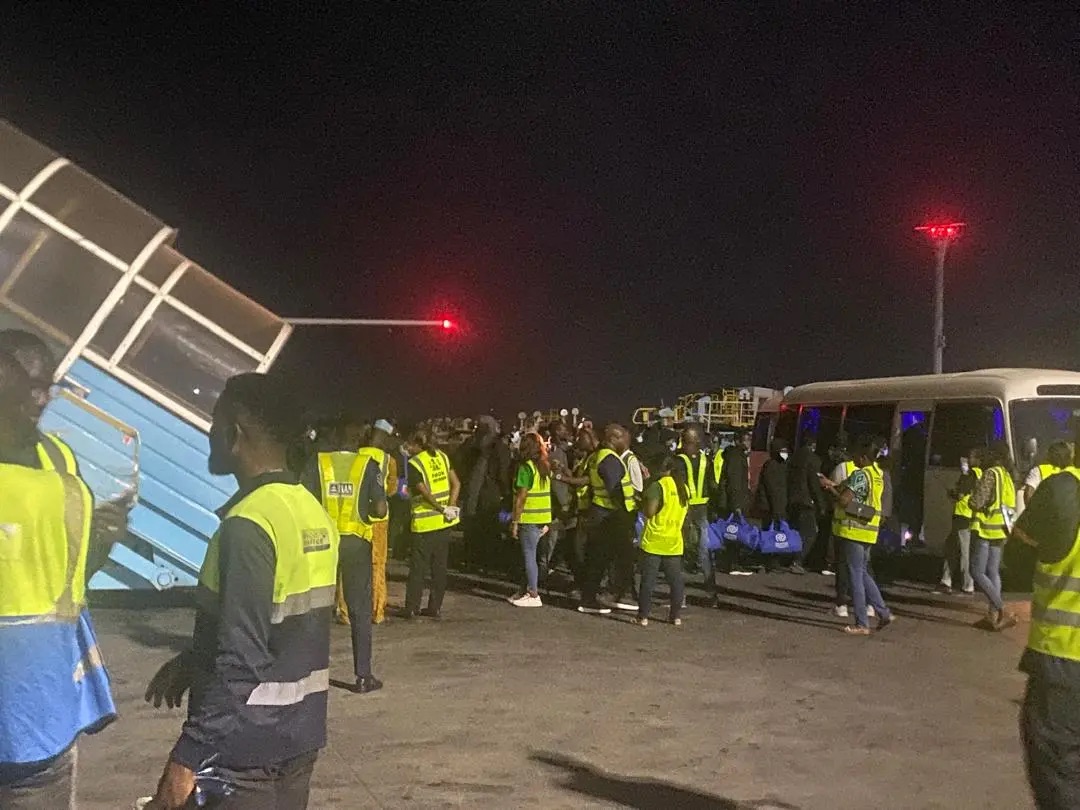
A female Libya returnee, Endurance Daniel, has revealed how she and other migrants had to drink their own urine during their journey due to water scarcity in the desert.
The 23-year-old also revealed that seven persons out of 52 that she boarded the same vehicle with died in the course of the journey due to harsh conditions.
She said, “We spent more than a month in the desert. There was no water; so we were drinking our urine to survive. At a time, urine was no longer coming out. Some of us had blood coming out instead of urine.
“Those who died were left where we stayed in the desert. We watched their bodies decay for days because we had nowhere else to go and there was nothing we could do.”
She disclosed that she was deceived at age 17 to migrate to Libya with promises of job employment in the North African nation.
She said her mother’s friend convinced her family to let her embark on the journey.
Daniel is one of 182 Nigerians that were arrested to return from Libya by the International Organisation for Migration (IOM).
She disclosed that she went to Libya in 2019 after her mother’s friend said she could make “good money” in less than a year.
Other News
According to Daniel, the woman promised that after repaying the sponsor through domestic work, she would be free to pursue any occupation or business.
“She told me that I could even open a shop after settling my sponsor. Things were difficult at home. My family was suffering, with no food to eat. So, I decided to go (to Libya),” she said.
She said what she met on ground in Libya was very different from the picture her mother’s friend had painted.
“On getting to Libya, my sponsor told me there were only two jobs available for women migrants, domestic work and prostitution. There was nothing else,” she narrated.
Daniel said she immediately decided to return home but could not do so because the trafficker insisted that she must repay the transportation expenses incurred during her journey.
“When I asked for a phone to contact my family, he (the trafficker) refused. He feared my family would send money for me to return (to Nigeria),” she said.
She said traffickers used coercive techniques, including threats and intimidation, to keep the migrants in check.