Follow Us on Google

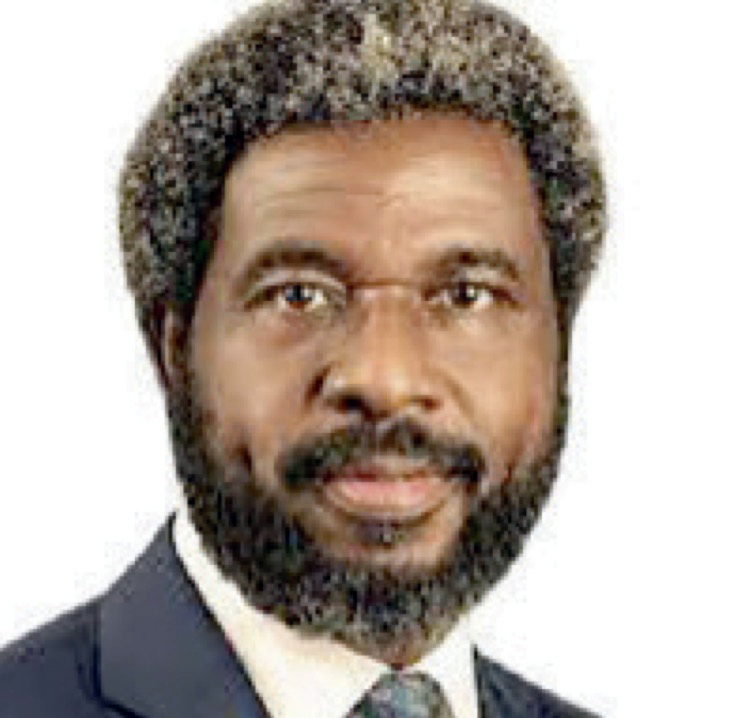
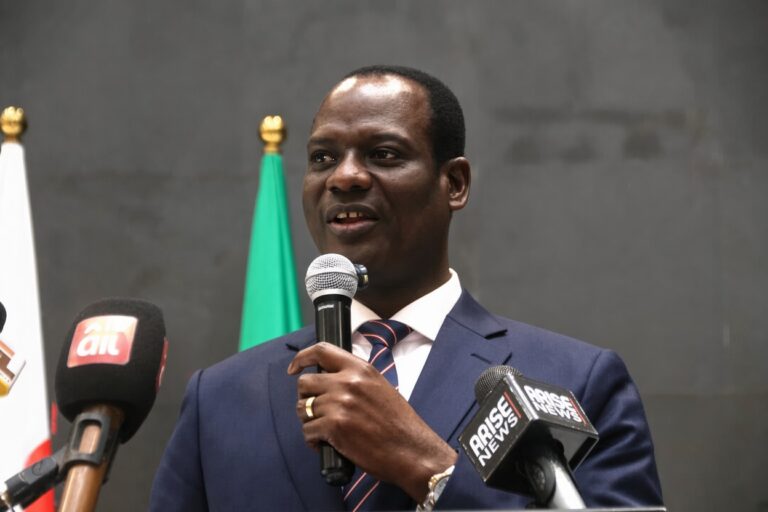
A prominent Nigerian chartered surveyor, property valuer, real estate coach and Founder and Principal Partner at Olawale Jordan Company, Mr. Akin Opatola, has said that affordable housing in Nigeria will remain out of reach unless the country reduces its dependence on imported building materials and boosts local production.
Opatola, is also the Vice President of the World Council of Managers for the International Real Estate Federation and immediate past President of FIABCI Nigeria, said addressing the housing insufficiency nightmare requires functional solutions and not an emotional one.
In this exclusive interview with Daily Sun, he shared his experience in real estate.
He further noted that the country does not have a housing problem because it lacks land or investors, rather it has a housing problem because finance, policy, infrastructure and implementation have not worked together.
He added that the future belongs to countries that see housing not merely as a social programme, but as an economic development strategy.
“If we get housing right, we will create jobs, attract investment, reduce poverty and improve the quality of life for millions of Nigerians. Affordable housing will remain difficult until we reduce our dependence on imports”, he said.
Do you think Nigerians are gaining through real estate?
The simple answer is yes. Real estate remains one of the most reliable vehicles for wealth creation in Nigeria despite our economic challenges. Those who invested in strategic locations such as Lekki, Ibeju-Lekki, Epe, Abuja, and parts of Port Harcourt over the last decade have seen remarkable capital appreciation. Beyond investment returns, real estate preserves wealth against inflation and provides rental income. However, the challenge is that many Nigerians still see real estate merely as buying land. In advanced markets, people build wealth through Real Estate Investment Trusts (REITs), fractional ownership, mortgage-backed investments and institutional property funds. But Nigerians are also gradually embracing these new ways of innovative real estate investment channels. We understand that we currently live in a highly inflationary economy, but capital appreciation especially in high growth corridors sees positive appreciation especially those lucky enough to position strategically and early enough along the infrastructure corridors. The next phase of Nigerian real estate should focus on making property investment accessible to ordinary Nigerians, not just the wealthy.
Is Nigeria harnessing local building materials?
Not enough is being done in that direction in Nigeria. It’s a drop in the ocean of what is presently happening. Nigeria possesses several God given natural resources which are in high demand in the real estate and construction industry, abundant limestone, clay, bamboo, laterite, timber, compressed earth technology and pozzolanic materials, yet we still rely heavily on imported finishing materials and building components. Countries like India, Brazil and even Rwanda have deliberately invested in local building technologies to reduce construction costs. The government should incentivize manufacturers, universities and research institutions to commercialise local materials while ensuring they meet international quality standards. Affordable housing will remain difficult until we reduce our dependence on imports.
You are playing in international real estate, can you compare Nigeria with other African nations?
Yes, that is correct, I am active in a few African and European countries and I practice real estate through my partners and international-colleagues and experience has shown that Nigeria remains Africa’s largest real estate market by potential because of our population, urbanization and entrepreneurial spirit. However, countries like Rwanda have made land registration remarkably efficient. Morocco has stronger mortgage penetration. South Africa has deeper institutional property investment markets. Egypt has delivered large-scale government-backed housing schemes. Kenya is leading in PropTech innovation. Nigeria’s greatest strength is demand. Our greatest weakness is execution. If we improve land administration, mortgage accessibility and infrastructure, Nigeria could easily become Africa’s leading real estate investment destination.
What does Nigeria gain by being a member of FIABCI?
FIABCI is one of the world’s oldest and largest international real estate professional associations, with members in more than 70 countries. Membership connects Nigeria directly to global Investors, Developers, Financiers, Valuers, property managers and policymakers. It promotes international best practices, professional ethics, technology transfer and foreign direct investment. Through FIABCI, Nigerian professionals gain access to global networks while international investors gain confidence in our market. Real estate has become global, and Nigeria cannot afford to operate in isolation. FIABCI has been operating in Nigeria since 1972, and I think it strengthens the capacity of Nigeria’s real estate sector to attract capital, create jobs, improve housing delivery and contribute meaningfully to the nation’s economic growth.
Why is the cost of properties still rising in Nigeria?
The cost of properties in Nigeria will keep rising and this increase is driven by several factors that include but are not limited to construction materials. Construction materials have continued to increase in terms of cost significantly. This increase is because a greater percentage of the building materials is imported from abroad. Again exchange rate volatility has made imported materials more expensive. The exchange rate at any given time determines the cost of building materials which invariably boils down to the ultimate cost of properties. Interest rates remain high and the government seems not to understand that the nation is still a consuming nation that depends largely on exchange rates to get its consumables. Please don’t lose sight of the fact that infrastructure costs are largely borne by developers. After bearing the cost of bringing infrastructure you will expect that the developer will inculcate the cost into the eventual cost of the property. Land acquisition and title perfection remain expensive especially in major cities in Nigeria. When you aggregate the cost of building materials, cost of providing infrastructure, and the prevailing cost of exchange rate, you will give it to the property developers that the cost of renting or buying property in the country is moderate. The above is despite the fact that inflation continues to erode purchasing power in our economy. Housing demand still exceeds supply and you know that when demand is higher than supply, the cost will definitely increase. Until financing becomes cheaper, infrastructure improves and the government reduces development bottlenecks, property prices will continue to rise.
When should a developer seek mortgage financing?
A developer should seek financing only after critical project risks have been addressed. Land title should be secured and you know what it means to secure land title especially in cities like Lagos and Abuja. For a developer to seek financing, planning approvals should be substantially in place. The feasibility studies of the project should demonstrate demand and there should be a realistic sales strategy. The developer must as well map out cash flow projections that must support debt repayment. When all these are done the developer can then look in the direction of getting finance. Many developers borrow too early and use expensive debt to solve planning problems. This early borrowing keeps the project stalled because the moment the money finishes borrowing extra money will create risks the developer may not be able to cope with. Good finance should accelerate development and not rescue a poor project.
There is no single regulator for real estate in Nigeria. Is that the same elsewhere?
Other News
Most developed countries regulate different aspects of real estate through multiple specialized institutions. Take for instance in Nigeria, there is a Ministry that is in charge of land administration and an agency that handles planning, constructions and all these are different if you want to go by professional practice. In Lagos State, there is an agency that regulates mortgage; there is the Ministry of the Environmental that controls compliance. The issue in Nigeria is therefore not necessarily the absence of one regulator. The real issue is poor coordination, overlapping responsibilities and weak enforcement. Rather than creating another agency, the government should strengthen collaboration among existing regulators while digitizing land administration and improving transparency.
Do you think there is a need to review the Land Use Act?
Yes. The Land Use Act was progressive when introduced in 1978, but today’s realities are very different. It has slowed land transactions, increased bureaucracy and limited access to credit because obtaining title can take years. The objective should not be to abolish the Act but to modernize it. There should be digital land registries. There should be faster consent processes because all these contribute to the unnecessary bureaucracy that stalls the construction process. There should be transparent valuation systems. This valuation system should be empirical to give credence for transparent process and room for improved security of titles. Land should become an economic asset rather than a bureaucratic burden.
Should the government punish only the owner of a collapsed building?
I think that responsibility for building collapse should be shared because building collapse is rarely caused by one person. Those to share in the building collapse include but not limited to the Developers, Architects, Engineers, Builders, Quantity Surveyors, Contractors, Regulatory agencies, Approval authorities and Inspection officers. Of course everyone who failed in their statutory responsibility should be investigated.
We should know that the mistake of one in the value chain automatically affects the finishing of the other. Accountability across the entire value chain is what improves safety. Countries with low building collapse rates enforce professional responsibility at every level. That is why regulation, monitoring and supervision should start from the onset.
There are many unoccupied estates, what should the government do?
Vacant estates represent idle capital. Be it in the cities or anywhere.
Many of the unoccupied estates are unaffordable because they were built without understanding market demand. In order to stop having unoccupied estates, the government should encourage; Rent-to-own schemes, shared equity housing, affordable mortgages, institutional rental housing, Tax incentives for converting vacant units into affordable housing.
Housing should not only be built, it must also be occupied. In this way, success should be measured by occupancy rates, not simply by the number of houses constructed.
The government no longer supports social housing, why?
Housing is too important to be left entirely to the government. Globally, successful housing systems rely on partnerships between government and the private sector. For a successful housing system to be achieved the Government should focus on; providing land, Infrastructure, Mortgage guarantees. There should be tax incentives and clear regulation. The private sector should build efficiently. The future of affordable housing in Nigeria lies in Public-Private Partnerships, not government acting alone.
What else would you like to share with us about Nigerian real estate?
Real estate should no longer be viewed simply as buying and selling property. It is an engine of economic growth. Housing stimulates over 40 allied industries including cement, steel, timber, finance, insurance, logistics and manufacturing. Every home built creates employment and expands economic activity. Nigeria’s housing deficit is often discussed as a problem. I prefer to see it as one of Africa’s greatest investment opportunities. With the right policies, housing can become a catalyst for economic transformation. Nigeria does not have a housing problem because we lack land or investors. We have a housing problem because finance, policy, infrastructure and implementation have not worked together. The future belongs to countries that see housing not merely as a social programme, but as an economic development strategy. If we get housing right, we will create jobs, attract investment, reduce poverty and improve the quality of life for millions of Nigerians.
Can you appraise the cost of construction?
Construction costs remain historically high because of exchange rate instability. There is inflation, imported building materials and high energy costs. Others include transportation financing costs. All contribute significantly. Developers are now spending considerably more than they were just a few years ago to build the same project. The solution lies in increasing local manufacturing, improving logistics, stabilising the macroeconomy and encouraging innovation in construction technology.
Have government policies impacted real estate?
Yes, significantly, it has. Monetary policy affects mortgage interest rates and Exchange rate policy affects construction costs while Tax policy influences investment. Remember that infrastructure spending determines land values while land administration policies affect development speed. When government policies are predictable, investment increases. When policies change frequently or create uncertainty, investors become cautious while some run away. Real estate thrives on stability so policy consistency is one of the most valuable incentives the government can provide to help in real estate development.