Follow Us on Google
By Gabriel Dike

As part of its efforts to use research to reduce poverty in the country, the Grooming Centre, Lagos, has announced the start of the fifth edition of the research grants competition for university and polytechnic students.
Grooming Centre, in 2019, initiated the research grants competition among students in the Nigerian University System (NUS), which tasked them to come up with a research topic on products that would help alleviate poverty in the country.
Since 2019 when the centre unveiled the project, 245 postgraduate and undergraduate students have benefitted from the research grants.
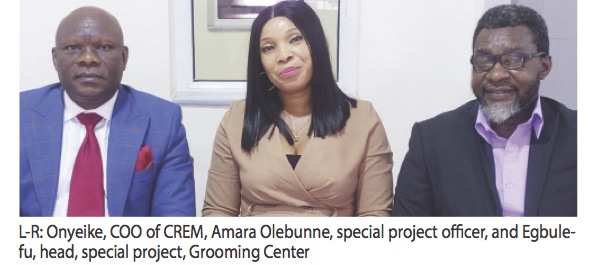
Announcing the call for submissions for the 2023 edition of research grants award, head, Special Projects, Mr. Chikezie Egbulefu, said the project cost the centre about N100 million and is attracting many students in tertiary institutions.
Egbulefu disclosed that 116 undergraduates would get N100,000 each, that is N11.6 million while 138 postgraduates would receive N200,000 each (N27.6 million).
He stressed that Grooming Centre’s commitment to contributing to and leading research, knowledge development and management in areas of social enterprise, microfinance, inclusive finance, poverty alleviation and rural development prompted it to launch the university grant scheme (GC- university grant) in 2019.
According to him, the grant scheme which is a corporate social responsibility (CSR) initiative of the centre, is aimed at catalyzing research, knowledge and management by providing monetary incentives through a grant system to 150 undergraduate and postgraduate students undertaking research works in the aforementioned sectors, each year.
He explained that the maiden edition of the GC-university grant was launched in 2019 with 25 students as winners.
“In the second edition (2020), 41 candidates (comprising 13 undergraduates and 28 postgraduates) qualified; the third edition in 2021, the number of winners increased by 66% from 41 candidates in 2020, to 68 candidates in 2021 (comprising 34 undergraduate and 34 post graduate students).
“In 2022, the number of winners increased by 76.4% from 68 candidates in 2021, to120 candidates (comprising 60 undergraduate and 60 post graduate students), bringing the total number of winners from 2019 to date to 254 (i.e. 116 undergraduate and 138 postgraduate students).
The winners of last year’s award are drawn from 47 institutions across the country,” Egbulefu added.
Giving further details of the project, the Deputy Manger, Research and Consulting of CREM, Mr. Ayotunde Hassan, disclosed that 2023 university grant will be awarded to 100 undergraduate and 50 postgraduate students.
Hassan said the 150 students must be presently engaged in research studies in the areas of microfinance, rural development, inclusive finance, social enterprise, MSME and women in development.
He explained that the applicants must be either a student at the postgraduate or undergraduate level in Nigerian institutions, whose research study must be relevant to the context, practical, innovative and capable of promoting any of the above areas of interest in the country.
Other criterion outlined by Hassan is that an applicant must be a student at an NUC/NBTE approved Nigerian university or polytechnic, submit written recommendation from he/her project supervisor, submit research concept between 10-25 pages, which will include an introduction, literature review, and research methodology as well as their personal profile.
“Awardees will be required to submit final soft copies of the research project on completion of the study. There are no age, gender, religion or ethnic barriers to application,’’ he stated.
Hassan added that submission of application opens June 26th and closes on August 18th, 2023.
In his remarks, the Chief Operating Officer of Center for Research in Enterprise and Action in Management (CREM), Mr. Clifford Onyeike, said the criteria is not about whether the applicants are from rich or poor homes but an avenue to promote research that would reduce poverty.
Onyeike said an eight-technical committee would evaluate each submission and pick the best undergraduate and postgraduate students for the grants.