Follow Us on Google
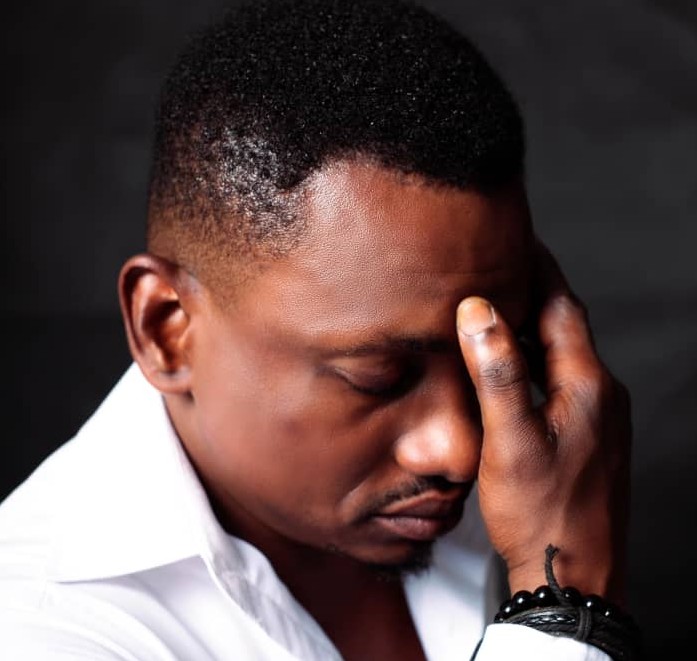
Nigerian poet Valentine Okolo’s voice is a gentle rebellion. He is not just writing poetry, he is listening. And what he hears (tragedy, courage, endurance) he transforms into art that shocks and soothes.
In a country like Nigeria where women’s struggles are frequently sidelined or spoken for rather than with, Okolo stands out, not merely as an ally but as a vessel.
His pen bleeds compassion and clarity. He often writes poems that echo with the weight of real wounds, and the quiet resistance of those who bear them.
Nigerian poetry has a long and powerful history but rarely does it see a male voice as attuned to the nuances of the female experience as Okolo’s.
His emergence as a socially conscious poet who centres women’s stories is as daring as it is needed.
While many male poets draw their metaphors from the soil, politics, or nostalgia, Okolo draws from something more intimate: anguish, survival, shame, and, ultimately, hope.
Okolo is a poet who is always drawn to hope.
Just as he is drawn to give voice to truth, because of this, his literary compass always points towards justice.
His critically acclaimed poem “I Will Be Silent,” published in Apogee Journal, United States, on October 30, 2017, is a gut-punch of a piece that confronts sexual violence with a rawness rarely seen in African poetry.
The poem, written from the perspective of a female victim during wartime, does not only tell a story it testifies of harrowing happenings in Darfur, Sudan. For “I Will Be Silent” is as much an indictment as it is eulogy.
Okolo is a poet who does not write poetry for applause or accolades. He is a poet who writes poetry because he must and that sense of duty which he has cultivated has birthed a body of work that functions as both art and advocacy.
His poems have been described as weapons that are soft on the tongue but sharp in their intent.
His poetry unearths the shame that society tries to bury, and gives voice to those long silenced.
His poetry covers a wide range of issues which affect women in Nigeria, Africa, and elsewhere.
And these include: sex trafficking, emotional abuse, societal erasure, and the quiet desperation of everyday life. It is no easy task to speak for those whose experiences you do not share. But Okolo does this with much panache.
He has this unique ability to write with a depth of sensitivity often associated with female voices in literature. He has once described, in an interview, how he immerses himself in the emotions and experiences of those he writes about. “I see with their eyes, I hear with their ears, and I feel with their skin,” Okolo once said as he explained how his empathy shapes his creative process.
And this creative approach of his allows him to capture the complexities of women’s stories without diminishing their agency or authenticity.
Okolo’s perspective as a man writing on women’s issues has not been without its challenges. Critics have questioned whether he can truly understand the struggles and experiences of women. But Okolo’s response is simple: read his poetry and see for yourself.
Okolo’s poems are labours of understanding, and reflections painstakingly shaped through research, listening, and emotional immersion. But his poetic empathy doesn’t just bridge gender gaps it builds a shared language of healing.
Beyond the power of Okolo’s themes lies another revolution. A revolution on how he redefines masculinity in literature. In a genre where male poets are often celebrated for their intellectualism or dominance over form, Okolo dares to be emotional, gentle, and deeply introspective.
Okolo doesn’t just challenge the status quo. He graciously upends it. He speaks of accountability, of emotional honesty, and of men taking an active role in ending the very systems they benefit from.
And he does this without preaching. In doing so, Okolo isn’t just changing poetry. He’s changing how we see manhood.
In this light, Valentine Okolo’s poetry serves as a bridge between genders between pain and hope. And between silence and voice. He does not see himself as a savior of women rather, he sees himself as part of the struggle. He uses his words to support, and to amplify women issues rather than to dominate discussions on the struggles women face in their lives. And perhaps that is why women respond so deeply to his poetry.
For they see in his poems not just a man who understands but one who is trying to understand. A man who is willing to sit in discomfort and do the difficult work of empathy.