Follow Us on Google
By Lawrence Agbo
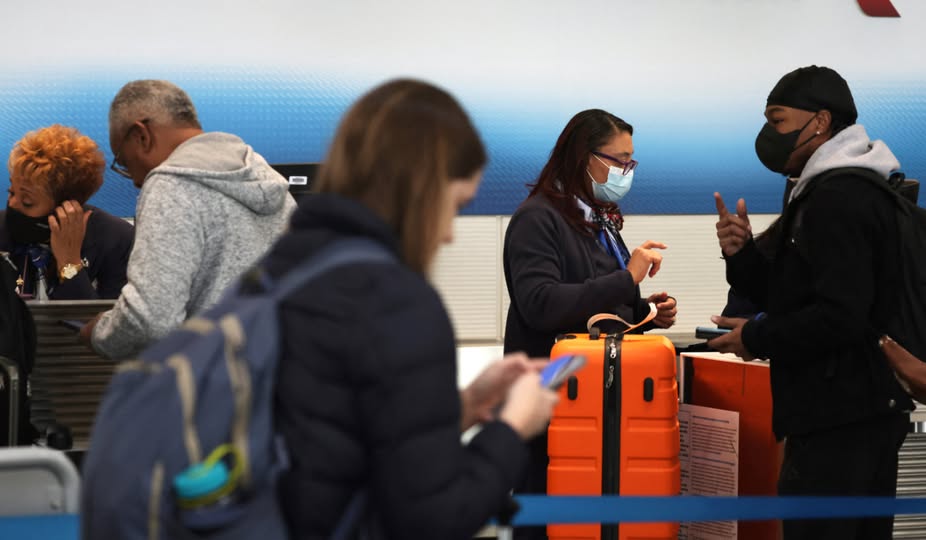
In response to a worsening Ebola outbreak in the Democratic Republic of Congo (DRC), the United States has announced stringent new border measures, including airport screenings and a temporary freeze on visa services in affected regions.
The emergency protocols, rolled out by the US Centers for Disease Control and Prevention (CDC), come after the World Health Organization (WHO) designated the current Ebola surge an international public health emergency.
As part of the crackdown, the CDC is implementing strict entry restrictions on non-US passport holders who have traveled through the DRC, Uganda, or South Sudan within the last 21 days. Simultaneously, the US Embassy in Kampala, Uganda, confirmed it has paused all visa processing until further notice.
The urgency of the situation hit home following confirmation from CDC Ebola response incident manager, Satish Pillai, that an American citizen working in the DRC has tested positive for the virus.
“The person developed symptoms over the weekend and tested positive late Sunday,” Pillai confirmed.
Other News
Plans are currently underway to medically evacuate the infected individual to Germany for specialized treatment. The US government is also attempting to evacuate six additional personnel for health monitoring, while reinforcing its 25-member field team in the DRC with a senior technical coordinator.
Despite these developments, the CDC maintained that the immediate risk to the general US public remains low.
The current strain of the highly contagious hemorrhagic fever has no approved vaccine or specific treatment. According to Congolese Health Minister Samuel-Roger Kamba, the surge has already resulted in 91 suspected deaths and roughly 350 suspected cases—over 60% of whom are women between the ages of 20 and 39.
While the State Department has mobilized $13 million in immediate aid, the administration is facing fierce backlash from global health experts over its handling of the crisis, following America’s formal withdrawal from the WHO and deep cuts to USAID funding.
Matthew Kavanagh, director of the Georgetown University Center for Global Health Policy and Politics, slammed the new travel restrictions as “more theater than effective public health.”
“The administration claimed it could replace the capacity of the WHO with domestic efforts. This outbreak clearly shows that is a failed strategy,” Kavanagh argued, adding that the US is now “playing catch-up” after weeks of undetected regional spread.