Follow Us on Google
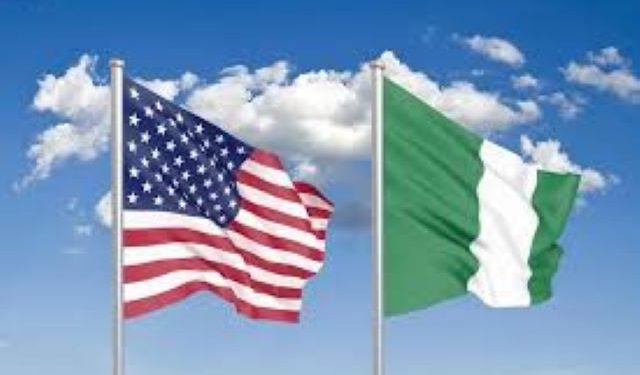
In a bold move to strengthen Nigeria’s healthcare system, the United States (US) and Nigeria have entered into a five-year agreement to inject a total of $5.1billion to particularly boost faith-based healthcare services throughout the country. The initiative came on the heels of recent engagement between Abuja and Washington over the designation of Nigeria as a Country of Particular Concern (CPC) by President Donald Trump administration due to alleged Christian genocide in the country.
The federal government has stoutly denied this allegation, stressing that the killing in Nigeria by terrorists is not targeted at a particular religion. It further argued that the victims of such violence include Christians, Muslims and adherents of indigenous religion. However, most of the victims are Christians. Under the agreement, the US government will provide $2.1billion for programmes to address the challenge of HIV, tuberculosis, malaria, polio and maternal and child health, while Nigeria will significantly increase its domestic health funding, providing $3billion for the period of the programme. The US Principal Deputy spokesperson, Thomas Pigott, said the deal falls under the framework of the America First Global Health Strategy.
The State Department also said Nigeria’s funding pledge was the largest co-investment made so far by any country under the America First Global Health Strategy. The intervention is expected to strengthen Christian faith-based healthcare providers across the country. The initiative will enhance access to affordable, preventive and curative services for HIV/AIDS, tuberculosis (TB), malaria, polio and others.
According to the Coordinating Minister of Health and Social Welfare, Prof. Ali Pate, the funding framework has been factored into the Federal Government’s proposed 2026 Appropriation. Pate further said the health intervention agreement signed by officials of both governments, is designed to strengthen cooperation in the early detection, prevention and control of emerging, re-emerging and existing infectious diseases in Nigeria, including HIV/AIDS and tuberculosis.
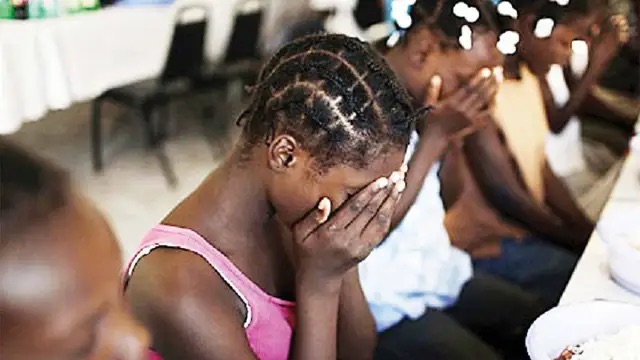
Unfortunately, Nigeria’s 900 faith-based clinics and hospitals currently serve more than 30 per cent of the country’s population of 230 million people. The intervention will complement government’s health services and strengthen Nigeria’s healthcare system. Available statistics show that about 788 health facilities in North-Eastern Nigeria were destroyed by insurgency activities. In Borno State alone, about one-third of 743 facilities were completely destroyed and only a third remained functional as of a few years ago.
Also, in the North-West, no fewer than 69 health facilities have been shut down in Katsina State as a result of the prevailing conflict. Moreover, health workers have become targets of abduction and violence. For instance, 30 health workers were kidnapped in the country in 2021. In Katsina State alone, about 100 health workers were kidnapped and 20 killed.
We commend the healthcare funding agreement between US and Nigeria to particularly strengthen Christian faith-based healthcare providers, recognizing their indispensable role to delivering care to communities in need. It will boost Nigeria’s fragile healthcare system, which has been buffeted by poor funding and brain drain. For years, our national health budget has hovered between five and eight per cent. It is yet to reach the 15 per cent agreed by African leaders in Abuja in 2001. The WHO’s Africa Regional Director has even urged African nations to allocate 20 per cent of their budget to health.
For the 2026 national budget proposal by President Bola Tinubu, health is one of the prioritized sectors. Out of the N58.18 trillion budget, Defence and Security gulps N5.41 trillion; Infrastructure, N3.56 trillion; Education, N3.52trillion; and Health, N2.48 trillion. The health sector gets about 5.18 per cent of the 2025 national budget, a significant increase from previous years allocations. In 2024, it was 4.6 per cent; 2023, 4.91 per cent; and 2022, 4.323 per cent. Interestingly, in 2025, some states like Kano, Kaduna, Borno, Benue and Abia met the 15 per cent benchmark, while others had lower allocations.
On dearth of doctors, tens and thousands of Nigerian doctors have left to work abroad with recent figures from 2024-2025 indicating at least 16,000 doctors have emigrated in the last five to seven years. Other estimates put the figure at 19,000 or more, with large numbers going to the United Kingdom (UK), United States and Canada, leading to severe shortage in Nigeria. Currently, Nigeria has a doctor-to-population ratio of 3.9 per 10,000 people. This is far below global minimum and puts immense pressure on remaining staff. Other sources said more than 40,000 Nigerian doctors might be practicing abroad.
Let the fund be judiciously used for the faith-based healthcare providers and targeted beneficiaries. It should not be diverted to other ulterior uses as witnessed in recent past.